
New Haven Mental Health
Table of Contents
Navigating Mental Health Care in New Haven
The Substance Abuse and Mental Health Services Administration (SAMHSA) emphasizes that integrated, evidence-based care is fundamental to mental health recovery. The New Haven mental health system offers a variety of such treatments designed to support individuals on their path to recovery. For comprehensive mental health treatment New Haven residents can turn to EMEND, a provider dedicated to integrating medical and therapeutic care.
At EMEND, clients have access to a full continuum of care that includes individual therapy, group sessions, cognitive behavioral therapy (CBT), and dialectical behavior therapy (DBT). These modalities form the backbone of a personalized treatment plan. Within the New Haven mental health community, dual diagnosis treatment in Connecticut addresses both mental health challenges and substance use disorders simultaneously, ensuring comprehensive healing. For individuals who do not require round-the-clock supervision, outpatient behavioral health services in New Haven offer flexible scheduling so they can continue work or school while attending therapy. Before starting any program, it is wise to verify your insurance benefits. EMEND’s admissions team provides free benefits verification to help you understand coverage options without financial stress.
Navigating the system is the first step; understanding therapy modalities helps you choose the right fit. Next, we will explore the types of therapy offered in greater detail, from individual sessions to specialized approaches like CBT and DBT.
Understanding the Levels of Care and Dual-Diagnosis in New Haven
Finding the right path to recovery means understanding that treatment is not a one-size-fits-all process. For many individuals beginning their journey, effective care follows a structured continuum. This spectrum of services, which exemplifies comprehensive behavioral health treatment Connecticut provides, is designed to meet a person where they are, addressing their unique medical and psychological needs at every stage. The goal is to create a stable foundation through a seamless transition between levels of care, from medical stabilization to intensive therapeutic work, ensuring the best chance for long-term healing.
The Role of Medically Supervised Detoxification
Medically supervised detoxification is typically the first, critical step in the continuum of care for individuals who are physically dependent on substances. In New Haven, this process involves 24/7 nursing and medical oversight, not just counseling, to manage the acute and often unpredictable symptoms of withdrawal safely. According to the ASAM Criteria, as established by the American Society of Addiction Medicine, this level of care focuses on patient placement based on the severity of their condition. Detox typically lasts 3-7 days, during which clinical staff administer medications to ease discomfort and monitor vital signs. The primary goal is safe medical stabilization, and upon completion, patients are clinically assessed and guided toward the next appropriate phase, most often a residential treatment program.
Structured Residential Treatment Programs
Following stabilization, a residential treatment program Connecticut offers is the next immersive step. A structured residential program is a live-in facility where individuals follow a highly organized daily schedule designed to promote recovery. These programs, typically lasting 30, 60, or 90 days, move beyond managing withdrawal to address the deep-seated psychological, behavioral, and social patterns of addiction. This level of care provides a safe, supportive community free from external triggers, allowing residents to focus completely on their recovery. The therapeutic environment combines individual and group therapy, skill-building activities, and peer support to equip individuals with the tools needed for sober living. This intensive, whole-person approach is fundamental to successful, sustainable recovery.
The following table offers a direct comparison of these two foundational care levels, highlighting their distinct purposes and therapeutic approaches.
| Feature | Medically Supervised Detox | Residential Treatment |
|---|---|---|
| Primary Goal | Safe medical stabilization from acute withdrawal | In-depth therapeutic work on underlying causes of addiction |
| Typical Setting | 24/7 medically supervised inpatient unit | Structured, live-in facility with a daily schedule |
| Average Duration | 3-7 days | 30, 60, or 90-day programs |
| Key Therapies | Medical monitoring, medication management | Individual therapy, group therapy, CBT, DBT |
| Dual-Diagnosis Focus | Stabilization of acute mental health symptoms | Integrated treatment for co-occurring disorders |
Detox provides the necessary medical intervention to clear the body of substances, but it does not address the psychological roots of addiction. Residential treatment, conversely, builds directly on this physical stability to engage patients in the therapeutic work required for a profound, lasting change.
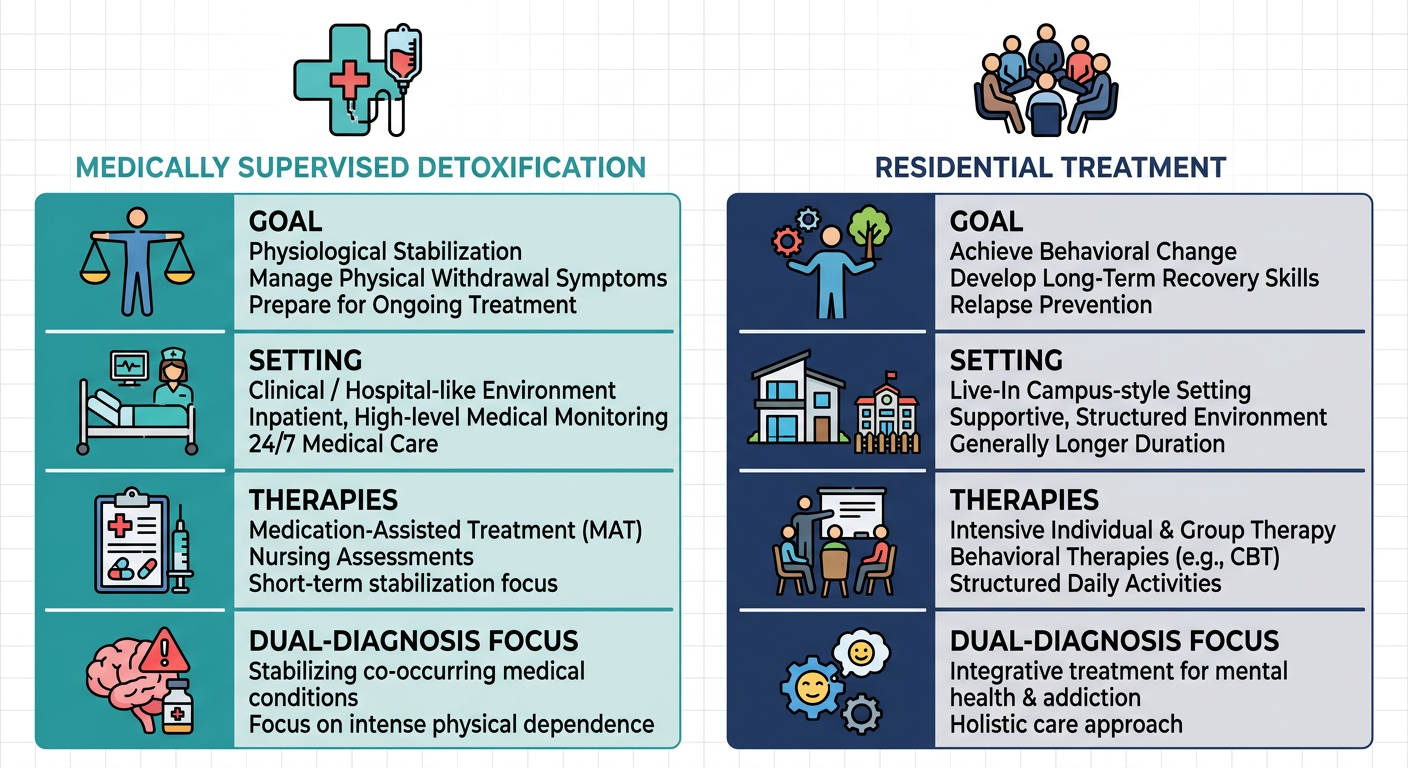
Qualitative comparison of detox versus residential dual-diagnosis care levels.
The Importance of Integrated Dual-Diagnosis Care
Dual diagnosis means a person has both a substance use disorder and a mental health condition, such as depression or anxiety, making professional dual diagnosis treatment Connecticut resources specialize in essential for lasting recovery. Treating both conditions simultaneously within the same treatment plan is more effective than addressing them one after the other. This integrated approach, as outlined in SAMHSA’s Treatment Improvement Protocols, is the gold standard because the conditions are often deeply intertwined; each fuels the other. By providing coordinated care that addresses both the addiction and the underlying mental health condition from the start, patients have a significantly stronger foundation from which to heal.
Evidence-Based Modalities in a Residential Setting
To effectively treat these complex, co-occurring disorders, a robust residential program employs specific evidence-based modalities. Therapies like Cognitive Behavioral Therapy (CBT) are used to help individuals identify and restructure harmful thought patterns that drive addictive behaviors. Dialectical Behavior Therapy (DBT), on the other hand, teaches crucial skills for emotional regulation and distress tolerance, which are vital for managing intense feelings without turning to substances. Furthermore, trauma-informed care is a core element, meaning all staff are trained to recognize and respond to the effects of trauma, creating a universally safe environment where real healing can begin.
Evidence-Based Therapies: The Foundation of Effective Dual-Diagnosis Care
Effective treatment for individuals facing both substance use and mental health conditions relies on therapeutic approaches grounded in scientific research and clinical expertise. The Substance Abuse and Mental Health Services Administration (SAMHSA) recognizes several evidence-based modalities as national best-practice standards for integrated care, and these therapies form the backbone of comprehensive programs. For those seeking dual diagnosis treatment Connecticut, understanding these therapies provides essential clarity about the path to stabilization and recovery.
Cognitive Behavioral Therapy (CBT) in Practice
Cognitive Behavioral Therapy helps individuals identify and restructure negative thought patterns that fuel both substance use and mental health symptoms. When a person experiences depression or anxiety, automatic thoughts can trigger cravings for alcohol or drugs as a coping mechanism. CBT interrupts this cycle by teaching practical skills to recognize distorted thinking and replace it with balanced, realistic perspectives. A commonly used technique is cognitive restructuring, where a therapist guides someone to examine the evidence for and against a distressing belief, such as “I am a failure,” and develop a more accurate self-assessment.
For individuals exploring New Haven mental health and addiction services, CBT offers a structured, goal-oriented approach that builds self-efficacy. The therapy focuses on the present moment rather than extensively revisiting childhood experiences, making it particularly practical for early recovery when stability is the primary objective.
Dialectical Behavior Therapy (DBT) for Emotional Regulation
Dialectical Behavior Therapy was originally developed to treat borderline personality disorder and has since been adapted effectively for co-occurring substance use disorders. DBT teaches four core skill modules: mindfulness, which cultivates present-moment awareness; distress tolerance, which builds capacity to withstand emotional pain without turning to substances; emotion regulation, which helps identify and modulate intense feelings; and interpersonal effectiveness, which strengthens communication and boundary-setting.
These skills are especially valuable for individuals who experience intense emotional dysregulation, a common challenge when trauma histories intersect with addiction. In a supportive setting, people practice DBT techniques daily, learning to ride out emotional waves rather than reacting impulsively. The emphasis on balancing acceptance with change makes this modality uniquely suited to the complexities of dual-diagnosis care.
The Importance of a Trauma-Informed Approach
Trauma-informed care is not a specific therapy but a framework that shapes the entire treatment environment. SAMHSA defines six key principles that guide this approach: safety, trustworthiness and transparency, peer support, collaboration and mutuality, empowerment and choice, and attention to cultural, historical, and gender issues. These principles together create a setting where individuals feel physically and psychologically secure.
A fundamental tenet of this model is that it does not require disclosure of traumatic events. Instead, staff members are trained to recognize the widespread impact of trauma and to respond in ways that avoid re-traumatization. Individuals are treated as active partners in their own recovery, with choices explained clearly and respected consistently. This framework also supports outpatient behavioral health New Haven programs by ensuring that care environments maintain supportive, predictable structures.
Integrating Modalities into an Individualized Plan
These therapies are not delivered in isolation. A clinical team collaborates to create a personalized schedule that might include individual CBT sessions to address specific thought patterns, group DBT skills training to practice interpersonal effectiveness, trauma-informed individual therapy to process underlying experiences, and psychoeducational groups to understand the neurobiology of addiction and mental health disorders.
Psychoeducation plays an important role by helping individuals and families recognize that addiction is a chronic brain condition, not a moral failing. This understanding reduces stigma and builds motivation for sustained engagement in treatment. For those enrolled in dual diagnosis residential treatment, this integrated structure provides consistent therapeutic contact throughout the day, reinforcing skills across multiple settings and strengthening the foundation for long-term recovery.
Information on this site is for educational purposes and is not a substitute for professional medical advice.
From Inquiry to Admission: A Step-by-Step Guide for New Haven Residents
Now that you understand the programs we offer, here is exactly what to expect when you take the next step toward recovery. Our residential treatment program connecticut is designed to provide a seamless and supportive admissions experience for every individual seeking care in New Haven. If you or a loved one in New Haven is seeking mental health support, the process outlined below will help you feel prepared and confident.
The First Call: What to Expect from the Admissions Team
When you call our admissions team, you can expect a compassionate, confidential conversation to understand your needs. The goal of this first call is to listen and determine how we can best help you. To make the process as smooth as possible, it helps to have some information ready:
- Your insurance card to verify benefits.
- A list of your current medications, dosages, and prescribing doctors.
- A brief personal history of substance use and any previous treatment.
- The name and contact information of any healthcare providers you are currently seeing.
This is also the best time for you to interview us. It is important that you feel safe with your treatment choice. We encourage you to ask questions such as “What documents do I need to bring for admission?”, “What should I pack for a stay at the facility?”, and “Are visitors allowed during treatment, and what are the family support options?” Asking these questions upfront helps relieve anxiety and sets clear expectations for your arrival.
Navigating Insurance Benefits and Verification
After your initial conversation, the next immediate step is understanding payment. At EMEND New Haven, we verify your benefits on your behalf to remove this burden from you. You simply provide your insurance information, and our team handles the rest, contacting your payor directly to determine your specific coverage. It is important to understand whether your plan has in-network benefits for our program or if you will be using out-of-network benefits, which typically involve a different rate of cost-sharing through deductibles and coinsurance.
A common concern is whether pre-existing mental health or substance use conditions will prevent coverage. Federal guidelines from the Substance Abuse and Mental Health Services Administration (SAMHSA) clarify that the Affordable Care Act protects individuals by prohibiting insurers from denying coverage based on pre-existing conditions. This means conditions like depression, anxiety, or opioid use disorder cannot be used to deny you essential behavioral healthcare. Self-pay can be an attractive option for those who prefer maximum privacy or who do not have an active insurance plan, eliminating the paperwork associated with benefit coordination. Regardless of which path you take, our team will provide a clear explanation of your financial responsibility before admission day, ensuring there are no surprises.
The Clinical Assessment and Creating a Treatment Plan
Once the financial logistics are clear, the clinical work begins. Upon arrival at our New Haven facility, you will sit down with a licensed clinician for a comprehensive assessment that typically lasts between 60 and 90 minutes. This is a face-to-face conversation, not a cold interrogation. The clinician will cover your full substance use history, medical and surgical background, mental health symptoms, and the social factors that influence your well-being. This thorough evaluation ensures we see the whole picture of your health.
The direct result of this assessment is a personalized treatment plan built specifically for you. If the evaluation identifies a co-occurring mental health condition, such as anxiety or trauma alongside a substance use disorder, your clinician creates a dual diagnosis residential treatment roadmap. Your individualized plan may integrate evidence-based modalities like cognitive behavioral therapy, group process sessions, and targeted tracks for dual diagnosis treatment in Connecticut. The goal is to map a clinical pathway that is unique to your recovery needs from day one.
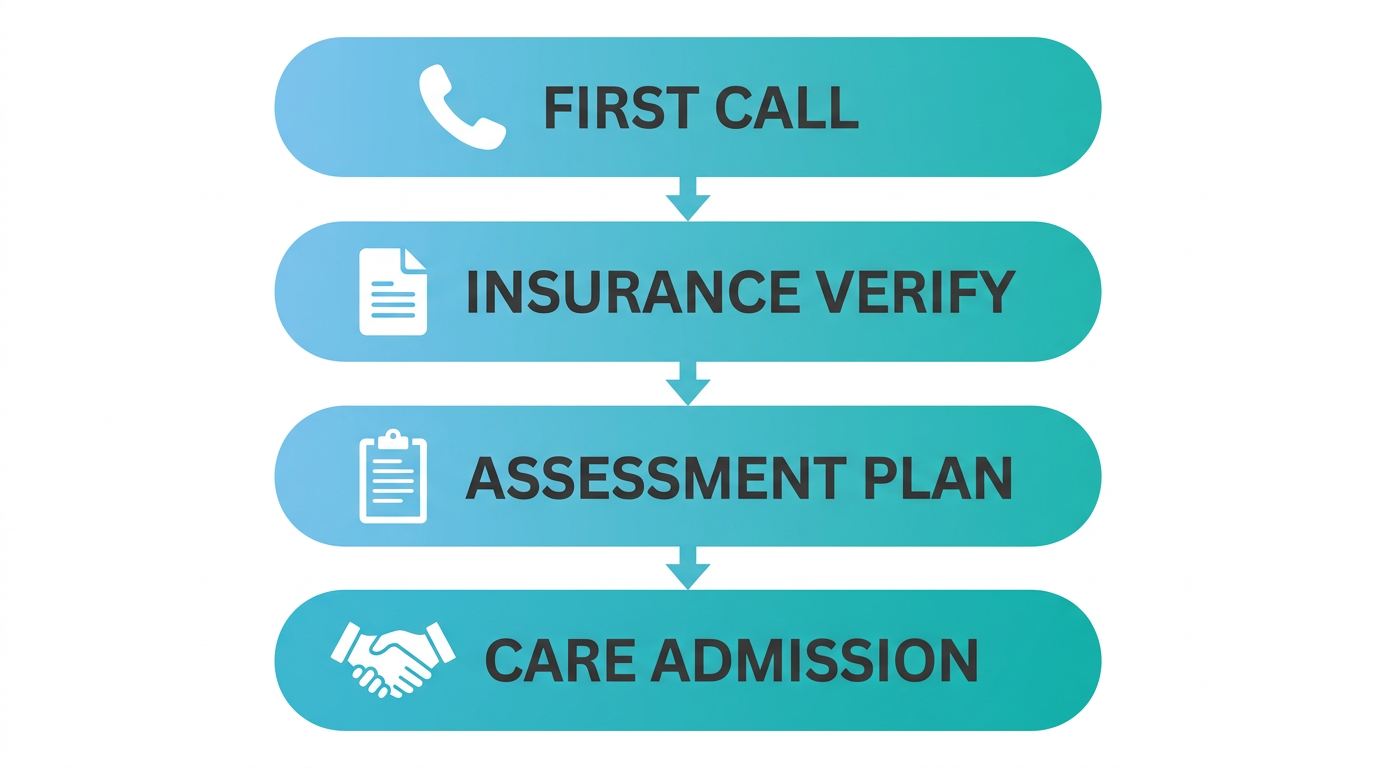
Admission process steps at EMEND New Haven behavioral healthcare facility.
Coordinating Care and Preparing for Admission
Patient-centered care means putting your unique needs and preferences at the heart of the treatment plan. In practice, this often involves actively coordinating with the trusted healthcare providers you already know. For example, if you have an established relationship with an outside psychiatrist or therapist, our clinical team will collaborate with them to ensure continuity of care. We also respect your identity and background by integrating cultural competence into our admission intake–this includes honoring dietary preferences, respecting religious practices, and arranging for language interpretation services if they are needed.
This supportive coordination also extends to planning for life after residential treatment. Our team works with you to connect with outpatient behavioral health in New Haven resources and other community supports that will be vital to your long-term recovery. Once your admission is set, our team will support you throughout your stay — learn more about daily life in our residential program in the next section.
Planning for Long-Term Success: Aftercare and Alumni Support in Connecticut
After completing the residential phase, a well-designed aftercare plan becomes the cornerstone of lasting sobriety. Long-term recovery from substance use disorders requires ongoing support, structured guidance, and a robust community connection. For individuals seeking new haven mental health resources, understanding the role of alumni programs and step-down care is essential for building a sustainable, fulfilling life after treatment.
The Role of an Alumni Program in Sustained Recovery
An alumni program is not a one-time discharge event but a lifelong membership in a supportive recovery community. A comprehensive alumni program includes regular check-ins, group events, peer mentorship, and continued access to counseling for graduates, ensuring that individuals do not feel abandoned once their residential stay ends. This structured support helps maintain sobriety by providing a sober social network, mutual accountability, and early intervention if a relapse risk arises. According to the Substance Abuse and Mental Health Services Administration (SAMHSA), continued engagement in recovery support services significantly improves long-term outcomes. Through its active alumni network, EMEND New Haven fosters these vital connections, reinforcing that recovery is a shared, ongoing journey.
Transitioning to Outpatient Care and Aftercare Planning
A smooth transition through the continuum of care is critical for preventing relapse. A comprehensive facility like EMEND guides patients through a structured step-down, from residential care into an intensive outpatient program (IOP) and eventually standard outpatient therapy–a proven continuum of substance use treatment Connecticut residents rely on for lasting stability. This aftercare planning begins during residential treatment, with a personalized plan developed by the clinical team that includes therapy frequency, support group recommendations, and contingency planning for relapse triggers. For those managing co-occurring conditions, this phase is particularly important, as ongoing care addresses dual diagnosis treatment Connecticut patients need to manage both mental health and substance use disorders effectively. The goal is to equip each patient with the tools and structure necessary to navigate daily life independently.
Community and Lifestyle Factors for Success in Connecticut
Sustaining recovery means navigating the unique lifestyle and environmental factors present in the region. Connecticut’s long winters can trigger seasonal affective disorder (SAD), which poses a significant challenge to mental wellness and recovery. Individuals should be proactive, utilizing local resources such as light therapy groups or seeking out indoor recovery meetings during colder months. Fortunately, a strong local recovery network exists, including organizations like the Connecticut Community for Addiction Recovery (CCAR) and various SMART Recovery meetings in the New Haven area. By connecting with outpatient behavioral health New Haven services and these community-based peer supports, individuals can build a resilient lifestyle that counters isolation and seasonal challenges. EMEND’s continuum of care provides a foundation for lifelong recovery, linking patients to the resources they need to thrive in their home environment.
Your Path to Recovery in New Haven
Your path to recovery in New Haven begins with a single, powerful step: asking for help. At EMEND New Haven, we offer a comprehensive, evidence-based approach that treats the whole person, not just the symptoms. Our clinicians are adept at addressing dual diagnosis treatment connecticut, which means we provide integrated care for co-occurring mental health and substance use disorders. We offer medically supervised detox, residential treatment, and robust outpatient behavioral health New Haven to meet you where you are. Substance use treatment Connecticut begins with a thorough, professional clinical evaluation, a critical first step recommended by the Substance Abuse and Mental Health Services Administration (SAMHSA) to create a personalized and effective care plan.