
Connecticut Detox Centers
Table of Contents
Connecticut Detox Centers: Your Guide to Medically Supervised Care
When starting the journey toward recovery, finding the right level of care is a critical first step. Connecticut detox centers provide a safe, structured environment where individuals can begin to heal under professional medical supervision. These facilities are licensed and regulated by the Connecticut Department of Mental Health and Addiction Services (DMHAS), ensuring that care meets rigorous state standards.
Medically supervised detox involves 24/7 monitoring by medical professionals who manage the often-unpredictable symptoms of withdrawal. This is especially important for substances like alcohol, benzodiazepines, and opioids, where complications can be severe. Medical detox Connecticut programs are designed not only for safety but also to maximize comfort during a challenging time, making the process more manageable.
Detox is the foundational first phase of addiction treatment, often followed by residential or outpatient services. Many high-quality connecticut detox centers also offer dual diagnosis treatment Connecticut for individuals managing co-occurring mental health conditions, addressing the whole person rather than isolated symptoms.
This information is for educational purposes and is not a substitute for professional medical advice. Please consult a healthcare provider for personalized recommendations. Results may vary based on individual patient conditions and circumstances.
Understanding what to expect during a medically supervised detox can help you or your loved one prepare for the journey ahead.
Understanding Connecticut Detox Centers and Medical Detox
When an individual develops a physical dependence on substances, the process of withdrawal can be both profoundly uncomfortable and medically dangerous. Across the state, medically supervised programs at detox in CT provide the foundation for safe stabilization. According to the Substance Abuse and Mental Health Services Administration (SAMHSA), detoxification is a critical first step in the continuum of care, designed to manage the acute and potentially life-threatening physiological effects of stopping substance use. Understanding these levels of care helps patients choose the right setting for their recovery journey.
What Is a Connecticut Detox Center? Understanding Levels of Care
A Connecticut detox center is a licensed healthcare facility where individuals undergo the elimination of addictive substances from their bodies under professional supervision. The highest level of care is medical detox, a 24/7 medically supervised process using pharmacological and clinical interventions to manage acute withdrawal symptoms safely. For substances like alcohol, benzodiazepines, and opioids, the risk of severe complications, including seizures, cardiac events, and delirium tremens, makes this intensive medical oversight essential. The American Society of Addiction Medicine (ASAM) criteria confirm that 24/7 nursing and medical monitoring is the appropriate standard for patients at risk of complicated or life-threatening withdrawal.
A lower level of care is Clinical Stabilization Services (CSS). These programs still provide structured, daily therapeutic support but are designed for individuals who may not require the constant medical presence of medical detox. While CSS offers crucial counseling and monitoring, it is not a substitute for immediate, intensive medical management when withdrawal risk is high. When considering treatment, finding the right detox Connecticut facility depends on the severity of your dependence and the substance involved.
Inpatient vs. Outpatient Detox: What’s the Difference in CT?
The primary distinction in detoxification services lies between inpatient detox and outpatient detox. Inpatient or residential medical detox provides 24/7 nursing and medical monitoring in a controlled environment. This setting is critical for withdrawal from alcohol, benzodiazepines, and opioids, as constant access to medical staff allows for immediate intervention if a crisis occurs. Patients receive stabilization medications, such as buprenorphine, under strict medical supervision to ease symptoms and prevent complications.
Conversely, outpatient detox allows patients to live at home while attending daily appointments at a clinic or facility. While offering more flexibility, this level of care is considerably less intensive. It may be appropriate for individuals experiencing mild withdrawal from substances like marijuana or stimulants, but it is rarely suitable for severe substance use disorders without a physician’s explicit medical clearance. Choosing the right detox Connecticut facility demands an honest assessment of medical risk, the home environment, and the intensity of support required to stabilize safely.
Your First 24 Hours at a Medically Supervised Detox Facility in CT
Once admitted, the first 24 hours set the foundation for recovery and are systematically structured to ensure patient safety. The process begins with a comprehensive medical evaluation, where a clinical team records your vital signs, takes a detailed medical history, and conducts a urine drug screen. Clinicians use standardized assessment tools to measure the severity of your withdrawal, enabling them to develop an immediate, data-informed stabilization plan.
Under 24/7 supervision, medical staff administer stabilization medications as clinically appropriate to manage distress, alongside comfort measures and integrative counseling support. This period is also when a facility that offers dual diagnosis treatment Connecticut patients rely on begins the critical process of screening for co-occurring mental health disorders. If anxiety, depression, or other conditions are present, the clinical team starts developing a treatment plan that addresses these simultaneously with the substance use disorder, recognizing that integrated care leads to more sustainable outcomes. Individual results may vary based on patient conditions and circumstances, and all information here is for educational purposes and is not a substitute for professional medical advice.
Benefits of Medical Detox and Dual Diagnosis Care in CT
Choosing to begin recovery is a profound step, and understanding the benefits of medically supported pathways is crucial. For individuals seeking stability, medical detox and dual diagnosis care in Connecticut offer an evidence-based foundation for lasting change. Connecticut detox centers provide structured environments where safety and whole-person healing are the top priorities, not afterthoughts.
Why Choose a Medical Detox in Connecticut? Safety and Stabilization First
Medical detox is the safest way to withdraw from substances like alcohol, benzodiazepines, and opioids because it provides 24/7 medical monitoring. Attempting withdrawal alone can be dangerous, with risks including severe dehydration, seizures, or life-threatening delirium tremens from alcohol cessation. Choosing a reputable drug detox in ct ensures that licensed clinicians manage these withdrawal symptoms immediately, preventing complications before they escalate. The clinical team follows rigorous protocols aligned with the American Society of Addiction Medicine (ASAM) criteria, which standardize placement and the intensity of medical care needed. This structured medical detox in Connecticut is not merely about pausing substance use; it is a stabilizing process that prepares the brain and body for the psychological work of comprehensive treatment.
Dual Diagnosis: Treating the Whole Person for Lasting Recovery
Integrated dual diagnosis treatment is essential because substance use and mental health conditions often fuel each other. Addressing only the addiction while ignoring underlying depression, anxiety, or trauma significantly increases the risk of relapse. Many detox programs in ct now incorporate dual diagnosis care, recognizing that co-occurring disorders require simultaneous, evidence-based therapy. This approach integrates therapies like Cognitive Behavioral Therapy and Dialectical Behavior Therapy with substance use treatment, creating a unified clinical plan. According to the Substance Abuse and Mental Health Services Administration (SAMHSA), integrated treatment for co-occurring disorders improves treatment retention and reduces relapse rates compared to treating conditions separately. Dual diagnosis treatment in Connecticut treats the whole person, ensuring that the roots of addiction are addressed alongside the physical dependence.
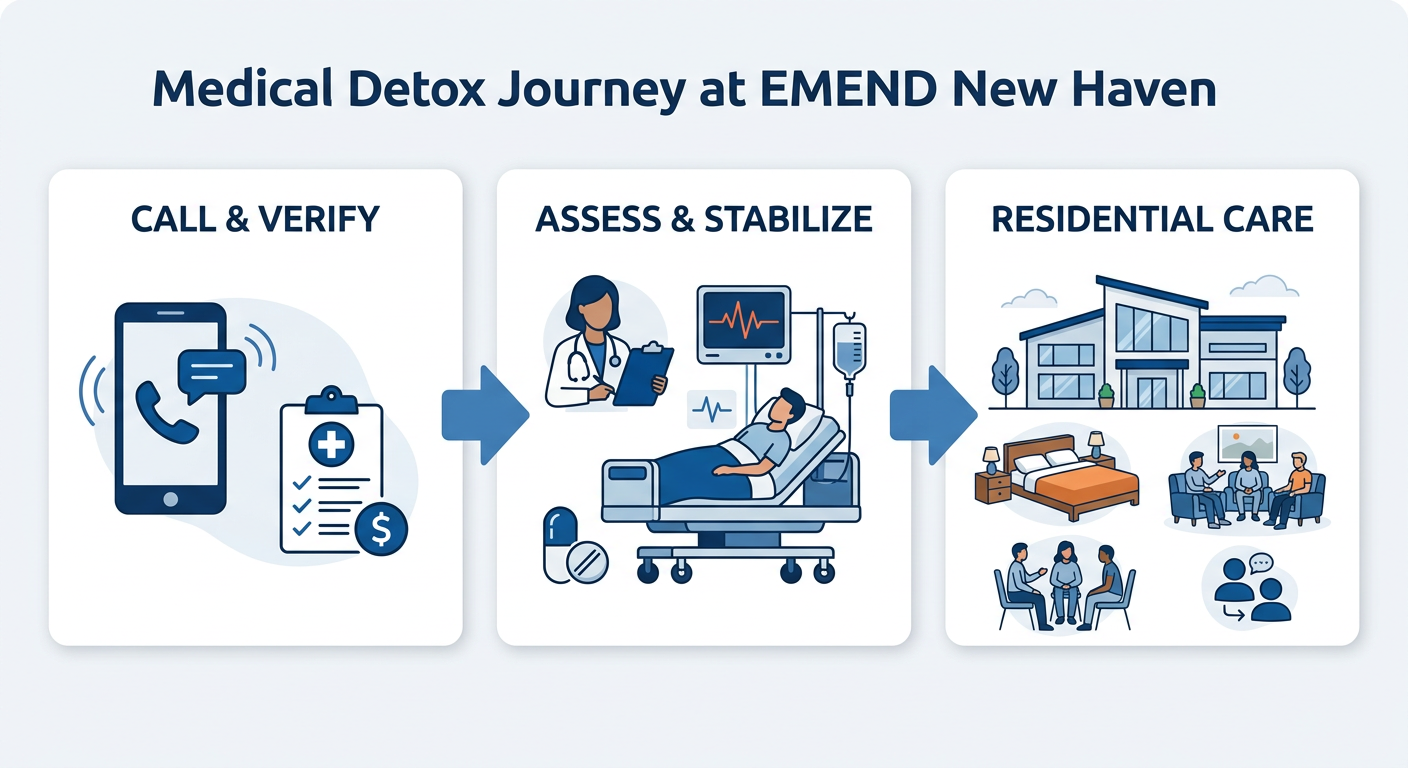
Medical detox journey from intake to residential care
Benefits of medical detox and dual diagnosis care at EMEND New Haven.
Building on this integrated medical model, the path to sobriety requires a supportive environment that extends beyond initial stabilization. The transition from managing physical withdrawal to actively building a new life hinges on structured therapeutic support.
How Dual Diagnosis Residential Programs in CT Support Long-Term Sobriety
Dual diagnosis residential programs in CT provide an immersive, structured environment that supports long-term sobriety by removing individuals from triggers and providing constant therapeutic access. These programs offer medication management for both addiction and mental health conditions, combined with daily individual and group therapies. This 24/7 medically supervised setting allows for real-time adjustments to a patient’s treatment plan based on their clinical progress. By building life skills and recovery support within a safe community, patients develop the resilience needed to manage their co-occurring conditions. Given these benefits, the next step is understanding how to find the right dual diagnosis residential program in Connecticut that aligns with an individual’s specific clinical needs.
Disclaimer: Results may vary based on individual patient conditions and circumstances.
How Medical Detox in Connecticut Works
Here is how the medical detox process works in Connecticut, step by step. When researching connecticut detox centers, it’s important to understand the structured process that guides you from the initial inquiry to a stable transition into ongoing care. The program at EMEND New Haven is designed to prioritize your safety and comfort from the very first phone call.
Step 1: Your Call and Insurance Verification for a Connecticut Detox Center
Your journey at EMEND New Haven begins with a confidential, no-obligation phone call. When you call, you can ask about detox Connecticut services and what information to have ready. During this initial conversation, an admissions coordinator will ask about your substance use history and any co-occurring mental health symptoms to gain a preliminary understanding of your needs. You should have your insurance card and basic personal information ready, as the team will conduct an immediate verification of your benefits. We work directly with most major private insurers, including Anthem and Aetna, to clarify your coverage details and communicate any potential out-of-pocket costs before you arrive at our new haven detox facility. It is important to note that while medically supervised detox is typically covered by insurance in Connecticut, coverage varies by plan, and verification is an essential step to ensure transparency.
Step 2: Medical Assessment and Stabilization During a CT Detox Stay
Once the initial call is complete, the next step is your arrival for a comprehensive medical evaluation. During a medical detox connecticut program, a licensed clinician conducts a thorough assessment that includes a physical exam, a review of your medical and substance use history, and a mental health screening. This information is used to create an individualized treatment plan tailored to your specific situation. To manage the discomfort of withdrawal, the medical team may employ medication-assisted protocols, which are commonly used for alcohol and opioid withdrawal, though individual responses can vary. The Substance Abuse and Mental Health Services Administration (SAMHSA) has established clear guidelines for these nationally recognized safety practices. Throughout your stay, which for many individuals lasts between five and seven days, you will receive 24/7 medical monitoring, with regular vital sign checks and symptom management to ensure your physical and emotional well-being.
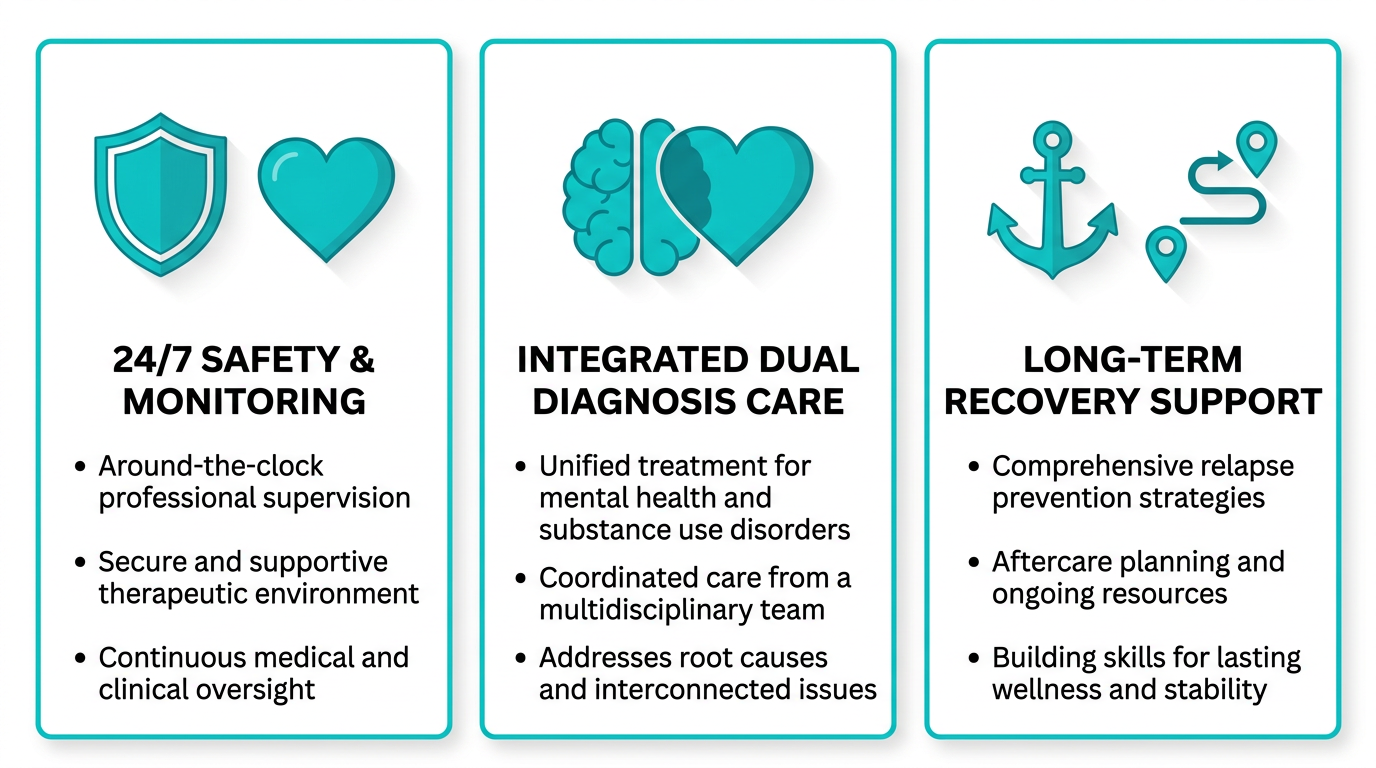
Benefits of medical detox and dual diagnosis care at EMEND New Haven.
Medical detox journey from intake to residential care
Step 3: Transition from Medical Detox to Dual Diagnosis Residential Care
Medical detox is only the foundational first step on the path to recovery, stabilizing your body so you can fully engage in therapeutic work. After your system is medically stable, the focus shifts seamlessly to dual diagnosis treatment connecticut services, which address both the addiction and any co-occurring mental health conditions in a structured residential setting. Our clinical team coordinates your transition, ensuring that the therapeutic momentum built during detox is not lost. Before you move to the residential care phase, case managers work diligently with your insurance provider again to secure authorization for continued treatment, minimizing any administrative stress on you. With detox complete, patients are ready to begin the deeper work of residential treatment, which we will explore in the next section.
Disclaimer: Information on this site is for educational purposes and is not a substitute for professional medical advice. Results may vary based on individual patient conditions and circumstances.
Best Practices for Choosing a Detox Center in Connecticut
To help you make an informed decision, here are best practices for selecting a detox center in Connecticut. When evaluating connecticut detox centers, it is essential to look beyond surface-level claims and examine a facility’s credentials, clinical programming, and financial transparency. A thorough assessment can support recovery by matching you with a program that addresses your medical needs, mental health concerns, and personal circumstances. Many detox programs in ct now offer integrated care, making it easier to receive comprehensive treatment in one location.
Check for Licensing and 24/7 Medical Supervision at CT Detox Centers
A quality medical detox in CT program begins with proper licensing and around-the-clock clinical oversight. According to the Connecticut Department of Mental Health and Addiction Services, all licensed detox centers in Connecticut must meet state regulations governing facility operations, staffing ratios, and treatment protocols. Before committing to a facility, verify that it holds current DMHAS licensure and ask specifically about the credentials of on-site medical staff.
The American Society of Addiction Medicine establishes criteria for medical detoxification that require access to physicians, registered nurses, and mental health professionals who can manage withdrawal symptoms and address complications. A well-staffed center like EMEND New Haven maintains an interdisciplinary team that includes licensed clinicians, nurses, and dedicated support staff to monitor patients continuously. When researching facilities, confirm that medical supervision is available 24 hours a day rather than limited to scheduled check-ins.
Look for Integrated Dual Diagnosis Programs with Proven Therapies
Many individuals requiring detoxification also struggle with co-occurring mental health conditions such as depression, anxiety, or trauma-related disorders. For those seeking drug detox in ct, integrated dual diagnosis care is critical because treating substance use without addressing the underlying mental health component may limit the effectiveness of recovery efforts. A growing number of connecticut detox centers incorporate dual diagnosis treatment into their core programming to address both conditions simultaneously.
When evaluating dual diagnosis treatment connecticut programs, look for evidence-based therapeutic modalities that have demonstrated effectiveness in clinical settings. These should include cognitive behavioral therapy, which helps patients identify and modify thought patterns that contribute to substance use, dialectical behavior therapy for emotional regulation and distress tolerance, and trauma-informed care that recognizes the impact of past experiences on current behaviors. Comprehensive centers integrate these approaches into individualized treatment plans rather than offering a one-size-fits-all curriculum.
Verify Insurance Coverage: What to Ask a Connecticut Detox Center
Private insurance often covers medical detoxification services, but coverage details vary significantly between plans. Many individuals wonder whether their plan through providers like Anthem or Aetna will fund treatment, and the most reliable way to confirm coverage is to contact the admissions team directly for a benefits verification. When speaking with admissions staff, use the following questions as a checklist:
- Is your facility in-network with my specific insurance plan, or would I be responsible for out-of-network costs?
- What are my estimated deductibles, copays, and any out-of-pocket maximums that might apply to detox services?
- Can your team verify my benefits before I arrive so I understand the financial commitment?
- Are all components of treatment, including medications and dual diagnosis care, covered under the verified benefits?
Most reputable detox centers in Connecticut offer free, confidential insurance verification as part of the admissions process. This step helps you understand your financial responsibility before beginning treatment, allowing you to focus on your health rather than billing concerns.
Results may vary based on individual patient conditions and circumstances. Please consult with a healthcare professional for diagnosis and personalized treatment recommendations.
Take the Next Step: Find Your Path to Recovery in Connecticut
Recovery is possible, and finding the right support among Connecticut detox centers is the first important move toward a healthier future. Taking that first step requires courage, but you do not have to do it alone.
The journey begins with a single, confidential phone call to verify your insurance and speak with a compassionate admissions specialist. We handle the logistics of benefits verification and coordinate with most major payors so you can focus entirely on your well-being, not paperwork. This simple step removes barriers and opens the door to immediate, professional care.
At EMEND New Haven, our new haven detox program provides medically supervised care in a supportive environment designed for your safety and comfort. Our clinical team creates an individualized treatment plan that addresses substance use alongside any co-occurring mental health conditions, integrating dual diagnosis treatment Connecticut residents need for whole-person healing. With 24/7 medical oversight and evidence-based therapies, a medical detox in Connecticut is the foundation for a stable recovery.
You do not have to take this step alone. Contact EMEND New Haven today to speak with an admissions specialist and begin your path to recovery.