
Ct Rehab Facilities
Table of Contents
Understanding CT Rehab Facilities
Rehabilitation facilities in Connecticut, commonly referred to as ct rehab facilities, are specialized treatment centers that provide structured programs for individuals struggling with substance use disorders. These facilities offer a safe, supervised environment where patients can begin their recovery journey. For those seeking care in the New Haven area, a rehab new haven program offers specialized options tailored to individual needs, ensuring that each person receives appropriate support.
A comprehensive medical detox connecticut program is often the first step, providing 24/7 medical supervision to manage withdrawal symptoms safely. Beyond detoxification, many centers also offer dual diagnosis treatment ct programs, which address co-occurring mental health conditions such as anxiety or depression alongside substance use. The Substance Abuse and Mental Health Services Administration (SAMHSA) emphasizes that facilities should adhere to evidence-based standards, and the American Society of Addiction Medicine (ASAM) provides clinical criteria to determine the appropriate level of care. These frameworks help ensure that treatment is both effective and individualized, with facilities like those in New Haven integrating these standards into their daily programming.
Levels of Care in Connecticut Rehab Facilities
Choosing the right rehab facilities in Connecticut starts with understanding the different levels of treatment intensity, structure, and medical oversight available. From round-the-clock detox support to flexible outpatient programs, each level is designed to meet you where you are in the recovery process. For many individuals, the journey begins with medical stabilization and continues through structured residential programming before transitioning into long-term community support.
The following table outlines the core levels of care available at CT rehab facilities, highlighting their primary focus, typical length, and the supervision and therapies you can expect.
| Level of Care | Focus | Typical Duration | Supervision & Therapies |
|---|---|---|---|
| Medically Supervised Detox | Withdrawal management and medical stabilization | 3-7 days | 24/7 medical monitoring, medication management |
| Residential Treatment | Structured, live-in treatment for substance use and co-occurring disorders | 30-90 days | 24/7 nursing, individual & group therapy, CBT, DBT, trauma-informed care |
| Outpatient Programs (IOP/PHP) | Flexible treatment while living at home | Varies, often 8-12 weeks | Therapy sessions several times per week, less medical supervision |
Building on this overview, the following sections walk through what you can expect from each stage of care in greater detail.
Medically Supervised Detox in Connecticut
Medically supervised detox is often the critical first step in addiction treatment, providing a safe environment for your body to rid itself of substances. During this 3-to-7-day process, you receive 24/7 medical monitoring–a standard highlighted by government resources from SAMHSA–to manage withdrawal symptoms from alcohol, benzodiazepines, and opioids. For individuals requiring specific opioid withdrawal support, a fentanyl detox New Haven program can provide targeted medication management to stabilize vital signs, control cravings, and ease physical discomfort.
The goal of medical detox in Connecticut is to keep you safe and medically stable, building a foundation for the therapeutic work that follows. Because withdrawal can be unpredictable, having continuous professional oversight ensures complications are addressed immediately.
Residential Rehab in New Haven: What to Expect
After completing detox, many individuals transition to residential treatment, a live-in program where you can focus entirely on healing without outside distractions. A new haven residential treatment center typically offers stays ranging from 30 to 90 days, depending on your clinical needs and progress. According to the American Society of Addiction Medicine (ASAM), this level of care is designed for those who need a structured environment to address both substance use and co-occurring mental health conditions.
Your daily schedule integrates evidence-based therapies such as Cognitive Behavioral Therapy or CBT, Dialectical Behavior Therapy or DBT, and trauma-informed care. For individuals with a dual diagnosis treatment in CT, the program weaves psychiatric care directly into the substance use curriculum, treating depression, anxiety, or trauma alongside addiction rather than as a separate issue.
The Continuum of Care: From Detox to Aftercare
The continuum of care ensures that your progress in one level of treatment is not lost when you step down to a less intensive setting. After residential treatment, a thorough aftercare plan connects you with outpatient resources, recovery meetings, and ongoing therapeutic support. Many programs, including EMEND New Haven’s active alumni network, encourage continued engagement through peer-check-ins and community events.
This integrated pathway–from medical stabilization through immersive residential work and into a supportive alumni community–reinforces sobriety skills in real-world settings. Understanding how each phase builds on the last helps you and your loved ones approach treatment as a connected journey rather than a series of disconnected steps.
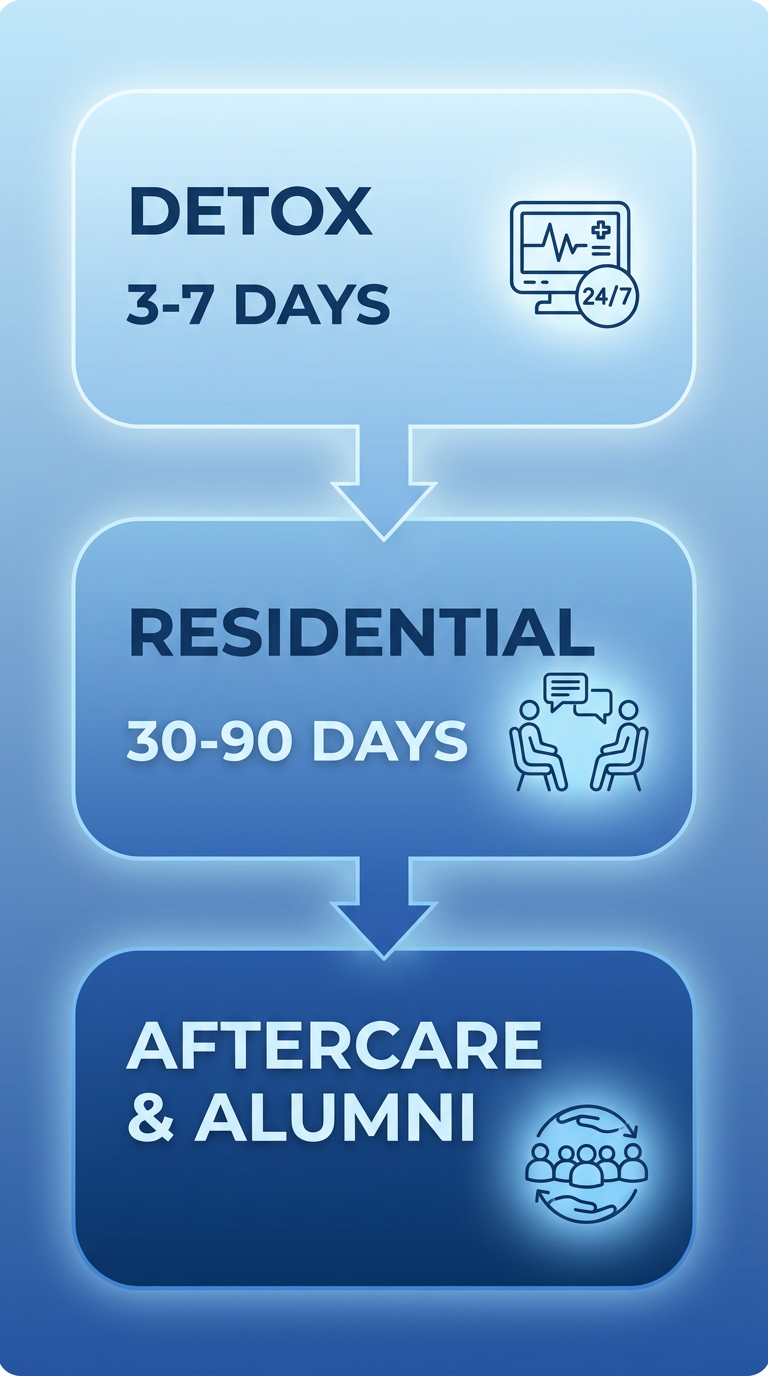
Three levels of care in addiction treatment: detox, residential, aftercare.
Results vary based on individual patient conditions and circumstances. Information on this site is for educational purposes and is not a substitute for professional medical advice.
Dual-Diagnosis Treatment in CT
What Is Dual-Diagnosis Treatment?
Many ct rehab facilities in Connecticut offer specialized programs for individuals facing both a substance use disorder and a mental health condition. The Substance Abuse and Mental Health Services Administration (SAMHSA) defines integrated treatment for co-occurring disorders as care that addresses both conditions simultaneously, rather than treating them separately. Dual diagnosis treatment ct programs use a multidisciplinary team of psychiatrists, therapists, and addiction specialists who coordinate care to stabilize symptoms and build recovery skills. This approach can help improve outcomes by treating the whole person.
Evidence-Based Therapies: CBT, DBT, and Trauma-Informed Care
Rehab centers in CT use several evidence-based modalities in dual-diagnosis care. Cognitive Behavioral Therapy (CBT) helps patients identify and change maladaptive thought patterns and behaviors related to both addiction and mental health. Dialectical Behavior Therapy (DBT) focuses on emotional regulation, distress tolerance, and interpersonal effectiveness, which can be particularly helpful for individuals with borderline personality disorder and substance use. Trauma-informed care follows principles of safety, trustworthiness, peer support, and cultural sensitivity, recognizing how trauma can contribute to co-occurring disorders. According to SAMHSA guidelines, integrating these therapies into treatment is associated with improved engagement and long-term recovery support.
Choosing a Rehab Facility for Dual-Diagnosis Care in CT
When evaluating dual diagnosis treatment ct options, look for facilities with licensed psychiatrists and certified addiction counselors on staff. The American Society of Addiction Medicine (ASAM) recommends using its standardized criteria for level-of-care placement to ensure the program matches individual needs. For individuals seeking fentanyl addiction treatment, it is essential to choose a facility that provides integrated dual-diagnosis care. You can check the State of Connecticut portal for facility licensing and regulatory compliance. Medical detox connecticut services often serve as the first step in these comprehensive programs. Results may vary; consult a healthcare professional for personalized treatment recommendations. Understanding these treatment options helps in selecting the right program for your needs.
What to Expect at a New Haven Rehab Facility
Now that you understand the benefits of choosing a New Haven rehab, let’s walk through what to expect. When researching ct rehab facilities, it helps to know the practical steps involved in starting treatment. At EMEND New Haven, we follow national standards guided by the Substance Abuse and Mental Health Services Administration (SAMHSA) and comply with Connecticut state regulations to ensure your safety and comfort from day one.
What to Bring to Residential Rehab in New Haven
Packing appropriately helps you settle in smoothly. We recommend bringing:
- Comfortable clothing for 7-14 days
- Closed-toe shoes
- Alcohol-free toiletries
- A list of current medications with dosages
- A small amount of cash for incidentals
- Identification and insurance cards
If you require medical detox Connecticut, the facility will provide necessary medical supervision and any required medications. Note that electronics like phones and laptops may be restricted; check the facility’s policy beforehand.
The Admissions Process and Insurance Coverage
The admissions process begins with a confidential phone inquiry, followed by insurance benefits verification. Many plans cover treatment, and our team provides verification assistance. During intake, you’ll undergo a medical and psychological assessment to determine if dual diagnosis treatment ct is appropriate for your needs. The first 24 hours include a medical evaluation, an orientation to facility rules, a meeting with clinical staff, and time to settle into your living space. Once you’re settled in, your personalized treatment plan will begin.
Please note that individual results may vary. This information is for educational purposes and does not guarantee specific outcomes.
Getting Started With CT Rehab Facilities
Entering a rehab facility can feel like a significant step, but understanding the initial process helps make it manageable. For those seeking ct rehab facilities, the journey begins with a simple, confidential phone call. EMEND New Haven guides you through this first stage, starting with an initial consultation to understand your unique situation, followed by thorough insurance verification to clarify coverage and payment options.
First Steps to Recovery in New Haven
To get started, you will speak with an admissions coordinator who listens to your needs and answers your questions about treatment. They will verify your health insurance benefits to determine coverage for levels of care, including medical detox in Connecticut and residential treatment. This step ensures you can focus on your health without financial uncertainty. EMEND New Haven also provides integrated care for co-occurring conditions, a vital component of dual diagnosis treatment in CT.
Aftercare and Alumni Support at EMEND New Haven
Recovery extends well beyond a treatment stay, which is why aftercare planning begins early. Your clinical team works with you to build a continuing care plan that may include therapy and community resources, creating a bridge to daily life. The alumni program at EMEND New Haven offers ongoing connection through events and peer support, reinforcing the foundation built during treatment and promoting long-term wellness.
Results may vary based on individual patient conditions and circumstances. Please consult with a healthcare professional for diagnosis and personalized treatment recommendations.
Making an Informed Decision About CT Rehab Facilities
Choosing among the many options for rehab requires a focus on clinical quality. When evaluating Connecticut rehab centers, the first step is to verify an active license from the Connecticut Department of Public Health. The Substance Abuse and Mental Health Services Administration (SAMHSA) also provides a national treatment locator to help people find licensed and certified programs.
Look for accreditations from the American Society of Addiction Medicine (ASAM) or CARF, which signal that a program meets rigorous standards. As you evaluate any addiction treatment center New Haven, confirm they provide evidence-based practices like medication-assisted treatment and therapies such as CBT and DBT. Ask directly about their approach to co-occurring mental health conditions, as this is central to co-occurring disorder treatment New Haven. Prioritize programs offering 24/7 medical supervision for detox rather than making decisions based solely on amenities.
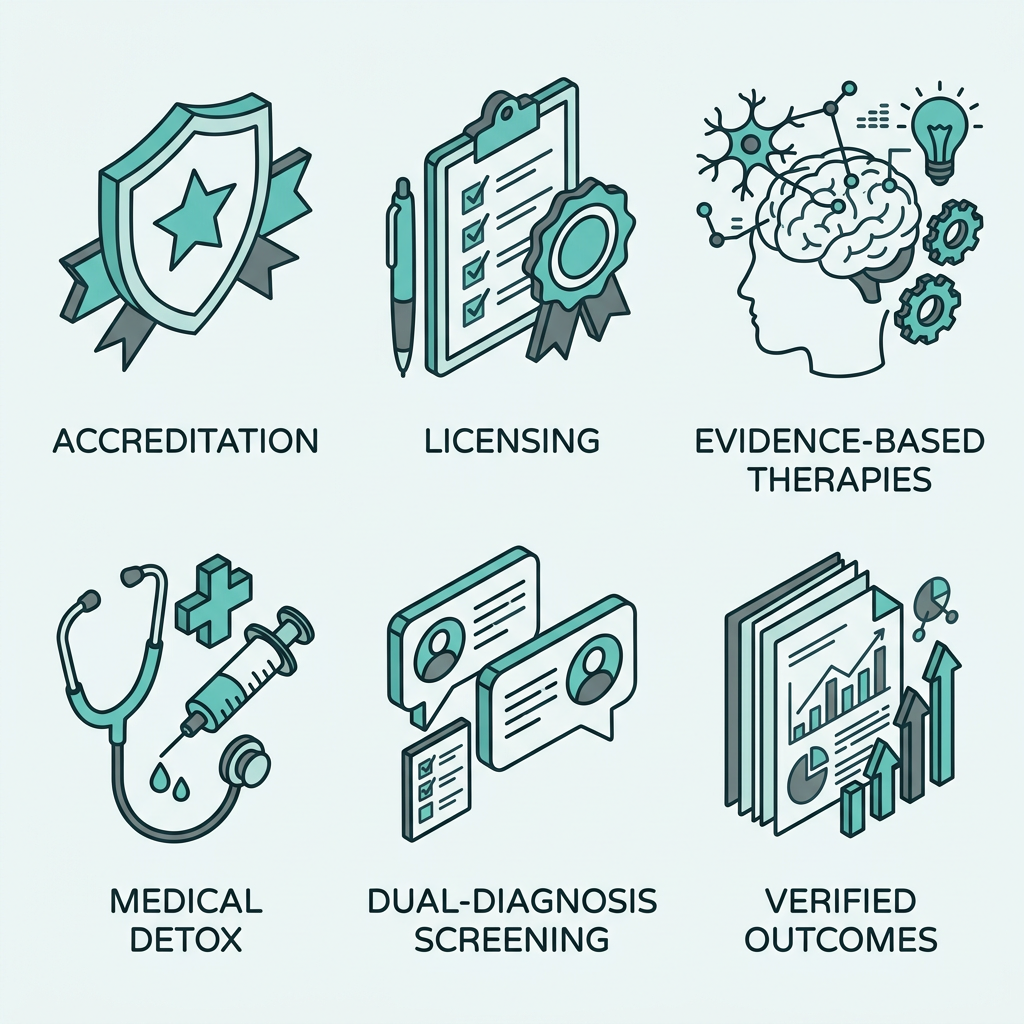
Six decision-factor icons for evaluating Connecticut rehab facilities