
Sober Houses In New Haven Ct
Table of Contents
Understanding the Role of Sober Houses in New Haven, CT
Sober houses in New Haven CT are peer-run, substance-free residences that support individuals transitioning from formal treatment to independent living. These recovery residences bridge the gap between intensive clinical care and everyday life, providing a structured yet flexible environment where individuals practice accountability while rebuilding their lives.
Unlike halfway houses New Haven CT, which may involve government funding or court-ordered stays, sober living homes are typically private-pay and less regulated. While transitional living New Haven CT programs vary widely in structure, sober houses maintain recovery-focused rules such as mandatory drug testing, curfews, attendance at 12-step meetings, and shared household responsibilities. These expectations foster accountability without the intensity of clinical oversight.
Residents often complement their sober living experience with outpatient programming at rehab centers in New Haven CT. Many continue alcohol addiction treatment New Haven while building a foundation for lasting recovery in a supportive, peer-driven community.
Sober Houses in New Haven, CT: Types, Roles, and the Recovery Continuum
In the recovery ecosystem, understanding the differences between various housing options is essential. For individuals seeking stability after clinical care, sober houses in New Haven CT offer a peer-supported, drug-free living environment. These homes differ significantly from halfway houses and residential treatment centers, each serving a distinct role in the journey toward independent living.
Distinguishing Sober Living, Halfway Houses, and Inpatient Treatment
As shown in the table below, these three models operate with unique missions and levels of structure. Sober homes in New Haven provide a bridge to independence but offer no on-site clinical services; residents attend outside therapy. In contrast, halfway houses in New Haven CT often focus on reentry and employment, frequently with a court-ordered mandate, and provide minimal clinical oversight. Residential treatment represents the highest level of care, delivering 24/7 medically supervised clinical services.
| Aspect | Sober House | Halfway House | Residential Treatment |
|---|---|---|---|
| Primary Purpose | Drug-free, peer-supported independent living | Transitional living for reentry, often court-ordered | Structured, medically supervised clinical care |
| Clinical Services | None on-site; residents attend outside therapy | Minimal; focus on employment and life skills | 24/7 medical detox, therapy, nursing, case management |
| Program Length | 3-12+ months | 3-12 months | Typically 30-90 days |
| Level of Structure | House rules, curfews, drug testing, peer accountability | Structured schedule of work, meetings, curfew | Highly structured daily schedule with medical oversight |
| Insurance Coverage | Usually private pay; some scholarships available | Often publicly funded or private pay | Broadly covered by major health insurance plans |
| Admission Requirements | Completion of detox or residential treatment preferred | Often requires referral from corrections or treatment | Clinical evaluation; medically appropriate level of care |
The key distinctions lie in clinical oversight and purpose. Recovery residences in New Haven prioritize peer accountability, with house rules and drug testing forming the core of their structure, according to Connecticut’s state government framework. Understanding these differences helps individuals make informed decisions about the appropriate level of care.
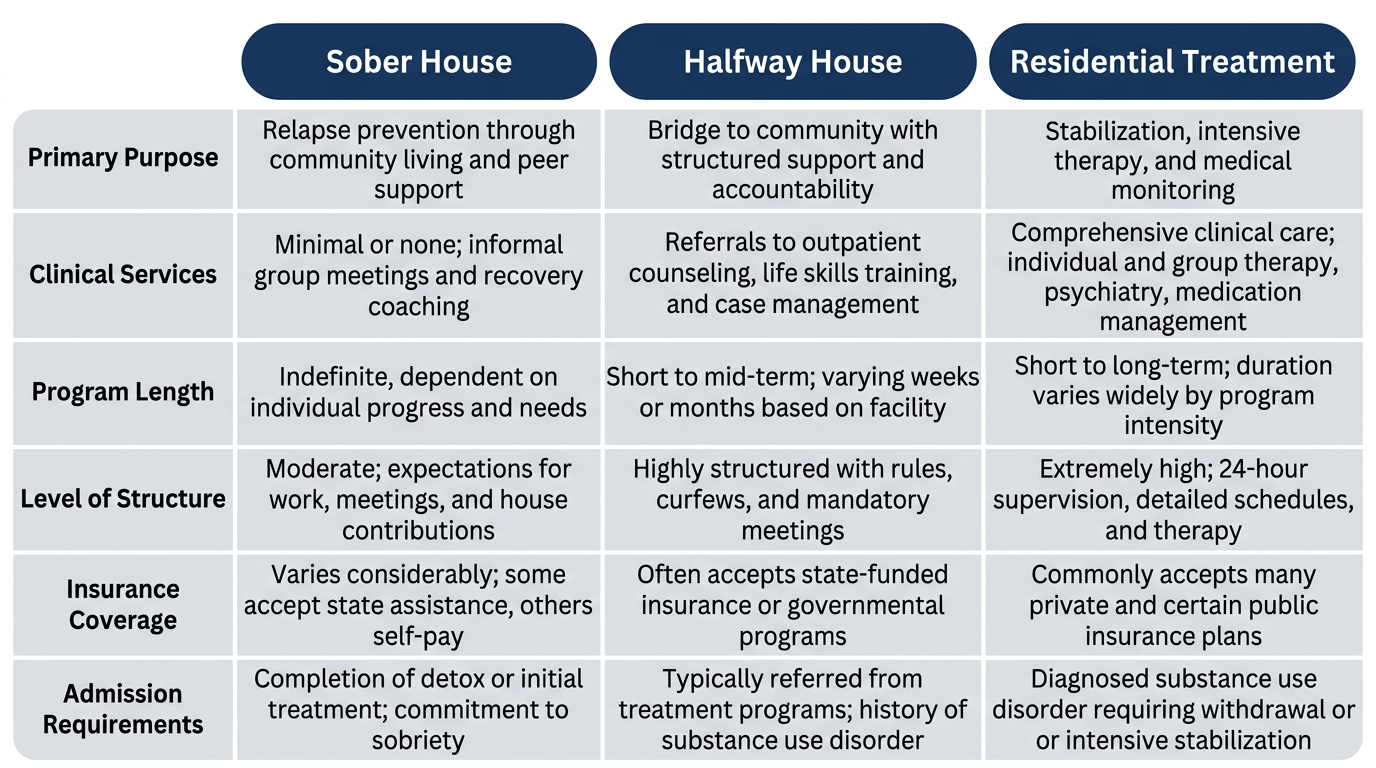
Comparison of sober living, halfway house, and residential treatment in New Haven.
Comparison chart of sober house, halfway house, and residential treatment structures.
The Recovery Continuum: From Detox to Sober Living in New Haven
A common path through recovery in New Haven follows a structured continuum of care. Many individuals begin with medical detox to safely manage withdrawal, then step down to a residential program for intensive therapy. After completing alcohol detox residential treatment, a person may transition into a transitional living New Haven CT home to reinforce their sobriety skills in a less restrictive environment. This progression from highly structured clinical care to a supportive, peer-based community allows for a gradual return to autonomy.
New Haven sober living homes act as this critical bridge, offering the accountability of a structured environment without the intensity of round-the-clock medical care. Residents continue their outpatient therapy and build life skills, applying the relapse-prevention tools learned in treatment to daily life.
Who Benefits from Sober Living in New Haven?
The typical candidate for a sober house has already completed a higher level of care and is motivated to sustain their recovery. Many residents have recently completed a new haven drug treatment program and need structured peer support before returning to fully independent life. This environment particularly benefits individuals who thrive with peer accountability and are building a foundation of employment, education, or family reconnection.
These homes reinforce recovery through mandatory house meetings, curfews, and a shared commitment to sobriety. For those stepping down from clinical care, the community and structure of a recovery residence may support a sustainable transition into long-term independent living.
Rules, Admission, and Structure: What to Expect in a New Haven Sober House
Once you understand the benefits, it’s important to know what to expect in terms of rules, costs, and admission. Sober living residences in New Haven provide a structured, drug- and alcohol-free environment where residents can strengthen their recovery through accountability and peer support. Choosing to live in one of the sober houses in New Haven CT is a significant step toward long-term wellness, but understanding the framework is essential before making the transition.
Typical Stay Lengths in New Haven Sober Living
Most New Haven sober living homes recommend a minimum 3-month commitment, though the most positive recovery outcomes are associated with stays of 6 to 12 months. According to professional standards from the American Society of Addiction Medicine, longer stays in sober living environments support sustained sobriety by giving individuals time to practice new life skills and build supportive routines. Recovery housing in New Haven is designed so that progress, rather than a strict deadline, determines the appropriate length of stay. Residents who actively engage in employment, therapy, and house responsibilities often find extended participation reinforces their stability.
Insurance and Payment Options for Sober Living in New Haven
Payment for halfway houses New Haven CT is typically private-pay, with monthly costs ranging from $500 to $1,500 depending on location, amenities, and level of structure. Private-pay means residents pay directly rather than billing an insurance plan. It is important to understand that health insurance rarely covers room and board in sober living residences in New Haven, though clinical treatment services like therapy or medical detox may be covered separately. Some Connecticut state programs, as indicated in official Connecticut State Government resources, offer limited publicly funded beds to support individuals who qualify based on financial need or specific program eligibility.
Admission Requirements for Sober Houses in New Haven
Admission typically requires completion of a new haven detox program or residential treatment, plus a demonstrated willingness to follow house rules. Sober living residences maintain consistent admission criteria to protect the environment for all residents.
Common requirements for transitional living New Haven CT include:
- Completion of a medically supervised detox or residential treatment episode
- Documented drug- and alcohol-free status
- Agreement to random drug testing
- Willingness to attend house meetings and fulfill assigned chores
- Adherence to curfews and guest policies
- Maintaining employment, active job-seeking, or enrollment in a structured program
- Minimum age of 18 and no history of violent behavior
With these expectations in mind, the next section explores the daily routines and support systems available in New Haven sober houses.
From Treatment to Sober Living: Transitional Options in New Haven CT
After completing a residential treatment program, the next logical step is often a structured living environment that reinforces the recovery gains made in clinical care. This transition is a critical period, and understanding the options for sober houses in New Haven CT helps you plan for lasting sobriety with confidence and support.
Transitioning from EMEND New Haven to a Sober Home
The move from intensive treatment into a less restrictive sober home in New Haven begins during your early days in residential care. Our clinical team collaborates with you on a discharge plan that coordinates directly with local recovery residences. This ensures you maintain continuity of care while building independent living skills. For details on the clinical program that precedes this step, see how we treat addiction new haven. The alumni support network remains available to provide connection and guidance after you leave our facility.
Dual-Diagnosis Aftercare and Sober Living Integration
Ongoing stability frequently depends on continuing the dual-diagnosis work started during residential treatment. Your aftercare plan seamlessly integrates individual therapy, medication management, and recovery coaching to address co-occurring mental health conditions. These supports travel with you into transitional living in New Haven, preventing gaps that can occur between levels of care. State guidelines, accessible through the Connecticut DMHAS resource on portal.ct.gov, can help you verify that a recovery residence is prepared to support complex clinical needs.
How to Choose a Sober House in New Haven CT
Evaluating a sober home requires looking at several practical factors. Prioritize properties close to EMEND so you can easily continue outpatient appointments. Assess the house structure by asking about curfews, chore requirements, and drug testing policies. Inquire whether staff includes certified recovery coaches or licensed counselors with formal qualifications. Finally, consider the peer culture to determine if a 12-step, SMART Recovery, or another philosophy-based approach matches your preferences. These evidence-based considerations help you select a halfway house in New Haven CT that truly supports your recovery.
Getting Started: Admission and Best Practices for Sober Living in New Haven
Understanding what sober living entails is an important first step, but knowing exactly how to get started and how to succeed once you arrive is what turns intention into lasting recovery. This guide walks you through the admissions pathway for sober houses in New Haven CT and shares proven best practices for maximizing your experience.
Step-by-Step Admissions Process for Sober Houses in New Haven
The typical journey begins with a comprehensive clinical evaluation. According to the American Society of Addiction Medicine (ASAM), this assessment uses standardized criteria to determine the appropriate level of care, with many sober homes and halfway houses in New Haven CT situated at ASAM Level III or IV. After completing a detox or residential treatment program, your provider will issue a referral. The next steps are to tour at least two recovery residences in New Haven, submit a formal application, and review the house rules–which commonly include curfew, random drug testing, and chore assignments.
Maximizing Your Sober Living Experience in Connecticut
Success in a transitional living New Haven CT environment is built on structure and active engagement. Make it a non-negotiable routine to attend at least three 12-step or SMART Recovery meetings each week. Simultaneously, maintain full-time employment, school enrollment, or a structured volunteer schedule of 30 or more hours per week to rebuild accountability. During your first 90 days, lean heavily into the support system around you by actively engaging with house case management or a recovery coach. Building a strong peer support network within the home will serve as your foundation for navigating challenges and celebrating milestones together.
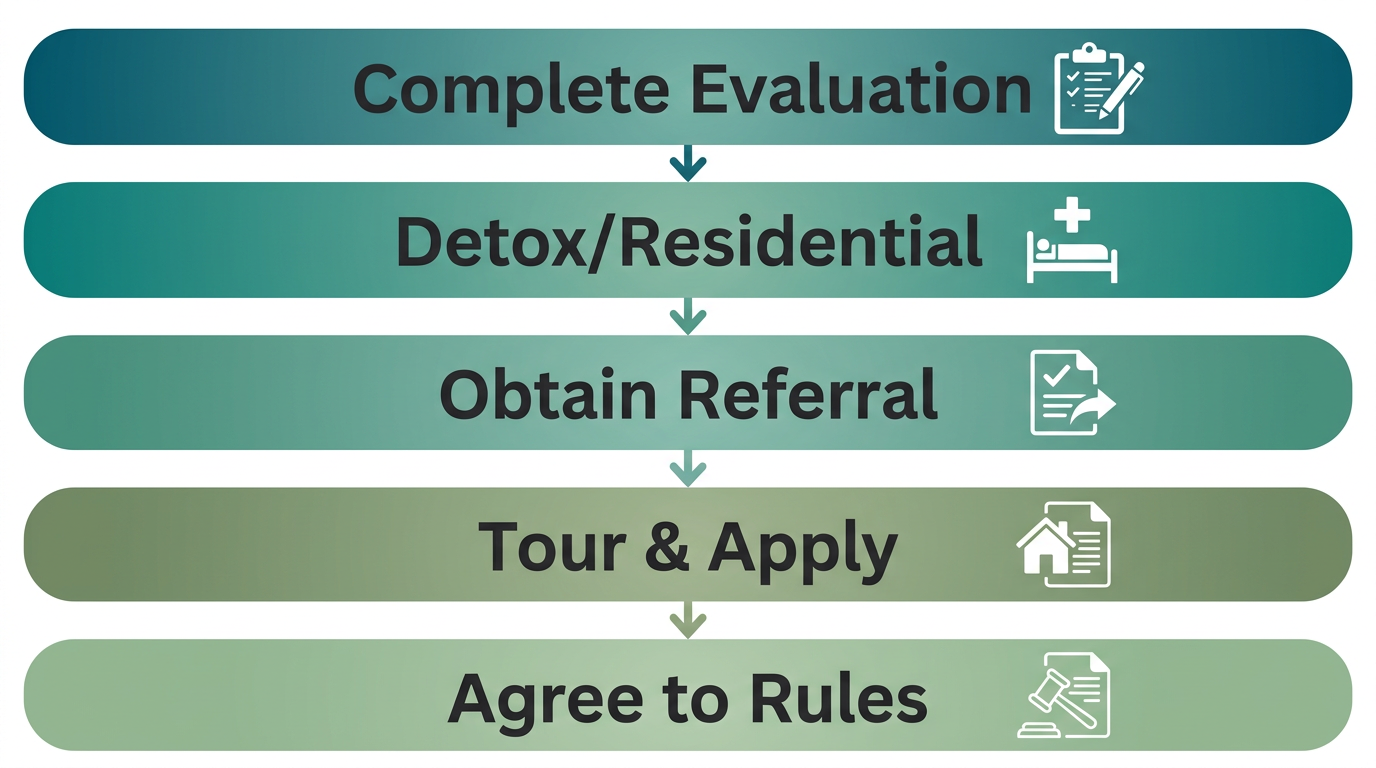
Admissions process for sober living centers in New Haven
How EMEND New Haven Supports Your Transition to Sober Living
As your treatment provider, our discharge planning team works closely with you to identify appropriate sober homes in New Haven that accept referrals from our detox and residential programs. We coordinate the transfer of your clinical records and provide a continuity-of-care summary to the sober home’s staff, ensuring a seamless handoff. While we can help identify appropriate options, placement is not guaranteed. With this support system in place, you are ready to explore the sober home that best fits your recovery goals.
Information on this site is for educational purposes and is not a substitute for professional medical advice.
Building a Foundation for Lasting Sobriety in New Haven
For individuals searching for sober houses in New Haven CT, building a lasting recovery means more than completing a treatment program–it requires a stable, structured environment where new habits can take root. Transitional living options, including halfway houses New Haven CT residents turn to, offer the peer support and daily routine that reinforce the clinical gains made during detox and residential care. Transitional living New Haven CT provides a bridge between intensive treatment and independent life, creating a space where individuals practice accountability, rebuild confidence, and strengthen their commitment to sobriety. The next section explores the types of sober homes available in New Haven and how they provide the structure needed for lasting recovery.