
Rehabs Connecticut
Table of Contents
Rehabs in Connecticut
When exploring rehabilitation centers in CT, it’s important to consider the types of programs available. Connecticut offers a range of options including medical detox, structured residential treatment, and flexible outpatient programs. Many rehab centers in Connecticut provide dual diagnosis treatment for co-occurring mental health conditions, ensuring whole-person care. The Substance Abuse and Mental Health Services Administration (SAMHSA) is a valuable government resource, offering a National Helpline at 1-800-662-HELP and an online treatment locator to help you find appropriate care. For example, EMEND New Haven offers a full continuum of services, from medically supervised detox to residential care and therapy, all rooted in evidence-based practices. We encourage you to explore your options and consult a healthcare professional to find the personalized approach that best supports your recovery journey.
Addiction Treatment Options in Connecticut
When exploring rehabs Connecticut, understanding the available treatment options is an important first step toward recovery. The state offers a comprehensive continuum of care designed to meet individuals at every stage of their journey, from initial stabilization to ongoing support. This overview examines the levels of care, therapeutic approaches, and medical detoxification services commonly available through Connecticut rehab centers.
Levels of Care Available in Connecticut
The American Society of Addiction Medicine (ASAM) has established criteria that define four primary levels of care, each matched to individual patient needs. These levels create a structured pathway for recovery that can adapt as a person progresses through treatment.
When evaluating connecticut rehab centers, you will typically find medical detoxification as the entry point, followed by residential or inpatient treatment providing 24/7 structured support. Partial hospitalization programs (PHP) offer intensive daytime therapy while allowing patients to return home in the evenings, and intensive outpatient programs (IOP) provide flexible scheduling for those transitioning back to daily responsibilities. Inpatient drug rehab in Connecticut typically includes round-the-clock medical supervision within a structured therapeutic environment.
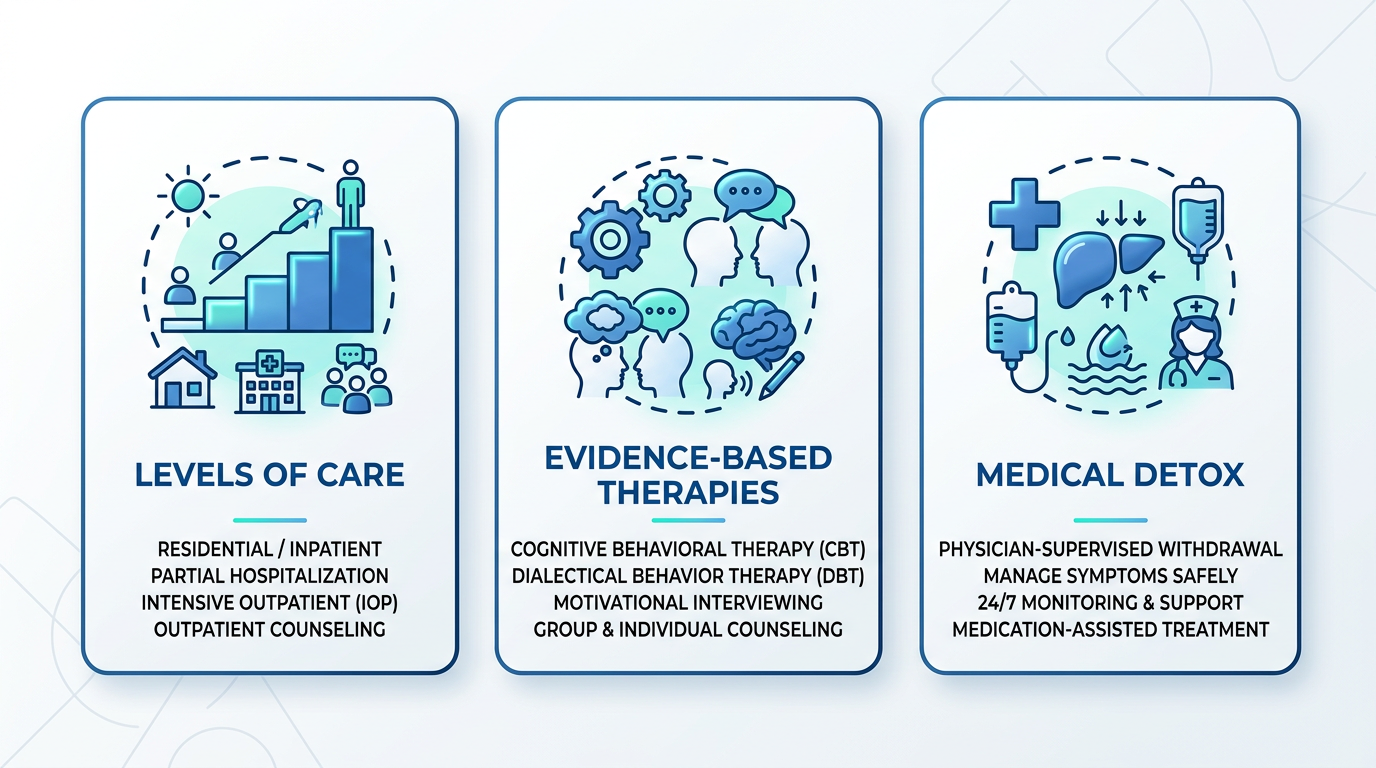
Three core components of addiction treatment summarized
Evidence-Based Therapies and Dual Diagnosis Support
Connecticut rehab facilities commonly employ evidence-based therapies that research has shown to be effective in treating substance use disorders. According to the Substance Abuse and Mental Health Services Administration (SAMHSA), these approaches form the foundation of quality addiction care. Cognitive Behavioral Therapy (CBT) helps patients identify and modify thought patterns that contribute to substance use, while Dialectical Behavior Therapy (DBT) builds skills for emotional regulation and distress tolerance.
Trauma-informed care is another modality frequently integrated into Connecticut treatment programs, recognizing that many individuals with substance use disorders have experienced significant trauma. Dual diagnosis treatment New Haven and other locations across the state addresses co-occurring mental health conditions such as anxiety, depression, or PTSD alongside substance use disorders, providing coordinated care for both conditions simultaneously.
Medical Detoxification and Withdrawal Management
Medical detoxification is typically the first step in the treatment process, providing medically supervised withdrawal management in a safe, controlled environment. During detox, healthcare professionals monitor vital signs, manage withdrawal symptoms, and can administer medications when appropriate to ease discomfort and reduce medical risks.
The ASAM criteria guide decisions about the appropriate level of detoxification care based on the severity of withdrawal risk, the substance involved, and the presence of co-occurring medical or psychiatric conditions. SAMHSA’s National Helpline at 1-800-662-HELP connects individuals to treatment resources and can assist in locating detox services throughout Connecticut. Results vary based on individual patient conditions and circumstances. Please consult with a healthcare professional for diagnosis and personalized treatment recommendations. Information on this site is for educational purposes and is not a substitute for professional medical advice.
Service Availability and Insurance Verification
When exploring rehabs in Connecticut, verifying insurance coverage is a critical first step that can significantly ease the financial burden of treatment. Understanding your benefits early helps you make informed decisions about the level of care you can access. The table below outlines common program types available in Connecticut to help you match your needs with the right treatment setting.
| Program Type | Typical Setting | Program Duration | Best For |
|---|---|---|---|
| Medical Detoxification | 24-hour medical supervision | 5-14 days | Stabilization during acute withdrawal |
| Residential Treatment | Structured live-in facility | 30-90 days | Intensive, immersive recovery |
| Partial Hospitalization Program | Day treatment at clinic | Varies (often 30+ days) | Step-down from residential |
| Intensive Outpatient Program | Evening or afternoon sessions | Varies (often 8-12 weeks) | Flexible schedule, less supervision |
These programs represent a full continuum of care, from medically managed withdrawal to flexible outpatient support. Choosing the right level depends on your clinical needs, living situation, and treatment history, a decision best made in consultation with professionals.
Verifying Insurance Coverage for Rehab
To check your benefits, you will need your insurance card handy with the member ID and group number. Your coverage for an inpatient drug rehab Connecticut facility depends on these details, as well as the facility’s NPI or tax ID. Contacting your provider clarifies the specific level of coverage before you commit to a program. Individuals requiring dual diagnosis treatment in New Haven should confirm that their plan includes services for co-occurring mental health and substance use disorders.
How Admissions Teams Help with Insurance
Admissions teams in Connecticut handle the verification process so you don’t have to. They contact your insurance company directly to confirm your coverage level, deductible, copay, and out-of-pocket maximum. Admissions teams can verify if your plan covers residential treatment centers in ct and will coordinate any required prior authorization. Our team at EMEND New Haven works with most major payors, including Anthem, Cigna, Aetna, ConnectiCare, and Husky Health, offering a free, confidential benefits check with no obligation to enroll.
State-Funded and Low-Cost Options
Without insurance, you still have options through Connecticut DMHAS-funded programs, which often use sliding-scale fees based on income. For those without coverage, state-funded rehab facilities in ct and community health centers may provide low-cost detox and residential treatment through state grants. These resources help ensure that the cost of care is not a permanent barrier to starting recovery. Once coverage is confirmed, the next step is completing the admissions process to enter a program that fits your needs.
Results may vary based on individual patient conditions and circumstances. Insurance verification is a free, confidential service.
Local Considerations in New Haven
When exploring rehabs Connecticut has to offer, it is important to focus on local factors that influence long-term recovery. Choosing a facility in New Haven means you are not just selecting a program you are integrating into a supportive local ecosystem designed for sustainable wellness.
Dual Diagnosis and Co-Occurring Disorder Care
Comprehensive dual diagnosis treatment New Haven programs are essential for individuals facing co-occurring mental health and substance use disorders. Local providers integrate evidence-based modalities such as Cognitive Behavioral Therapy (CBT), Dialectical Behavior Therapy (DBT), and trauma-informed care. This integrated approach ensures that root causes are addressed alongside addiction, providing a stable foundation for lasting recovery in the local community.
Proximity and Aftercare Planning
Selecting a facility close to home provides significant logistical and therapeutic advantages. By staying local, you maintain natural connections to family and support networks, which is vital for emotional reinforcement. Addiction treatment centers in Connecticut emphasize aftercare planning as a critical step; local alumni programs and outpatient services make it far easier to transition smoothly from a structured residential environment back into day-to-day community life without losing momentum.
Evaluating Residential Programs in New Haven
Assessing an inpatient drug rehab Connecticut facility requires an evaluation of its daily structure and medical supervision standards. Look for robust therapeutic environments that include 24/7 medical oversight and adherence to strict compliance benchmarks. According to the State of Connecticut, licensed programs must meet rigorous health regulations, ensuring a safe and professional setting where patients can focus entirely on their recovery journey.
Guide to Choosing a Rehab in Connecticut
When researching rehabs Connecticut, it is essential to evaluate each facility carefully to ensure it aligns with your personal recovery goals and clinical needs. Making this decision can feel overwhelming, but a structured approach that considers accreditation, levels of care, therapy options, and program length will help you find the right fit. The American Society of Addiction Medicine provides a widely accepted framework for matching patients to the appropriate treatment intensity, and the Substance Abuse and Mental Health Services Administration offers guidelines for integrated care. By following the steps below, you can move forward with greater confidence.
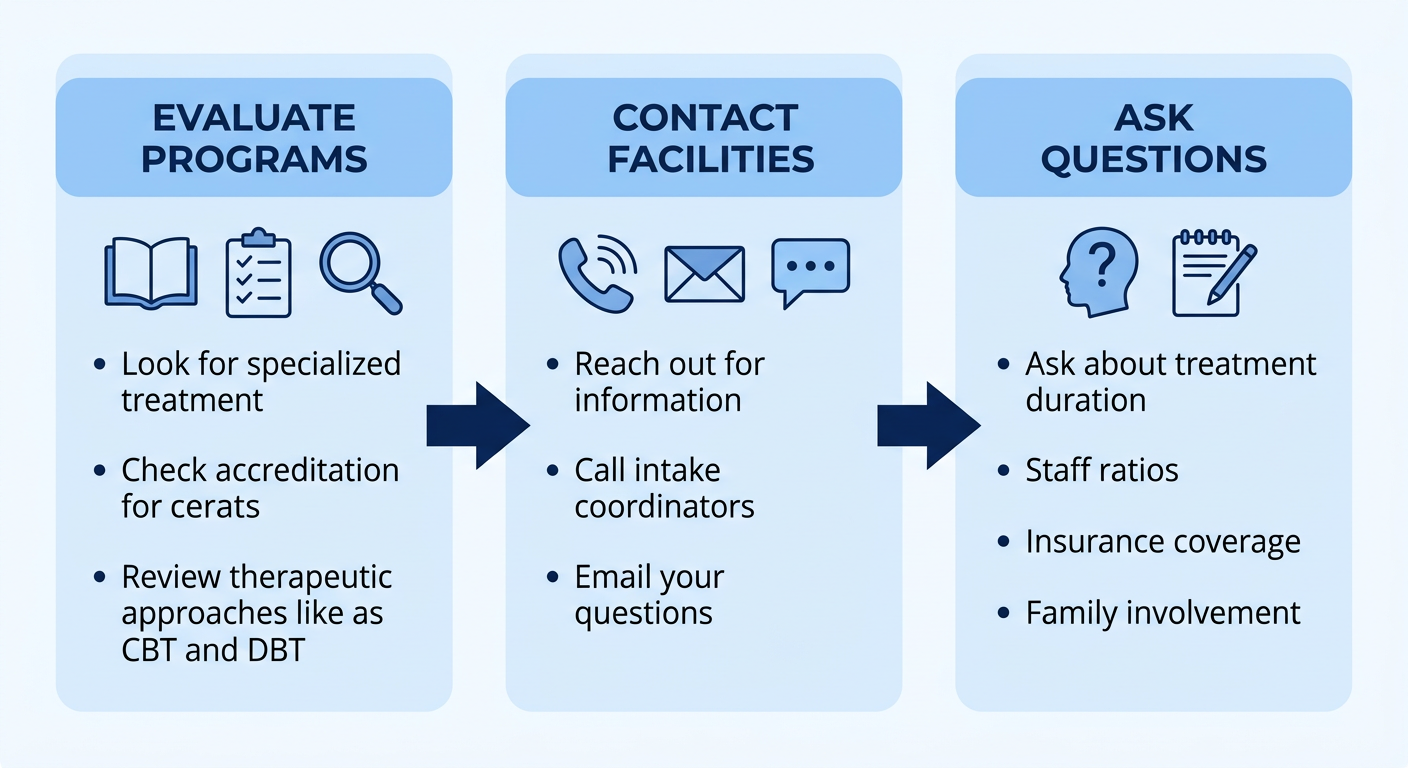
Simplified guide to choosing a rehab in Connecticut
Step-by-Step Guide to Choosing a Rehab
- Verify accreditation and licensing. Look for national accreditation from organizations such as CARF or The Joint Commission, and confirm the facility holds a current Connecticut state license.
- Assess levels of care. If you require inpatient drug rehab Connecticut, prioritize programs that offer medical detox and residential treatment. The ASAM criteria can help you determine whether detox, residential, or outpatient care is most appropriate for your situation.
- Evaluate therapy modalities. The best programs provide a blend of evidence-based therapies, including Cognitive Behavioral Therapy, Dialectical Behavior Therapy, trauma-informed care, and both group and individual sessions.
- Check program length and aftercare. Ask how long the program lasts and what discharge planning looks like. A strong aftercare plan that includes alumni support and community resources can make a significant difference in long-term recovery.
Contacting Facilities and Scheduling Assessments
Reaching out to treatment centers can feel intimidating, but being prepared makes the process easier. Use these practical tips when you call:
- Have your insurance card and basic personal information ready before you dial.
- Start with a simple script such as, “I’m calling to learn more about your program and to see if you accept my insurance. Can you tell me about your admission process and current bed availability?”
- Take notes on each conversation so you can compare options later.
Our admissions team at EMEND New Haven is available to conduct a free, confidential insurance benefits verification and answer your questions without any obligation. We believe everyone deserves access to accurate information, regardless of where they ultimately seek treatment.
Questions to Ask Before Enrollment
Before you commit to a program, speaking directly with admissions staff can clarify whether the facility is equipped to meet your unique needs. Consider asking these questions:
- Does the program include family therapy or visitation?
- What is the staff-to-patient ratio during the day and overnight?
- Is dual diagnosis treatment New Haven available for co-occurring mental health conditions?
- How do you plan aftercare and coordinate with outpatient providers after discharge?
- Do you use medication-assisted treatment as part of your protocols, if clinically indicated?
Information on this site is for educational purposes and is not a substitute for professional medical advice. Results may vary based on individual patient conditions and circumstances. Please consult with a healthcare professional for diagnosis and personalized treatment recommendations.
Guide Next Steps
If you are searching for rehab places in CT, the next step is to contact EMEND New Haven today to begin the intake process for a confidential assessment. Our team can quickly verify your insurance benefits to determine coverage for inpatient drug rehab in Connecticut. We make admissions supportive and easy, so you can focus on starting treatment for dual diagnosis treatment in New Haven with confidence.