
Rehab Centers Connecticut
Table of Contents
Understanding Rehab Centers in Connecticut
Rehab centers in Connecticut provide structured, professional treatment for individuals struggling with substance use disorders. These facilities offer a safe environment where patients can begin recovery under the guidance of licensed clinicians and medical staff. For residents near New Haven, rehab centers in New Haven CT offer comprehensive care that addresses both addiction and its underlying causes.
Why Choose Connecticut for Rehab?
In Connecticut, rehab centers offer a full continuum of care designed to meet patients at every stage of recovery. The treatment spectrum typically includes medical detoxification, residential treatment, and outpatient programs. Many facilities also provide dual diagnosis treatment for individuals managing co-occurring mental health conditions alongside substance use disorders. This integrated approach ensures that both conditions receive simultaneous attention, which research shows leads to better outcomes.
Many programs begin with a comprehensive medical assessment followed by detox in CT to manage withdrawal safely under 24-hour supervision. Rehab centers throughout Connecticut then transition patients into residential or outpatient care, where evidence-based therapies form the foundation of treatment.
The Importance of Accreditation
Quality addiction treatment depends on adherence to established clinical standards. The Substance Abuse and Mental Health Services Administration (SAMHSA) certifies treatment facilities that meet rigorous requirements for safety and effectiveness. Additionally, many reputable Connecticut rehab centers follow the American Society of Addiction Medicine (ASAM) criteria for patient placement and treatment planning. These benchmarks ensure that individuals receive care tailored to their specific needs rather than a one-size-fits-all approach.
Accredited centers integrate evidence-based therapies into individualized treatment plans, following proven protocols that support lasting recovery. While no facility can guarantee results, choosing a program with proper accreditation provides confidence that the treatment meets nationally recognized quality standards.
Information on this site is for educational purposes and is not a substitute for professional medical advice.
Inpatient Rehab vs Outpatient Programs: What’s Right for You?
When comparing rehab centers in Connecticut, one of the most important decisions you will face is choosing between inpatient rehab and outpatient programs. Each level of care serves a different purpose, and understanding these differences is essential for finding the path that best supports your recovery. The right choice depends on your personal health history, the severity of your addiction, and the stability of your home environment.
What Is Inpatient Rehab?
Inpatient rehab, also known as residential treatment, is a live-in healthcare setting where you receive 24/7 structured care and medical monitoring. During your stay, you sleep on-site at the facility and follow a daily schedule that typically includes individual therapy, group counseling, and life-skills training. This immersive environment removes you from everyday triggers and provides a protected space to focus entirely on healing.
In Connecticut, residential facilities offer varying levels of medical support. EMEND New Haven, an 88-bed facility, provides this level of care with access to evidence-based therapies. For example, their clinical program incorporates dialectical behavior therapy new haven to help patients build emotional regulation and distress tolerance skills. This structured approach ensures that medical and therapeutic support is available around the clock.
Key Differences Between Inpatient and Outpatient Programs
While both rehab centers in Connecticut aim to support long-term recovery, the structure of inpatient and outpatient programs differs significantly. Here are the primary distinctions:
- Structure and Supervision: Inpatient rehab offers continuous medical and emotional oversight. Outpatient programs, by contrast, require you to attend treatment sessions for a set number of hours per week while living at home.
- Medical Support: Inpatient care often includes medically supervised detoxification to manage withdrawal symptoms safely. Outpatient treatment may coordinate with external medical providers, but on-site supervision is less intensive.
- Ability to Leave: In residential treatment, you remain on campus throughout your stay. Outpatient participants can leave the facility after each session, maintaining work or family obligations.
- Best Fit: Mild-to-moderate substance use disorders often respond well to outpatient care, while severe addictions or unstable home environments typically require the protected structure of inpatient treatment.
Programs that incorporate trauma informed care addiction recovery can be especially beneficial for individuals with a history of trauma, as they address the root causes that often underlie substance use disorders. The American Society of Addiction Medicine provides widely recognized criteria for determining which level of care is clinically appropriate based on a thorough assessment of your needs.
How to Decide Which Level of Care Is Right for You
Choosing between inpatient and outpatient treatment is not a decision you need to make on your own. A clinical assessment conducted by a licensed professional is necessary to determine the appropriate level of care. Several key factors will be evaluated during this process:
- Severity of Addiction: The intensity and duration of your substance use help determine whether you need round-the-clock support or can manage with less frequent therapy.
- Co-Occurring Mental Health Conditions: If you experience depression, anxiety, or other conditions alongside addiction, dual diagnosis treatment becomes critical. Integrated care that addresses both conditions simultaneously offers the most effective path forward.
- Previous Treatment History: If you have completed treatment before and relapsed, a higher level of care may be recommended.
- Home Environment Stability: A supportive, substance-free living situation makes outpatient care more viable. If your environment presents high risk, residential treatment provides a safer alternative.
- Insurance Coverage: Your health plan may cover both options, but prior authorization and benefits verification are essential steps in the admissions process.
According to the Connecticut Department of Mental Health and Addiction Services, state-licensed facilities must adhere to established standards that prioritize patient safety and individualized care. If inpatient rehab seems like the right fit, the next section will walk you through what a typical day looks like and how to prepare for your stay.
Results may vary based on individual patient conditions and circumstances. Please consult with a healthcare professional for diagnosis and personalized treatment recommendations. Information on this site is for educational purposes and is not a substitute for professional medical advice.
The Importance of Dual-Diagnosis Treatment in Rehab
Achieving lasting recovery from substance use requires more than just addressing the addiction itself. For many individuals, there is an underlying mental health condition that also demands professional care, which is why dual diagnosis treatment is so critical. A dual diagnosis is defined as the co-occurrence of a substance use disorder and a mental health condition–such as anxiety, depression, PTSD, or bipolar disorder. According to authoritative government data from the Substance Abuse and Mental Health Services Administration (SAMHSA), a significant number of individuals struggling with substance use also experience a mental health disorder. If only one condition is treated while the other is ignored, the untreated symptoms can often trigger a return to substance use, resulting in a cycle of relapse and frustration.
What Is Dual Diagnosis?
It is not one condition causing the other, but rather two separate disorders that are intertwined in a way that makes each one more severe. Without integrated care, the likelihood of relapse increases dramatically because the underlying emotional pain and psychological triggers remain unaddressed. Common co-occurring disorders include major depressive disorder, generalized anxiety disorder, post-traumatic stress disorder (PTSD), and bipolar disorder, though many other combinations are possible. When you participate in an integrated dual diagnosis program, you treat the whole person, not just the addiction. Government health data indicates that integrated treatment offers the most effective path to breaking this destructive cycle for people with multiple, layered behavioral health challenges.
How Integrated Dual-Diagnosis Treatment Works
Integrated treatment is a cohesive approach where all therapeutic interventions work together under a single, coordinated care plan. Rather than seeing separate clinicians for mental health therapy and substance use counseling, you receive services from a unified team that communicates regularly. This model includes combined therapy sessions, medication management, and coordinated aftercare planning. Individual therapy addiction recovery in Connecticut focuses on personal triggers and history, while proven modalities like CBT (Cognitive Behavioral Therapy) help you reframe negative thought patterns that fuel both disorders. DBT (Dialectical Behavior Therapy) is also highly effective, teaching you emotional regulation and distress tolerance skills that are critical to maintaining sobriety.
At EMEND New Haven, a full spectrum of evidence-based therapies is integrated into this approach. These include trauma-informed care, which recognizes the profound impact of past experiences on both mental health and addiction, as well as peer process groups that provide community and shared learning. Individualized care also includes individual therapy addiction recovery connecticut that focuses on personal triggers and history. This combination ensures that every facet of your well-being is being fortified simultaneously, creating a foundation for resilience that siloed treatment simply cannot offer.
Insurance Coverage for Dual-Diagnosis Programs in Connecticut
Many people are understandably concerned about the financial aspect but are often relieved to learn that these essential programs in Connecticut are widely accessible. Most major insurance plans, including the state’s HUSKY Health program and many private commercial insurers, provide coverage for dual-diagnosis treatment. Because benefit structures can vary greatly between individual policies, the most reliable way to understand your specific coverage is through a personalized benefits verification. EMEND New Haven’s admissions team coordinates directly with most major payors to clarify your plan details, so you can focus your energy on healing rather than billing confusion. Please note that results may vary based on individual patient conditions and circumstances, and for any diagnosis or personalized treatment recommendation, you should consult with a healthcare professional.
The Continuum of Care from Detox to Aftercare
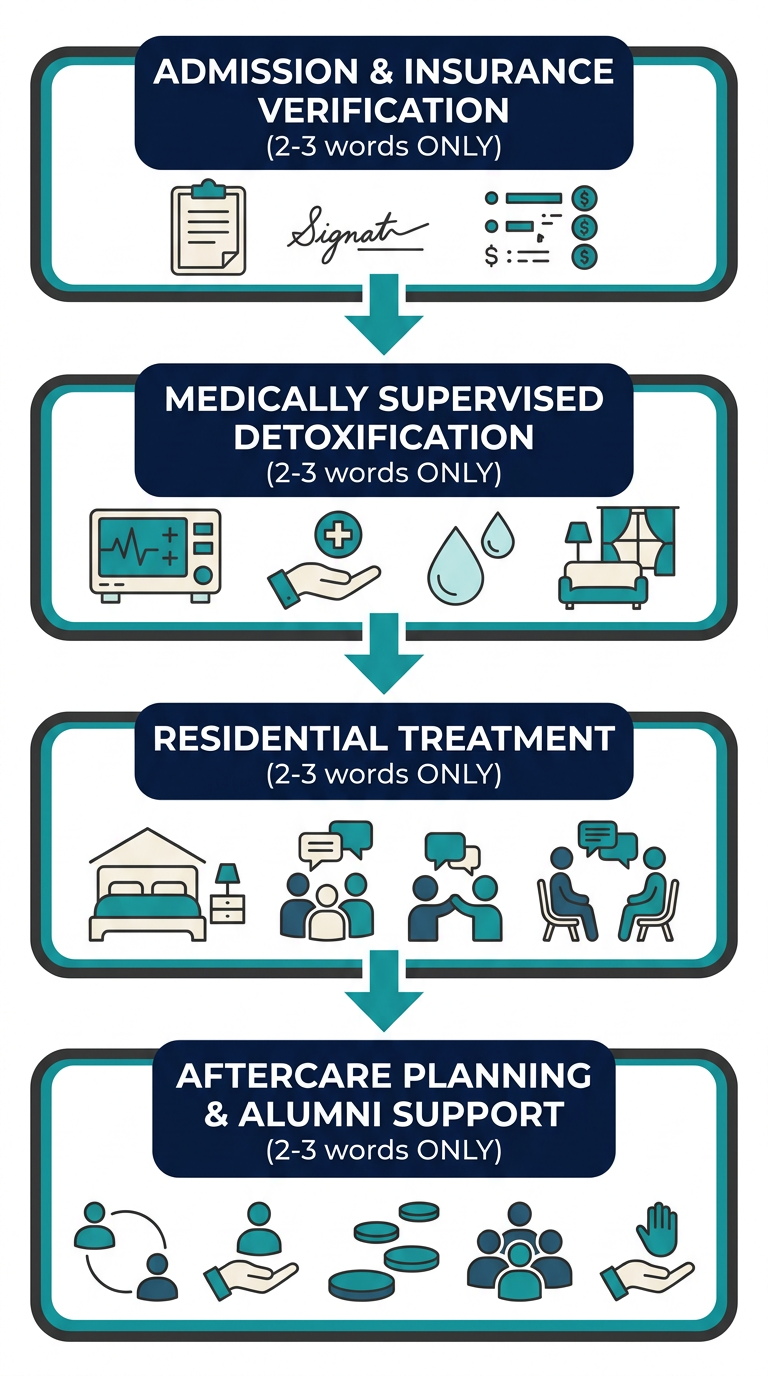
Moving from understanding your treatment options to actually starting care can feel overwhelming, but a well-structured continuum of care creates a clear, supportive path forward. At EMEND New Haven, every patient follows a phased treatment model that begins the moment you make the first call. Unlike fragmented systems where you might need to transfer between separate facilities, our approach keeps all levels of care under one roof, ensuring continuity as your clinical needs evolve. This integrated model aligns with the patient placement criteria established by the American Society of Addiction Medicine, which emphasize matching treatment intensity to individual clinical presentations.
Admission and Insurance Verification
Your first connection with EMEND New Haven is a confidential assessment call designed to understand your immediate needs and explain how we can help. During this initial conversation, a compassionate admissions specialist will ask about your substance use history, any co-occurring mental health concerns, and your current physical condition to determine the appropriate starting level of care. This is not a clinical diagnosis, but rather a way to ensure we recommend the right services before you arrive.
The same admissions team handles benefits verification and coordinates directly with your insurance company, removing a significant source of stress from the process. We work with most major payors and will explain your coverage clearly, including any out-of-pocket responsibilities, before you commit to treatment. Once verified, the team provides guidance on what to bring to our 88-bed facility at 915 Ella T Grasso Boulevard and sets a date for admission, often within 24 hours of your call.
Addiction treatment continuum of care flow
Medically Supervised Detoxification
For patients entering treatment with substances still active in their system, medically supervised detoxification is the essential first phase. At EMEND New Haven, this means 24/7 monitoring by nurses and physicians who manage withdrawal symptoms through appropriate medications and continuous observation. The goal is not simply to endure withdrawal but to stabilize your body as safely and comfortably as possible, addressing both physical distress and the anxiety that often accompanies this vulnerable period.
Our clinical team follows standardized, evidence-based protocols to assess and treat withdrawal. For alcohol, we use the CIWA-Ar scale, a validated tool that measures symptom severity and guides medication dosing. For opioids, the COWS protocol serves a similar function, ensuring that interventions match what your body is experiencing in real time. These protocols, recommended by the American Society of Addiction Medicine, represent the standard of care in professional withdrawal management. A typical detox stay ranges from five to fourteen days, though the exact length depends on the substances involved, the severity of dependence, and your individual response to stabilization before you are medically cleared for the next phase.
Residential Treatment and Aftercare Planning
Once detox is complete, you transition into residential treatment, where the deeper therapeutic work begins. This phase typically lasts between twenty-eight and ninety days, providing structured time to address the underlying psychological and behavioral patterns that contribute to substance use. A typical day includes individual therapy, group therapy, and psychoeducation classes covering topics like relapse prevention, emotional regulation, and understanding addiction as a disease. Life-skills training and supervised recreational activities round out the schedule, helping you rebuild a balanced routine that supports sobriety.
Integrated dual diagnosis treatment remains central throughout residential care. If you entered with co-occurring conditions such as depression, anxiety, or trauma-related disorders, those continue to receive clinical attention alongside your substance use work. Our interdisciplinary team–including licensed clinicians, nurses, and case managers–coordinates care so that mental health symptoms do not go untreated when they could destabilize your recovery.
As your residential stay nears its end, aftercare planning takes shape. Your case manager works with you to develop a continuing care plan that may include outpatient therapy, sober living arrangements, and ongoing medication management. The EMEND New Haven alumni program serves as a bridge to long-term recovery, offering peer connections and structured support events that continue well after you leave the facility. Compliance with Connecticut state licensing standards, overseen by the Department of Mental Health and Addiction Services, ensures that every phase of your care meets rigorous regulatory requirements.
The continuum of care is not simply a sequence of services; it is a sustained commitment to your stability at each transition point. By moving through admission, detox, residential treatment, and structured aftercare within a single, coordinated system, you build momentum that carries into life beyond our doors.
What to Look for When Selecting a Rehab Center in Connecticut
Once you understand the types of rehab centers available, the next step is knowing what specific criteria to evaluate. When researching rehab centers Connecticut families and individuals turn to, understanding the markers of quality care helps you make a confident, informed decision. A well-equipped facility demonstrates its commitment to patient safety through clear credentials, proven therapeutic methods, and a roadmap for long-term recovery.
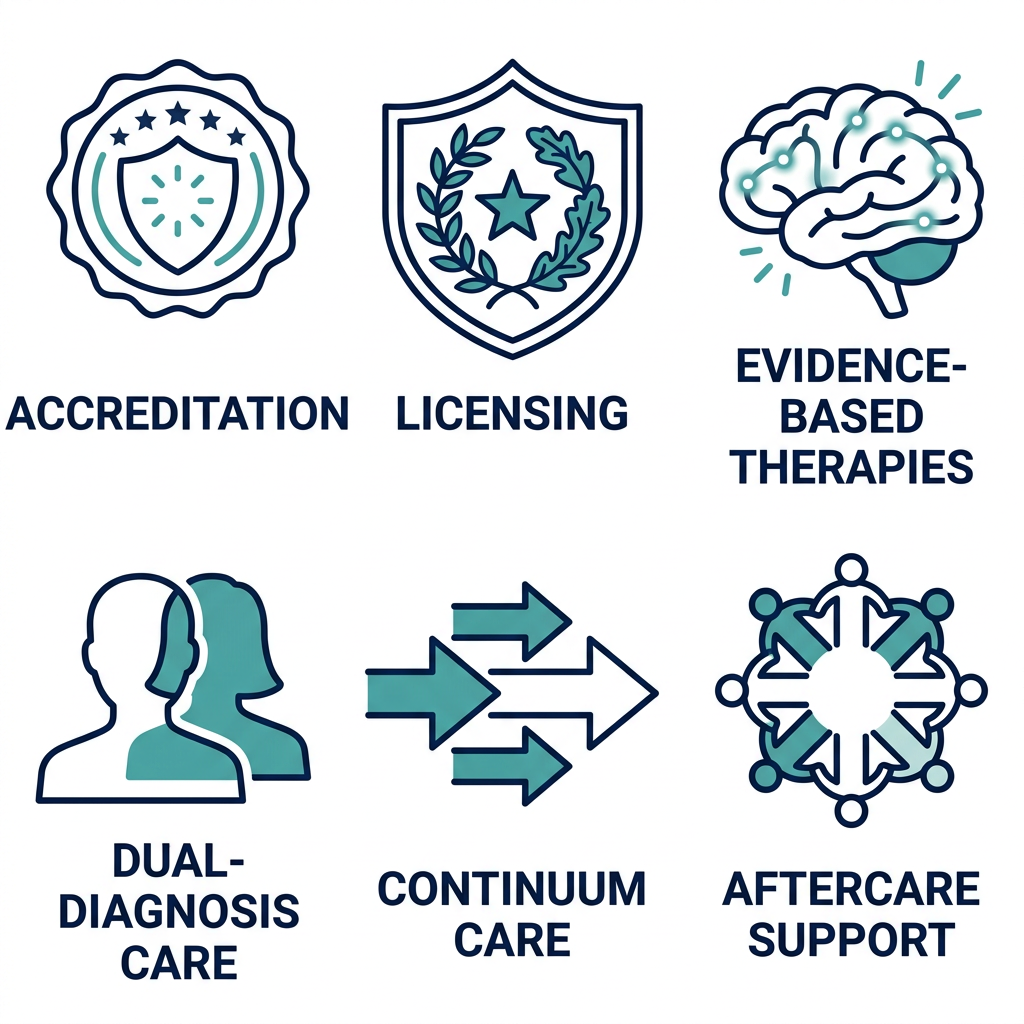
Accreditation, Licensing, and Staff Credentials
National accreditation from organizations like CARF (Commission on Accreditation of Rehabilitation Facilities) or The Joint Commission signals that a center adheres to rigorous quality standards for addiction treatment. In Connecticut, the Department of Mental Health and Addiction Services (DMHAS) licenses and regulates rehab centers, adding a critical layer of state-level oversight. When evaluating options, look for licensed clinicians, board-certified addiction medicine physicians, and 24/7 nursing staff on site. This multidisciplinary staffing model ensures patients receive continuous medical supervision and therapeutic support throughout their stay.
Key rehab center selection criteria
Evidence-Based Therapies and Dual-Diagnosis Care
The Substance Abuse and Mental Health Services Administration (SAMHSA) provides federal government guidelines that define effective, research-backed treatment approaches. Quality programs incorporate Cognitive Behavioral Therapy (CBT), Dialectical Behavior Therapy (DBT), trauma-informed care, individual and group therapy, and medication-assisted treatment (MAT) into their clinical programming. Equally critical is integrated dual diagnosis treatment for lasting recovery, as many individuals facing substance use disorders also live with co-occurring mental health conditions. EMEND New Haven, for example, delivers these evidence-based modalities and integrated dual-diagnosis care through individualized clinical pathways and 24/7 medical supervision, illustrating what comprehensive treatment looks like in practice.
Continuum of Care and Aftercare Support
A full continuum of care includes medically supervised detoxification, residential treatment, and outpatient aftercare, allowing patients to step down through levels of support as they progress. The best treatment centers in the state also offer structured alumni programs that provide ongoing community connection and relapse prevention resources long after the initial program concludes. When evaluating your options, use this checklist to guide your conversations:
- Does the center offer dual-diagnosis treatment for co-occurring mental health conditions?
- Is it accredited by CARF or The Joint Commission?
- Do they accept my insurance and conduct benefits verification before admission?
- Do they have a structured aftercare plan that includes alumni support?
With these criteria in mind, you can now assess individual rehab centers to find the best fit for your needs.
Information on this site is for educational purposes and is not a substitute for professional medical advice. Please consult with a healthcare professional for diagnosis and personalized treatment recommendations.
Take the First Step Toward Recovery
Admitting you need help is the hardest part–and you’ve already done that. If you’re looking for rehab centers in Connecticut that see you as a whole person, not just a diagnosis, you want a place that truly understands your journey. That journey now begins with one simple, confidential phone call to verify your insurance benefits. There is no commitment required, no pressure–just a caring, dedicated admissions coordinator on the line 24/7 who can explain treatment options in plain language. We accept most major insurance plans and will verify your coverage on that very first call, so you can focus completely on what matters: getting well.
The initial phase of treatment typically begins with a medically supervised detoxification to help your body and mind stabilize in a safe, monitored environment. You have already learned about our range of care, from detox through residential treatment, followed by aftercare planning and your lifelong place in our addiction recovery alumni program. This community is your long-term support network, offering connection and encouragement long after you leave our doors. Because we provide dual diagnosis treatment, our clinical team will also address any co-occurring anxiety, depression, or trauma alongside your substance use concerns, treating the whole you.
Now it is time to take the step that changes everything. Call (XXX) XXX-XXXX today or visit our admissions page to speak with someone who can help you begin recovery. We are here for you–right now, just as you are.