
Mental Health Facilities Connecticut
Table of Contents
Understanding Mental Health Facilities in Connecticut
The state of Connecticut offers a diverse range of mental health support, from community-based counseling to structured residential care. For many, finding a starting point involves understanding the landscape of mental health facilities in Connecticut, which are designed to meet a spectrum of clinical needs.
For acute conditions requiring constant supervision, inpatient behavioral health programs provide 24/7 care in a hospital or residential setting. These programs are distinct from outpatient services, which allow individuals to maintain daily routines while attending scheduled therapy. Many facilities also integrate comprehensive care for those with co-occurring disorders through dual diagnosis treatment centers. These specialized programs, guided by our interdisciplinary team at EMEND New Haven, also serve the New Haven area as a rehab New Haven resource for co-occurring substance use and mental health challenges.
Building on this foundation, the next step is understanding a specific, local path to care by exploring mental health treatment New Haven region. The Substance Abuse and Mental Health Services Administration (SAMHSA) notes that facilities may offer varied, individualized pathways.
Levels of Care at Mental Health Facilities in Connecticut
When exploring mental health facilities in Connecticut, it is important to understand the different levels of care available to meet individual needs. Treatment options range from highly structured residential settings to flexible outpatient programs. One such option is residential treatment New Haven, which provides a supportive environment for intensive healing and recovery.
What Is Inpatient or Residential Treatment?
Inpatient or residential treatment provides 24/7 medical supervision and structured daily programming, including therapy sessions and life skills training. These inpatient behavioral health programs create a controlled, substance-free environment. According to SAMHSA guidelines, this level of care is best for individuals who require medical detox or intensive monitoring for co-occurring disorders in a secure setting.
Outpatient Programs: Flexibility With Structure
Outpatient programs offer flexibility while still delivering evidence-based therapy. A Partial Hospitalization Program (PHP) is the most intensive, typically providing 20-30 hours of therapy per week, while an Intensive Outpatient Program (IOP) generally involves 9-12 hours. These programs allow patients to live at home and maintain work or family responsibilities while receiving therapies such as CBT and DBT at mental health facilities in Connecticut.
The Role of Dual-Diagnosis Care
Effective healing often requires addressing more than one condition at the same time. Many dual diagnosis treatment centers in Connecticut integrate mental health and substance use treatment under one clinical pathway. Following DMHAS guidelines, this approach treats co-occurring disorders together, recognizing that they are deeply interconnected, rather than treating each issue in isolation.
Please consult with a healthcare professional for diagnosis and personalized treatment recommendations.
The following table compares key aspects of inpatient and outpatient care to help clarify these distinct paths to wellness.
| Aspect | Inpatient / Residential Treatment | Outpatient Programs (IOP / PHP) |
|---|---|---|
| Level of Supervision | 24/7 medical and clinical staff on-site | Several hours per day, no overnight stay |
| Typical Duration | 30-90 days (often 30, 60, or 90-day tracks) | 8-12 weeks (IOP) or 4-6 weeks (PHP) |
| Best For | Individuals needing a structured, substance-free environment with medical detox and dual-diagnosis monitoring | Those with stable home environments who can attend therapy while maintaining work or family responsibilities |
| Insurance Coverage | Typically covered under most major medical plans with prior authorization | Often covered, but copays and session limits may apply |
Understanding the differences in supervision, time commitment, and structure shown above is a vital first step in the decision-making process. The choice between a residential setting and an outpatient program depends heavily on an individual’s medical needs, home environment, and personal responsibilities.
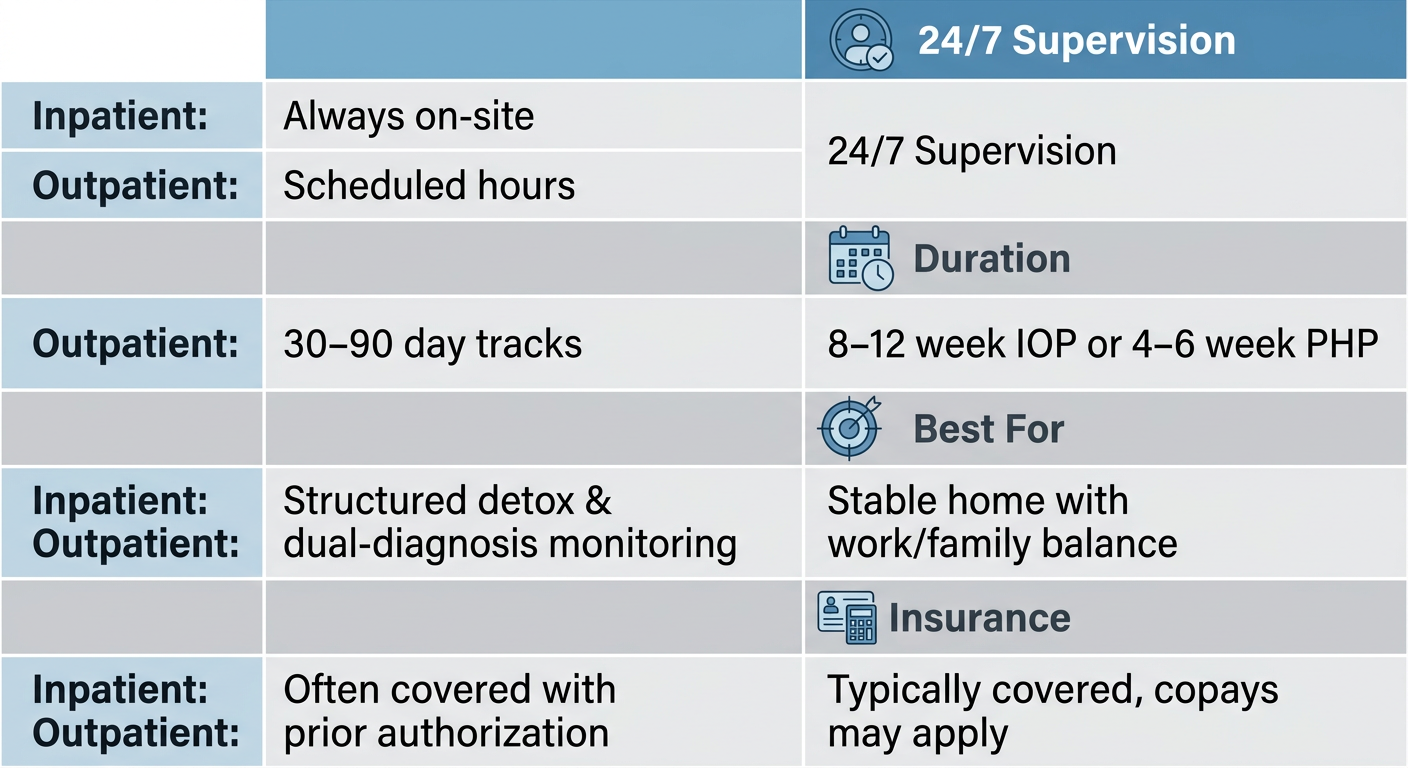
Inpatient vs outpatient care comparison for mental health treatment
By clearly defining these supports, individuals and families can have more informed conversations with professionals. Understanding these levels of care helps in selecting the right facility for your situation.
Services Available at Mental Health Facilities in Connecticut
Choosing among mental health facilities Connecticut residents trust starts with understanding the services they provide. According to the Substance Abuse and Mental Health Services Administration (SAMHSA), comprehensive treatment should address both mental health conditions and substance use disorders through evidence-based care.
How to Verify Your Insurance Coverage
Verifying your benefits is an insistence first step. Have your insurance card ready and call the facility’s admissions team. Ask about in-network and out-of-network benefits, deductibles, and any copays. The admissions coordinator will confirm coverage details and explain next steps. This ensures you understand your financial responsibility before beginning treatment.
Services to Look For in a Connecticut Facility
When evaluating a residential treatment program Connecticut offers, confirm that the facility provides integrated, dual diagnosis care. Core services should include:
- Medically supervised detoxification available 24/7
- Individual and group therapy using CBT and DBT modalities
- Trauma-informed care and dual diagnosis treatment
- Life skills training and aftercare planning with alumni support
According to SAMHSA, effective treatment addresses co-occurring disorders simultaneously for the best possible recovery outcomes.
What the Admissions Process Looks Like
The admissions process begins with a confidential phone assessment. A trained professional will discuss your needs, verify insurance benefits, and schedule a clinical evaluation. After the evaluation, the team determines the appropriate level of care and guides you through admission to the program. Results may vary based on individual patient conditions and circumstances. Please consult with a healthcare professional for diagnosis and personalized treatment recommendations.
Local Considerations for Connecticut Mental Health Care
Understanding the local landscape is essential when seeking support from mental health facilities in Connecticut. State-specific regulations and resources shape the care available, making it important for residents and their families to know what to expect from local programs.
According to the State of Connecticut, the Department of Mental Health and Addiction Services (DMHAS) is the primary agency overseeing these services. The state also enforces mental health parity laws, which require insurance plans to cover behavioral health treatment at the same level as medical care. This regulatory framework supports access to a network of community providers, including inpatient behavioral health programs and dual diagnosis treatment centers for individuals with co-occurring disorders throughout the state.
For those seeking specialized care, options are available locally. For example, fentanyl addiction treatment New Haven provides targeted support for individuals facing this specific substance use disorder, reflecting the range of services accessible within the state’s larger network of mental health facilities across Connecticut.
Steps to Begin Treatment at a Connecticut Mental Health Facility
Beginning treatment at mental health facilities in Connecticut typically involves several clear steps to ensure you receive the right level of care. If you are considering care, including inpatient behavioral health programs, here is what the admission process usually involves.
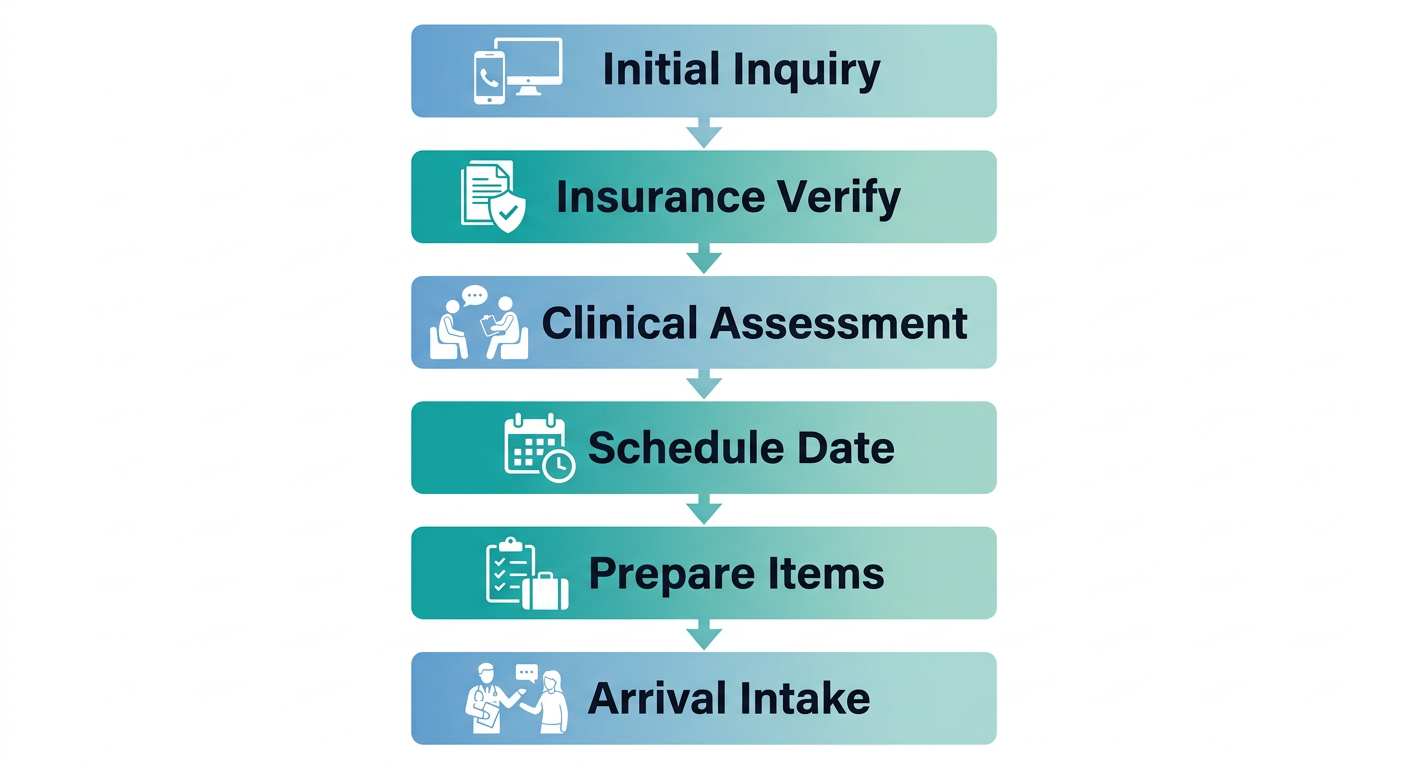
Six-step admission process for EMEND New Haven treatment.
- Initial Inquiry. The first step is to contact the facility via phone or an online form. Our admissions team will listen to your needs and answer initial questions about our programs.
- Insurance Verification. Before your first appointment, the admissions team will typically handle insurance verification and a benefits check. Have your insurance card and a list of current medications ready when you call.
- Clinical Assessment. Many facilities, including dual diagnosis treatment centers, offer a free, confidential pre-admission assessment. This evaluation helps determine the appropriate level of care for your situation.
- Scheduling Admission. After the assessment, the team will work with you to schedule a convenient admission date and guide you through the next steps.
- Preparing for Intake. You will receive guidance on what to bring, such as medical records and personal items, and how to arrange transportation.
- Arrival & Intake. Upon arrival, you will complete intake paperwork and meet your care team, marking the formal start of your treatment journey.
If you are unsure where to start, the Substance Abuse and Mental Health Services Administration (SAMHSA) National Helpline is a trusted government resource for finding support. Please consult with a healthcare professional for personalized advice.
Finding the Right Mental Health Facility in Connecticut
When searching for mental health facilities Connecticut offers, it’s wise to start with a structured checklist. Government resources like SAMHSA’s treatment locator can help you find verified programs.
- Verify accreditation from CARF or The Joint Commission.
- Look for dual diagnosis treatment centers that address co-occurring conditions.
- Prioritize evidence-based therapies (CBT, DBT) and trauma-informed care.
- Confirm the program accepts your insurance before admission.
- Ask whether the facility provides inpatient behavioral health programs if structured, live-in support is needed.
For those seeking specialized care, consider a fentanyl rehab connecticut program that offers medically supervised detox and therapy. Always consult a healthcare professional for personalized recommendations.