
Sober Living In Connecticut
Table of Contents
Sober Living in Connecticut
For many individuals completing addiction treatment, Connecticut alcohol treatment programs provide a critical foundation, but the transition back to daily life requires continued structure and support. Sober living in Connecticut offers that essential next step: structured, substance-free residences where individuals can strengthen their recovery skills before returning to fully independent living. These homes bridge the gap between formal treatment and the real world, providing peer accountability and a stable environment. Much like halfway houses in CT, sober living residences emphasize personal responsibility through house rules, meeting attendance, and continued therapeutic engagement. The Connecticut Department of Mental Health and Addiction Services oversees recovery housing standards, ensuring quality and safety across the state. Recovery houses in New Haven and other cities provide this supportive stepping stone, including sober houses in New Haven CT that help individuals build a solid foundation for lasting recovery.
Types of Recovery Residences in Connecticut
Connecticut offers several distinct types of recovery residences, each designed to support individuals at different stages of their journey. For those seeking a peer-supported environment, sober living in connecticut provides a crucial bridge between intensive treatment and independent living. These homes emphasize mutual accountability and a substance-free lifestyle without providing clinical treatment on site. Understanding the differences between a sober living home, a recovery house, and a halfway house is key to finding the right fit for your needs. The following table breaks down these distinctions.
| Feature | Sober Living Home | Recovery House | Halfway House |
|---|---|---|---|
| Primary focus | Peer-supported sober environment | Sober living with clinical transitional support | Re-entry from incarceration or court-ordered |
| Typical length of stay | 3-12 months | 3-9 months | Up to 6 months per program |
| State licensing requirement | Not required in Connecticut | May require DMHAS approval | Required (CT DMHAS oversight) |
| Clinical staff on site | No (house manager only) | Yes (usually counselors) | Yes (case managers) |
| Insurance accepted | Usually private pay only | Private pay and some insurance | Often state-funded or Medicaid |
| Work/curfew policy | Flexible, supports employment | Structured but work-allowed | Strict schedule, may require job search |
This side-by-side view helps clarify which setting aligns with your current phase of recovery and practical circumstances. A person needing a flexible, work-friendly home might lean toward a sober living house, while someone requiring clinical support or state-funded care would explore recovery houses or halfway houses respectively.
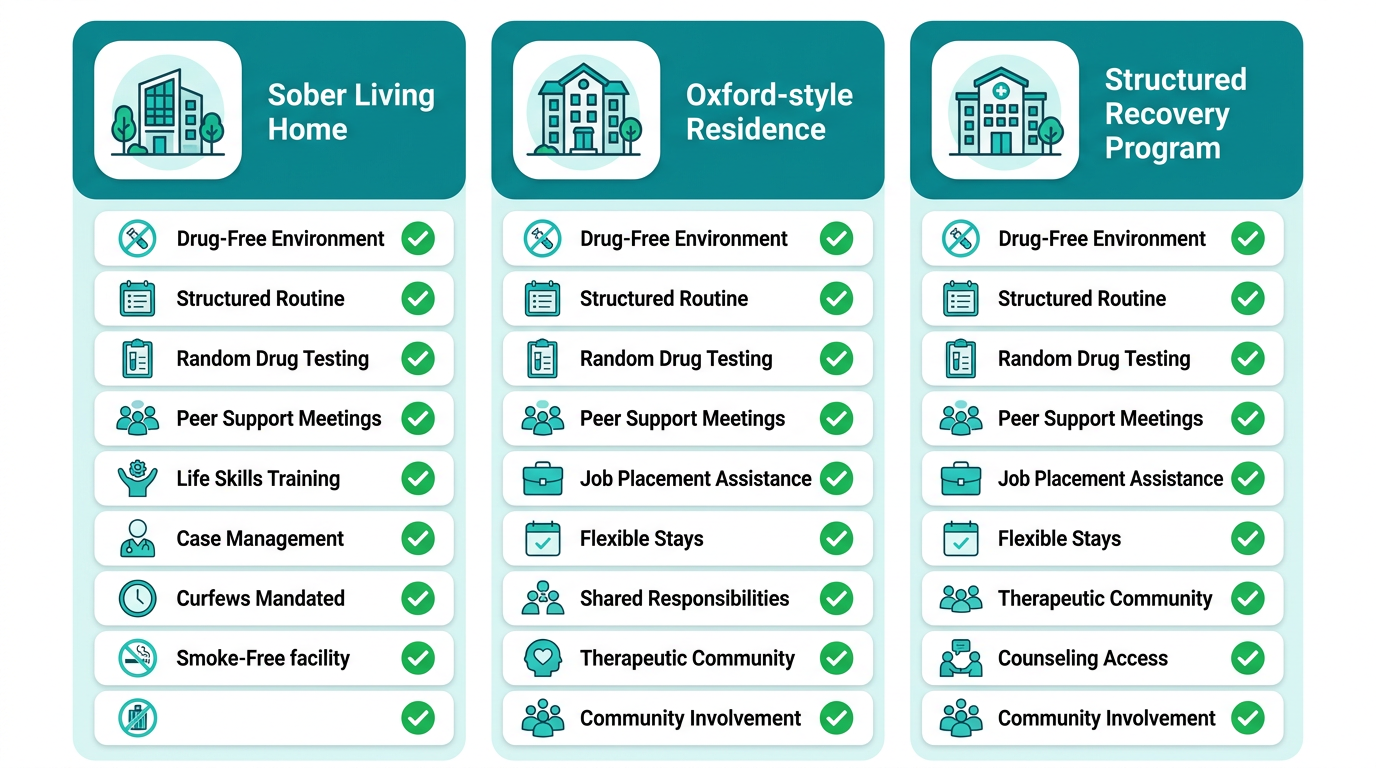
Recovery residence types in Connecticut compared side by side
Sober Living Homes
A sober living home is a peer-supported, substance-free residence for individuals in recovery. These homes are not treatment centers; instead, they provide a structured environment run by a house manager. According to the Connecticut Department of Mental Health and Addiction Services (DMHAS), state licensing is not required for this type of residence. The typical stay lasts between 3 to 12 months, and costs are usually covered through private pay. The structure is flexible, allowing residents to maintain employment as they rebuild their independence.
Recovery Houses in New Haven
Recovery houses represent a more structured subset of sober living, often acting as a step-down option from residential treatment. They employ on-site counselors to provide clinical transitional support. A stay can last from 3 to 9 months, and these facilities may require DMHAS approval. Many recovery houses in New Haven are conveniently located near alcohol treatment centers in ct, making it easier to attend outpatient appointments. While maintaining a structured schedule, residents are typically allowed to work and may use a combination of private pay and insurance to cover costs.
Halfway Houses in Connecticut
Halfway houses serve a distinct purpose, focusing on re-entry for individuals transitioning from incarceration or fulfilling court-ordered requirements. These facilities are strictly regulated and must be licensed by the state through DMHAS oversight. A program lasts up to 6 months, with case managers on site to guide residents. Halfway houses in CT often provide a critical funding pathway, as they are frequently state-funded or accept Medicaid (HUSKY D). The daily life is highly structured with a strict schedule, which may include mandatory job searching. By understanding these programmatic differences, you can take the next step toward finding the most appropriate level of support for lasting recovery.
Navigating Sober Living in New Haven
Finding stability after treatment often begins with the right environment. For many, recovery houses in New Haven offer a structured bridge between intensive care and independent living. These residences, ranging from peer-run homes to clinically supported facilities, create accountability through house rules while fostering community. Understanding what makes a home the right fit is essential for a successful transition in sober living in Connecticut.
Local Availability and Accessibility
Access to recovery residences is shaped by proximity to treatment corridors. The Ella T Grasso Blvd route serves as a major artery, connecting area treatment centers to downtown New Haven and making it easier to attend outpatient appointments or group sessions. While monthly costs for sober living in New Haven typically range from $500 to $1,200, location near reliable bus lines and services is a key logistical factor. Many residents transition into these homes after completing programs at alcohol rehab centers in CT, which often feed directly into halfway houses in CT.
Insurance and Funding Options
Navigating the financial side of recovery requires understanding what your plan covers. HUSKY D, Connecticut’s Medicaid program, may support case management, outpatient therapy, and other clinical services delivered at a sober living site, though it rarely pays for room and board directly. Private insurance benefits vary, so verifying coverage for supportive housing services with your provider is a critical early step. Because direct costs are often out-of-pocket, many families exploring sober living in Connecticut need to budget for monthly fees while their loved ones rebuild stability.
Choosing the Right Fit
Not every home suits every resident. DMHAS-licensed homes adhere to clear expectations: random drug testing, curfews, and requirements for work, school, or volunteer hours. A home’s culture can also vary by gender-specific availability and house meeting style. Dual-diagnosis readiness means staff can coordinate with outside psychiatric care if the home does not employ in-house clinicians, a vital feature for those with co-occurring disorders. Evaluating these factors alongside a connecticut rehab program’s continuing care plan helps match residents’ needs to the right level of structure and support. The best next step is scheduling a tour and having an honest conversation about rules, expectations, and clinical coordination.
Making the Transition from Clinical Care
Completing a residential treatment program is a major milestone, and the transition to a structured sober-living environment is designed to be a gradual, supported process. This next stage bridges the gap between the intensive support of clinical care and the autonomy of independent living.
Step-Down and Aftercare Planning
Moving from a treatment facility to rehabilitation centers in ct and their step-down programs represents a carefully coordinated process rather than an abrupt change. Before discharge, a case manager or recovery coach typically creates a comprehensive aftercare plan. This plan is a personalized roadmap that schedules ongoing outpatient therapy, establishes a rhythm of 12-step meetings or peer support groups, and outlines a concrete relapse prevention strategy. Pursuing sober living in Connecticut means entering a supportive environment where the clinical gains achieved in treatment can be practiced and reinforced daily.
Structure and Peer Support
Adjusting to self-directed living often brings uncertainty, but the built-in structure of recovery residences is designed to build confidence through routine. Residents in sober living in Connecticut programs can expect clear, non-negotiable expectations that foster accountability. These typically include mandatory house meetings three times per week, assigned household chores that teach personal responsibility, and random drug screening to maintain a safe environment. Exploring options for halfway houses in CT often reveals this same foundational commitment to structure, while specific recovery houses in New Haven cultivate a strong sense of community through peer accountability and a graduated curfew schedule that rewards progress. These elements work together to build the long-term recovery skills essential for a sustainable, substance-free life after formal treatment ends.
Steps to Enter a Sober Living Home in Connecticut
Once you understand what a sober living home offers, preparing for admission begins. Most homes in Connecticut require completing a residential program or 30 days of sobriety. Use the DMHAS provider search tool to find certified sober living in Connecticut.
Application and Readiness Checklist
- Complete a treatment program or show 30 days of continuous sobriety.
- Search certified homes via the DMHAS tool or local networks; look for halfway houses in CT or recovery houses in New Haven.
- Interview with photo ID and aftercare plan.
- Confirm discharge planner coordination for step-down care.
- Verify payment options; insurance rarely covers room and board. Ask about self-pay, sliding scales, or scholarships.
Once you’ve scheduled interviews, use these questions to compare homes.
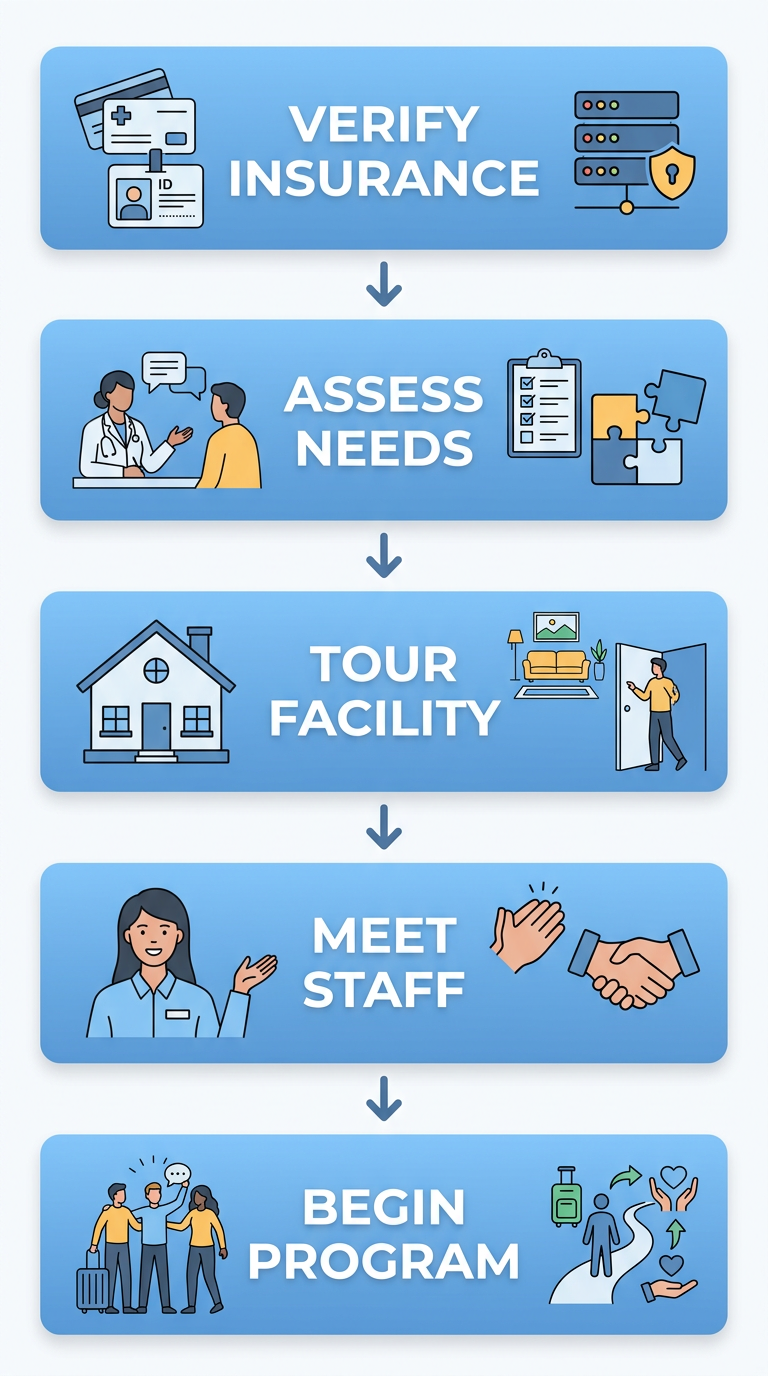
Five key questions to ask before entering a sober living home
What to Ask Before You Move In
- Drug testing policies: ask whether screenings are random or scheduled, and what happens after a positive result.
- Curfew and visitor rules: confirm nightly curfew times, guest restrictions, and mandatory house meeting attendance.
- Transportation options: check if the home helps with rides to jobs, therapy, or medical visits.
- Staff credentials: learn about staff qualifications, supervision hours, and emergency contact protocols.
- Relapse procedures: understand the steps taken after a relapse–discharge, supportive intervention, or referral.
Move Forward Toward Independence
Completing a treatment program marks a major step in your recovery, and the path ahead leads toward greater independence. Many rehabilitation centers in CT structure their programming to help you build the confidence and skills for life outside of residential care, often through step-down options like halfway houses in CT or recovery houses in New Haven. Sober living in Connecticut provides a supportive transitional environment, reinforcing that independence doesn’t require moving forward alone. Speaking with your care team about available aftercare resources ensures a solid foundation for the next chapter.