
Mental Health Facility Connecticut
Table of Contents
Mental Health Facility in Connecticut: A Guide to Residential Care
A mental health facility in Connecticut offering residential care provides a structured, live-in environment for individuals who need intensive therapeutic support but do not require acute hospitalization. At a program like the one at EMEND New Haven, residents participate in daily individual and group therapy, medication management, and life skills training within a 24/7 supervised setting. National standards, such as the levels of residential treatment defined by the Substance Abuse and Mental Health Services Administration (SAMHSA), guide the intensity of these services. A mental health rehab Connecticut program may also integrate specialized pathways for those who need a dual diagnosis treatment center, addressing co-occurring substance use alongside conditions typically managed through inpatient psychiatric care. For families researching their options, the Connecticut State Government (CT.gov) provides licensing information and directories that help verify a facility’s credentials. Residential care at a mental health facility in Connecticut typically includes a range of therapeutic services, which we explore in the next section.
Residential Mental Health Care in Connecticut: What to Expect
Now that you have an overview of mental health services, let’s focus on what residential care involves and how it compares to outpatient options. When exploring a mental health facility in Connecticut, residential care offers a structured, 24/7 supervised environment where nursing and clinical staff are available around the clock. This level of support is designed for individuals who need stabilization and intensive therapy in a safe, controlled setting. Typical stays last 30 days or longer, providing the time necessary for meaningful clinical progress.
Understanding Residential Mental Health Care Options in Connecticut
Residential programs in Connecticut integrate evidence-based therapies to address a range of mental health conditions. Clinicians commonly use Cognitive Behavioral Therapy (CBT), Dialectical Behavior Therapy (DBT), and trauma-informed care, following standards set by the Substance Abuse and Mental Health Services Administration (SAMHSA). For those with co-occurring substance use disorders, many facilities function as a dual diagnosis treatment center, delivering integrated care that treats both conditions simultaneously. The Connecticut State Government (CT.gov) oversees licensing requirements, ensuring residential facilities meet rigorous clinical and safety standards.
For those seeking local options, rehab centers in New Haven CT provide residential care with 24/7 support. Many residential programs also offer dual diagnosis treatment Connecticut for individuals with both mental health and substance use conditions. While this level of care is more intensive than inpatient psychiatric care in a hospital setting, it provides a longer duration of treatment and a greater focus on therapeutic skill-building.
Residential vs. Outpatient Mental Health Care: Key Differences
The table below outlines the key differences between residential and outpatient mental health care in Connecticut.
| Care Level | Typical Stay | Daily Structure | Medical Supervision | Ideal For |
|---|---|---|---|---|
| Residential Treatment | 30 days or longer | 24/7 structured schedule | Around-the-clock nursing & clinical staff | Those needing stabilization & intensive therapy |
| Outpatient Care | Several weeks to months | Several hours per week | Periodic check-ins with provider | Those with stable home environment & lower acuity |
This comparison can help you determine which level of care aligns with your needs. Residential treatment provides the highest level of structure and medical oversight outside of a hospital, making it appropriate when safety and round-the-clock support are priorities.
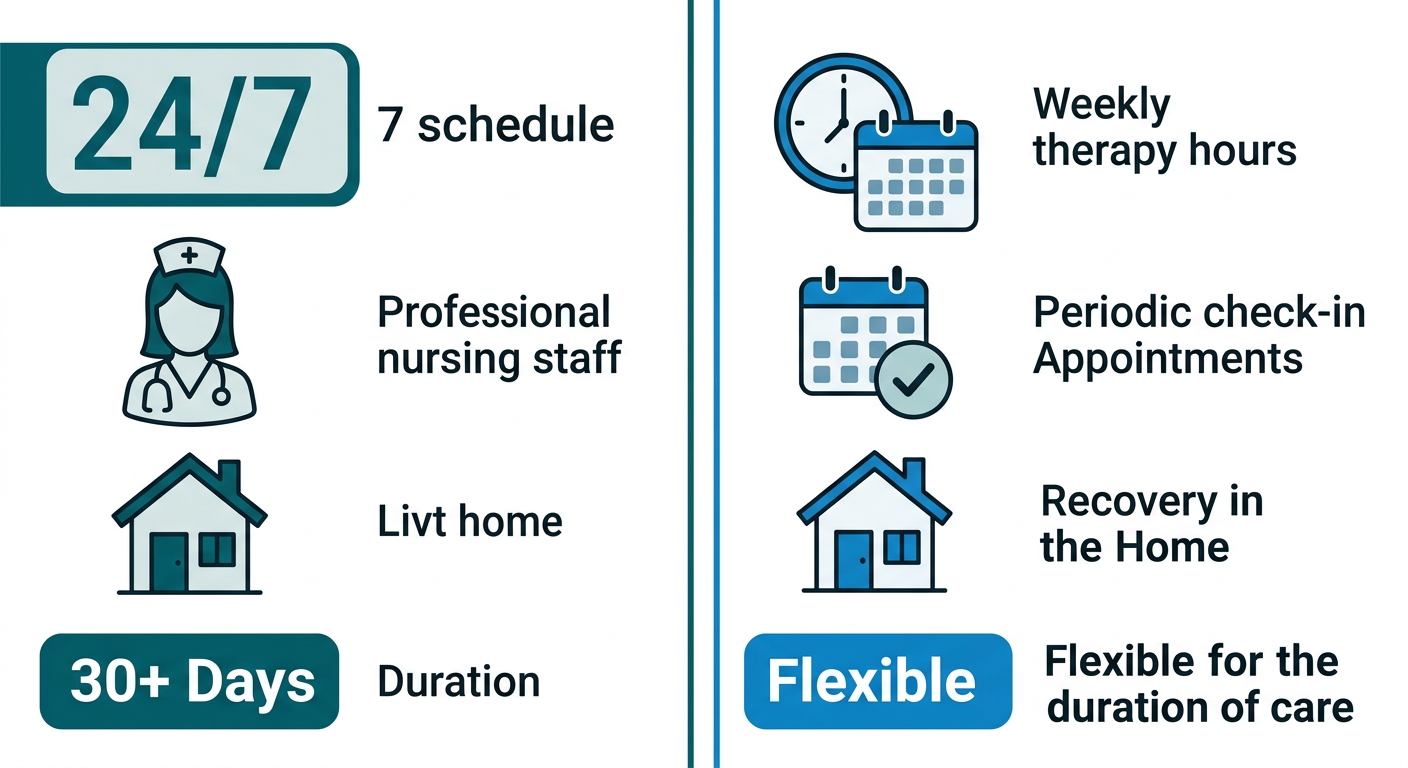
Residential versus outpatient mental health care comparison
Understanding these differences is the first step in finding the right path forward. While residential care offers intensive, 24/7 support, outpatient services provide flexibility for those maintaining work or family responsibilities. Your choice should reflect your current symptoms, safety needs, and treatment history. The next section will guide you through the admission process for residential programs in Connecticut.
Results may vary based on individual patient conditions and circumstances. Please consult with a healthcare professional for diagnosis and personalized treatment recommendations. Information on this site is for educational purposes and is not a substitute for professional medical advice.
Services Offered by a Mental Health Facility in Connecticut: Dual Diagnosis and Insurance Verification
Specialized care at a mental health facility Connecticut residents rely on includes dual diagnosis treatment and insurance navigation support. These core services connect evidence-based therapy with practical financial coordination to make treatment more accessible.
Dual Diagnosis Treatment in Connecticut for Co-Occurring Disorders
Dual diagnosis means a person’s substance use disorder and co-occurring mental health condition–such as depression, anxiety, or PTSD–are treated together inside the same clinical framework. According to national guidelines from the Substance Abuse and Mental Health Services Administration (SAMHSA), integrated care models that manage both conditions simultaneously lead to better long-term recovery outcomes. For those seeking a comprehensive approach, holistic rehab Connecticut programs address the whole person by combining evidence-based modalities like Cognitive Behavioral Therapy (CBT) and Dialectical Behavior Therapy (DBT) with trauma-informed support.
Many individuals with substance use disorders also require depression treatment Connecticut as part of their integrated care plan. The facility’s dual diagnosis program treats co-occurring depression, anxiety, PTSD, and other conditions concurrently with substance use, eliminating the need to manage them in separate settings.
How to Verify Insurance Coverage for Mental Health Treatment
In addition to clinical care, the facility helps patients navigate insurance coverage so they can focus on recovery rather than billing. The verification process follows a few clear steps:
- Contact your insurance provider and request a benefits check for mental health and substance use treatment.
- Confirm in-network and out-of-network status, deductible amounts, copay responsibilities, and any pre-authorization requirements.
- Provide your policy details to the admissions team, who will coordinate directly with the payor to verify benefits.
- Review the verified coverage summary with staff to understand exactly what your plan covers before starting treatment.
State of Connecticut regulations require mental health facilities to maintain proper licensing and follow privacy standards, including HIPAA compliance, throughout the verification process. Once coverage is confirmed, the admissions team guides patients through the next steps toward residential care.
Results may vary based on individual patient conditions and circumstances. Please consult with a healthcare professional for diagnosis and personalized treatment recommendations. Information on this site is for educational purposes and is not a substitute for professional medical advice.
24/7 Medical Supervision and Admission Timelines at Connecticut Mental Health Facilities
Entering a mental health facility connecticut marks a significant step in an individual’s recovery journey. Understanding the level of care provided and how quickly admission can occur creates clarity and reduces the anxiety often associated with seeking help. For adults considering residential treatment, knowing what to expect from the clinical environment and intake process is essential for making informed decisions.
The Role of 24/7 Medical Supervision in New Haven Mental Health Facilities
Residential facilities in New Haven maintain round-the-clock medical supervision to ensure patient safety and clinical stability. According to the Connecticut State Government (CT.gov), state licensing requirements mandate 24/7 staffing in residential mental health treatment settings. This structured environment includes licensed nurses, physicians, and psychiatric professionals who monitor patients continuously and respond immediately to any crisis that may arise. This constant clinical presence allows for medication management, vital sign monitoring, and therapeutic intervention whenever needed. For individuals receiving inpatient psychiatric care, this level of oversight provides the foundation for safe, effective treatment.
Admission Timelines for Residential Mental Health Care in Connecticut
The Substance Abuse and Mental Health Services Administration (SAMHSA) provides national guidelines for residential treatment admission protocols that emphasize timely access to care. The admission process at Connecticut facilities typically begins with an initial phone assessment, where clinical staff evaluate the individual’s needs and determine appropriate placement. Following this assessment, the facility conducts insurance verification and obtains pre-authorization for treatment. At a dual diagnosis treatment center, this step ensures coverage for integrated care addressing both mental health and substance use conditions. Intake and the start of treatment usually occur within 24 to 48 hours of initial contact. EMEND New Haven offers rapid admission for adults seeking residential care, with many patients admitted within 24 hours.
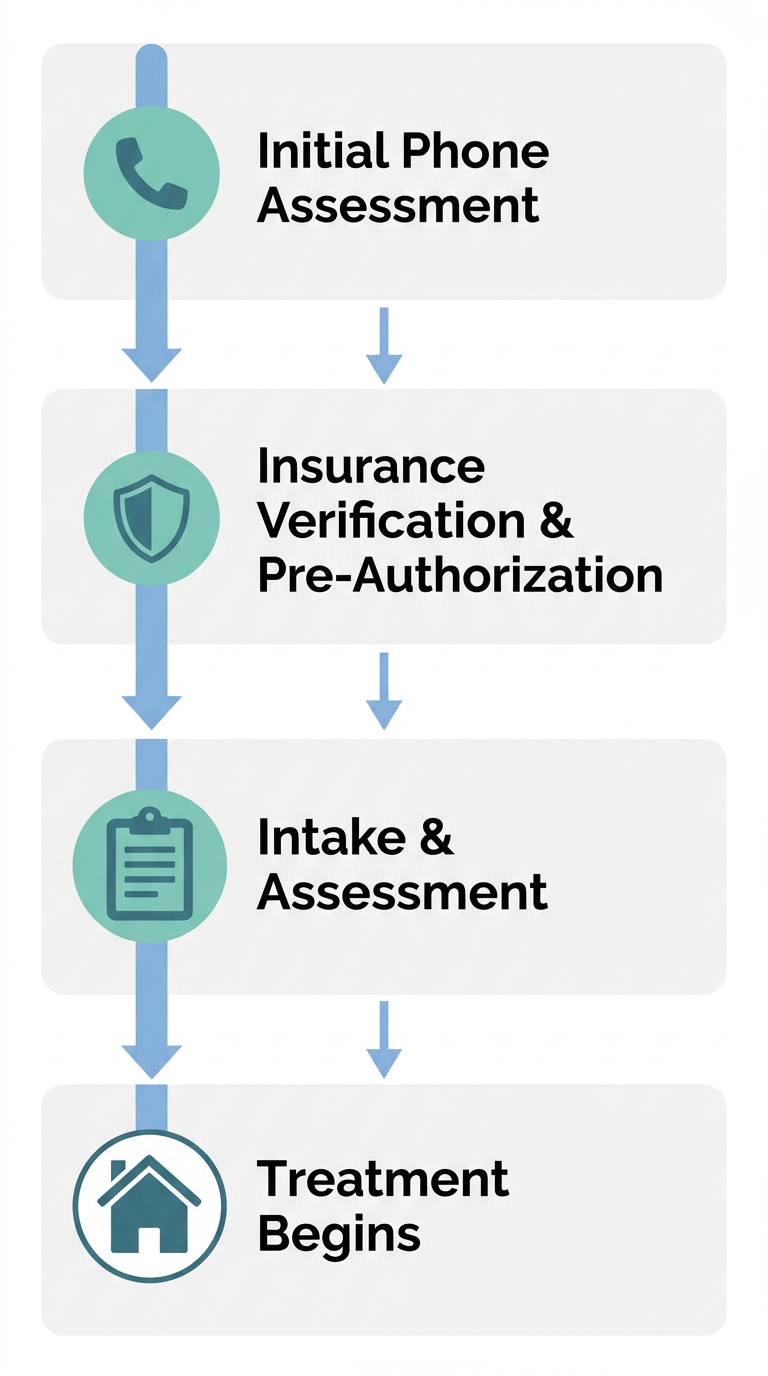
Admission timeline for residential mental health care at Connecticut facilities
Results may vary based on individual patient conditions and circumstances.
Getting Started with Residential Mental Health Care in Connecticut: Insurance and Admissions
Once you understand the structure of care, the next step is getting started at a mental health facility in Connecticut. The admissions team at EMEND New Haven guides you through a clear verification process to reduce uncertainty and keep the focus on your well-being.
How to Get Started: Insurance Verification and Admissions
The first practical step is a free, confidential insurance verification call with our admissions team. This call confirms your coverage before admission, ensuring there are no surprises. Most major insurance plans are accepted, and the team will verify both medical necessity and level of care, whether you need residential treatment or a partial hospitalization program.
To begin, you can typically follow these steps:
- Contact the admissions department for a confidential benefits check.
- Provide your insurance information so the team can confirm coverage.
- Discuss your clinical needs to determine the appropriate level of care.
- Receive a clear summary of verified benefits before making any commitment.
As a dual diagnosis treatment center, EMEND New Haven also assesses co-occurring mental health conditions during this process, ensuring you receive integrated care that addresses all aspects of your health. This structured approach to inpatient psychiatric care means you can move forward with clarity and confidence.
Frequently Asked Questions About Residential Treatment in Connecticut
Clients often ask which therapies are used in our residential program. The core clinical approaches include Cognitive Behavioral Therapy (CBT) and Dialectical Behavior Therapy (DBT), both of which can help you develop coping strategies for managing difficult emotions and behaviors. Trauma-informed care is woven into every interaction, ensuring all staff are trained to understand and respond to trauma histories with sensitivity and respect.
These therapies are most effective in a healing environment rehab connecticut, designed to promote safety and focus. After admissions is complete, you can focus on your recovery in a therapeutic environment designed for healing.
Next Steps Toward Residential Mental Health Care in Connecticut
Choosing the right mental health facility in Connecticut is a critical step toward lasting recovery. Our healing environment rehab Connecticut is designed to support your journey with compassionate care. As a dedicated dual diagnosis treatment center, our admissions specialists are available 24/7 to verify your insurance and answer any questions. You don’t have to face this alone — we offer supportive inpatient psychiatric care and are here to help you every step of the way.