
Detox Facilities In Ct
Table of Contents
Understanding Detox Facilities in Connecticut
Detox facilities in CT are medically supervised settings where individuals undergo withdrawal from alcohol, opioids, or benzodiazepines under professional care. Medical detox Connecticut programs reduce the risk of complications during this critical phase — seizures, dehydration, and cardiac issues can arise without proper monitoring, making clinical oversight essential for patient safety.
Connecticut licenses these facilities according to state regulations, with the Connecticut State Government overseeing compliance. The American Society of Addiction Medicine (ASAM) classifies withdrawal management into four levels: outpatient (1‑WM), intensive outpatient (2‑WM), clinically managed residential (3.2‑WM), and medically managed inpatient (4‑WM). For those seeking detox new haven, understanding these levels clarifies what alcohol detox centers CT programs provide. This foundation helps families evaluate new haven detox services with greater confidence.
Detox Facilities Across Connecticut and New Haven
Connecticut hosts a range of detox facilities in CT that serve individuals beginning their recovery journey. Understanding the different levels of care available is a critical first step toward selecting the right program. From acute hospital settings to community-based residential centers like EMEND New Haven, the state offers structured pathways for withdrawal management under professional supervision.
Hospital-Based Detox vs. Residential Detox Centers
Individuals seeking detox programs in CT encounter two primary facility types. Hospital-based detox units operate within acute-care hospitals and deliver the highest level of medical monitoring, ideal for those with severe withdrawal risks or complex medical comorbidities. In contrast, residential detox centers are community-based facilities that provide 24/7 supervision in a structured, home-like environment. These residential programs suit individuals with stable medical conditions who do not require intensive hospital services. Many alcohol detox centers CT offer residential options that combine safety with comfort. Both types must hold state licensing through the Connecticut Department of Public Health and may pursue national accreditation aligned with SAMHSA care standards.
Medically Supervised Detox in New Haven
New Haven residents access medical detox Connecticut services through facilities that prioritize continuous clinical oversight. EMEND New Haven, one of several detox centers in CT, operates as a residential detox facility with 24/7 nursing and medical supervision. The program integrates individualized care plans, evidence-based therapies, and dual-diagnosis support for co-occurring mental health conditions. Licensed by the state and guided by national accreditation frameworks, the facility’s interdisciplinary team monitors vital signs, manages withdrawal symptoms, and adjusts protocols throughout the detoxification process. This comprehensive approach ensures patients receive medically sound, compassionate care tailored to their specific substance use history and overall health status.
Types of Detox Programs Available in Connecticut
When exploring detox facilities in CT, individuals encounter a range of medically informed options tailored to different levels of physical dependence and psychological readiness. These programs form the essential first step in a continuum of care, guided by established clinical standards from the American Society of Addiction Medicine (ASAM) and supported by statewide resources through the Connecticut State Department of Mental Health and Addiction Services.
Medically Supervised Detox Services
For those seeking detox Connecticut, medically supervised services provide round‑the‑clock monitoring by licensed nursing staff and physicians who manage acute withdrawal symptoms using evidence‑based protocols. A medical detox Connecticut program integrates dual‑diagnosis care for co‑occurring mental health conditions, ensuring that patients receive comprehensive stabilization in a safe, clinical environment. This level of care is designed for individuals at risk of severe withdrawal complications and typically follows ASAM criteria for inpatient withdrawal management.
Residential and Inpatient Detox Programs
Residential detox centers in Connecticut, including programs like those at EMEND New Haven, offer a structured daily schedule of individual and group therapy, psychoeducation, and life‑skills building within a supportive community. Alcohol detox centers CT residents rely on often provide stays ranging from 5 to 14 days, depending on individual clinical needs. While hospital‑based detox delivers acute medical stabilization in a clinical setting over 3 to 7 days, residential programs extend the treatment window to foster early coping strategies and seamless transitions into ongoing residential care.
To help clarify the differences, the following table compares hospital‑based detox with residential detox centers in Connecticut:
| Feature | Hospital-Based Detox | Residential Detox Center |
|---|---|---|
| Level of Medical Oversight | 24/7 physician and nursing staff | 24/7 medical supervision with licensed nursing |
| Typical Length of Stay | 3 to 7 days | 5 to 14 days depending on clinical needs |
| Insurance Acceptance | Accepts most major medical insurance | Verifies benefits and coordinates with most major payors |
| Environment | Clinical hospital setting | Structured residential setting with therapeutic activities |
| Aftercare Planning | Referral to outpatient or residential programs | Built-in transition to residential treatment and alumni programs |
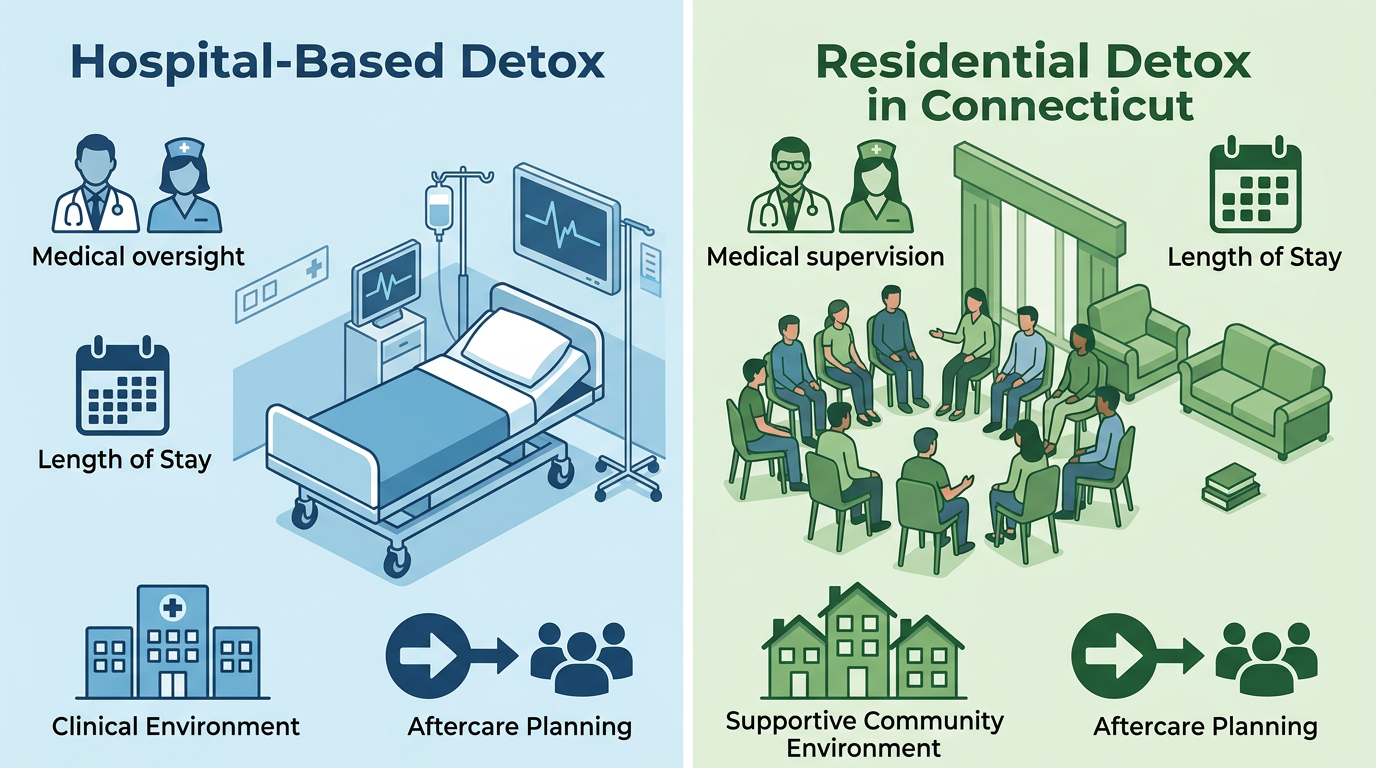
Comparison of hospital-based and residential detox programs in Connecticut.
Insurance Verification and Admissions Support
Most major insurance plans cover detoxification services, and facilities like EMEND New Haven conduct benefits verification before admission to minimize out‑of‑pocket costs. The admissions team coordinates with payors so that individuals can focus on their clinical stabilization rather than billing logistics. For further information on licensed providers, the Connecticut state substance abuse resources offer a current directory of certified detox programs.
Important Local Considerations for Choosing a CT Detox Facility
Beyond the general benefits of detox, there are important local considerations specific to Connecticut that can impact your choice. When evaluating detox facilities in CT, understanding state regulations, community ties, and aftercare options is essential for making an informed decision.
CT State Licensing and Regulations
All detox facilities in Connecticut must be licensed by the Connecticut Department of Public Health (DPH) and comply with strict regulations covering staffing ratios, medical oversight, safety protocols, and facility standards. These requirements are especially critical for medical detox connecticut programs, where 24/7 medical supervision ensures patient safety during withdrawal.
Community Resources Near New Haven
For those considering alcohol detox centers ct, proximity to comprehensive medical resources is a significant advantage. Facilities in New Haven routinely coordinate with Yale New Haven Hospital and local mental health centers for medical referrals, and many partner with organizations like the Connecticut Community for Addiction Recovery (CCAR) to connect individuals with long-term community support.
Aftercare and Alumni Support in CT
Strong aftercare programs are vital for sustained recovery. Quality facilities provide relapse prevention planning, alumni meetings, and direct connections to local support groups such as AA and NA meetings throughout Connecticut. These ongoing resources align with SAMHSA’s best practices for aftercare, helping individuals maintain progress after detox. Please consult with a healthcare professional for diagnosis and personalized treatment recommendations.
Getting Started: Preparing for Detox Treatment in Connecticut
Choosing to enter detox is a courageous first step. Once you decide to begin, here’s exactly how to prepare for your stay at medical detox programs in Connecticut. Knowing what to expect can reduce anxiety and help you feel more in control of the process. Many detox facilities in CT follow similar admissions and intake procedures, so being ready before you make your first call can make the transition much smoother.
What to Bring to a Detox Facility in Connecticut
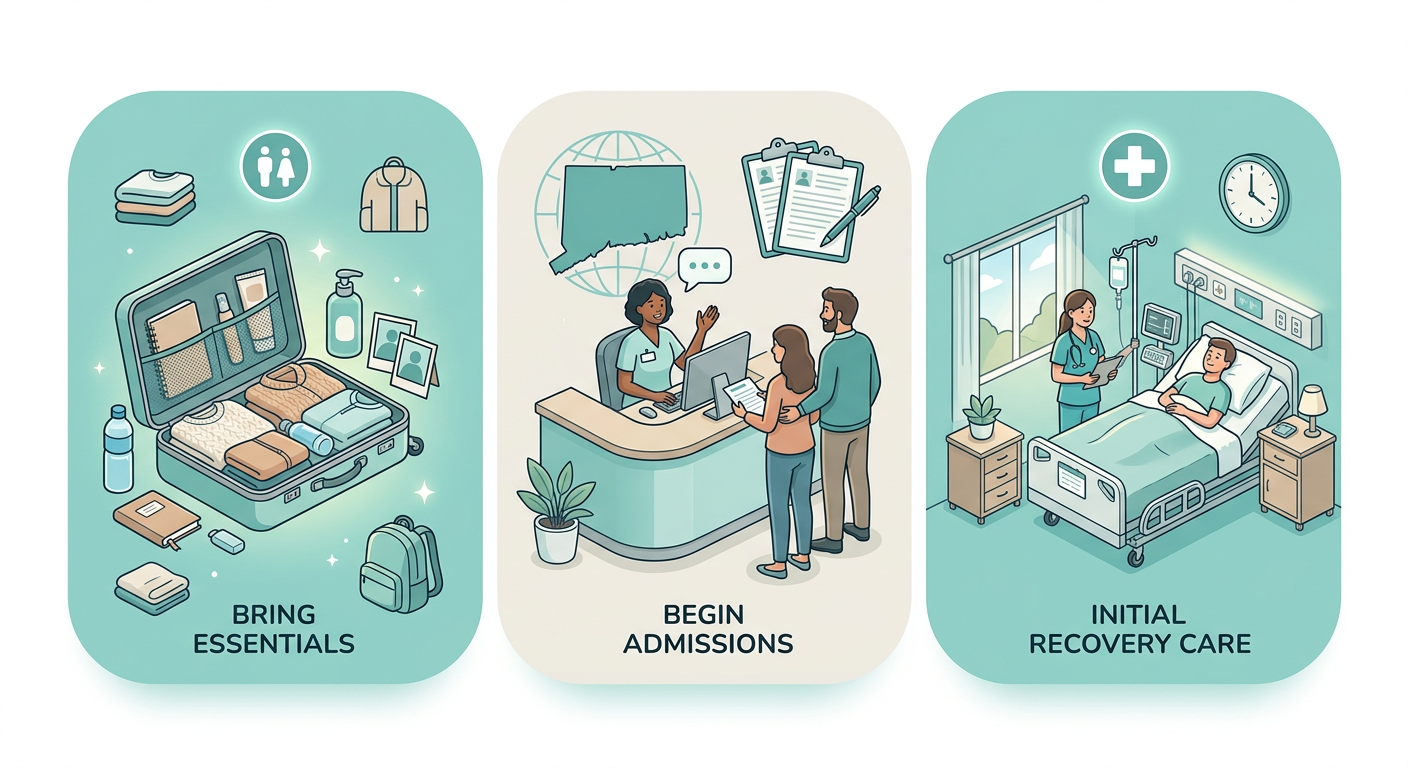
Three-step process to begin detox treatment in Connecticut
Packing thoughtfully can help you feel grounded during your first few days. Bring two forms of identification — a driver’s license and your insurance card are essential. Pack five days of comfortable clothing without drawstrings, basic toiletries that are alcohol-free and in non-aerosol containers, and a book or journal for reflection. Leave valuables, electronics, and all medications in their original bottles to be reviewed by the nursing staff upon arrival. Alcohol detox centers CT and other Connecticut detox centers require all personal items to be screened for safety during intake.
How to Start the Admissions Process
Admissions often start with a phone call where you ask two key questions: if a bed is available and whether the facility accepts your insurance. Use a straightforward script: “I’m calling to check bed availability and confirm you accept my insurance plan.” The admissions team can verify your benefits, then schedule an in-person or telehealth clinical assessment to match you to the right level of care. Many detox facilities in CT prioritize this verification so financial concerns don’t delay treatment.
What to Expect During Your First 24 Hours
Your first day follows a supportive, structured sequence. After arrival and paperwork, a nurse or doctor completes a comprehensive biopsychosocial assessment, which the Substance Abuse and Mental Health Services Administration (SAMHSA) recommends to personalize your medical detox Connecticut treatment plan. Licensed facilities in Connecticut are required by the State of Connecticut to follow mandated staffing ratios and provide a minimum of three supervised meals daily. You’ll then join a brief therapy session before dinner and an evening wind-down that brings closure to your initial stay. With your checklist ready and admissions underway, your medical detox journey can begin smoothly.
If you have additional questions about your next steps, call us, verify your insurance, or learn more about our team of clinical providers dedicated to your recovery.
Take the Next Step Toward Recovery
If you’re ready to break the cycle of addiction, the compassionate team at detox facilities in CT is available 24/7 to guide you into a fresh start. Our medical team offers personalized care at our dedicated detox centers connecticut residents trust, providing medical detox connecticut and alcohol detox centers ct in a supportive, non-judgmental environment where recovery is possible. As the Substance Abuse and Mental Health Services Administration (SAMHSA) recommends, seeking professional help is a critical first step. Call now to verify your insurance and speak with an admissions specialist who can answer your questions.