
Detox Centers Ct
Table of Contents
Understanding Detox Centers in Connecticut
For many individuals facing substance use disorders, the journey to recovery begins with a critical first step: medical detoxification. Detox in CT is widely recognized as the safest way to navigate withdrawal, providing 24/7 clinical supervision that stabilizes patients physically and psychologically before formal treatment begins.
The Substance Abuse and Mental Health Services Administration (SAMHSA) recommends medical detox as the standard starting point for moderate to severe substance use disorders. Throughout the state, medical detox in CT follows evidence-based protocols tailored to individual needs, while those seeking drug detox in New Haven will find professionals ready to deliver structured, compassionate care from the very first day of recovery.
1. Medically Supervised Detoxification
The journey to lasting recovery begins with medically supervised detoxification, a critical first step for individuals seeking safety and stability during withdrawal. For those looking for detox centers in CT, understanding that this initial phase provides a foundation for all subsequent care is essential. A professional medical detox in CT is a carefully managed process where healthcare professionals monitor and alleviate withdrawal symptoms within a controlled and supportive environment, helping individuals navigate this challenging period with greater comfort and safety.
This process directly addresses the physical aspect of substance dependence by managing withdrawal, and according to guidelines from the Substance Abuse and Mental Health Services Administration (SAMHSA), 24/7 medical supervision is a necessary standard of care. This continuous oversight is critical for preventing medical complications and ensuring patient safety. However, it is crucial to recognize that detoxification is not a standalone cure. Completing a drug detox in New Haven is an indispensable accomplishment, but it does not treat the underlying psychological and behavioral patterns of addiction. Therefore, it must be immediately followed by a comprehensive residential treatment program to begin addressing the root causes of substance use.
At EMEND New Haven, our program provides this essential 24/7 medical monitoring with evidence-based care to create a stable transition into the next phase of recovery. Our clinical team is prepared to manage a range of withdrawal symptoms, ensuring a safe and dignified start to treatment. After completing detoxification under medical supervision, patients step directly into our structured residential treatment for continued care and intensive therapeutic work. Results may vary based on individual patient conditions; consult a healthcare professional for personalized advice.
2. Medical Detox vs Social Detox
Two primary detox formats exist for individuals seeking substance use treatment, and understanding the distinction helps identify the appropriate level of care. Those looking into detox centers ct will encounter both medical and social models, each serving different patient needs.
Medical detox is a clinically supervised withdrawal management process delivered in a licensed facility. Patients receive 24/7 medical monitoring, medication management to alleviate withdrawal symptoms, and direct oversight from physicians and nurses. This setting is essential for substances known to produce severe or life-threatening withdrawal — alcohol, benzodiazepines, and opioids — and for individuals managing co-occurring medical or psychiatric conditions. Many detox centers in Connecticut offer medically supervised programs that provide this level of structured, safety-focused care.
Social detox, by contrast, operates in a peer-supported, residential environment without continuous medical staffing. Counselors or recovery coaches provide emotional support and structure, but 24/7 nursing is not present. This model works best for people with mild withdrawal potential and stable overall health who can detox safely without medication. A medical detoxification program in New Haven would suit someone facing significant withdrawal risks, while the social detox model may be appropriate when the clinical need is lower.
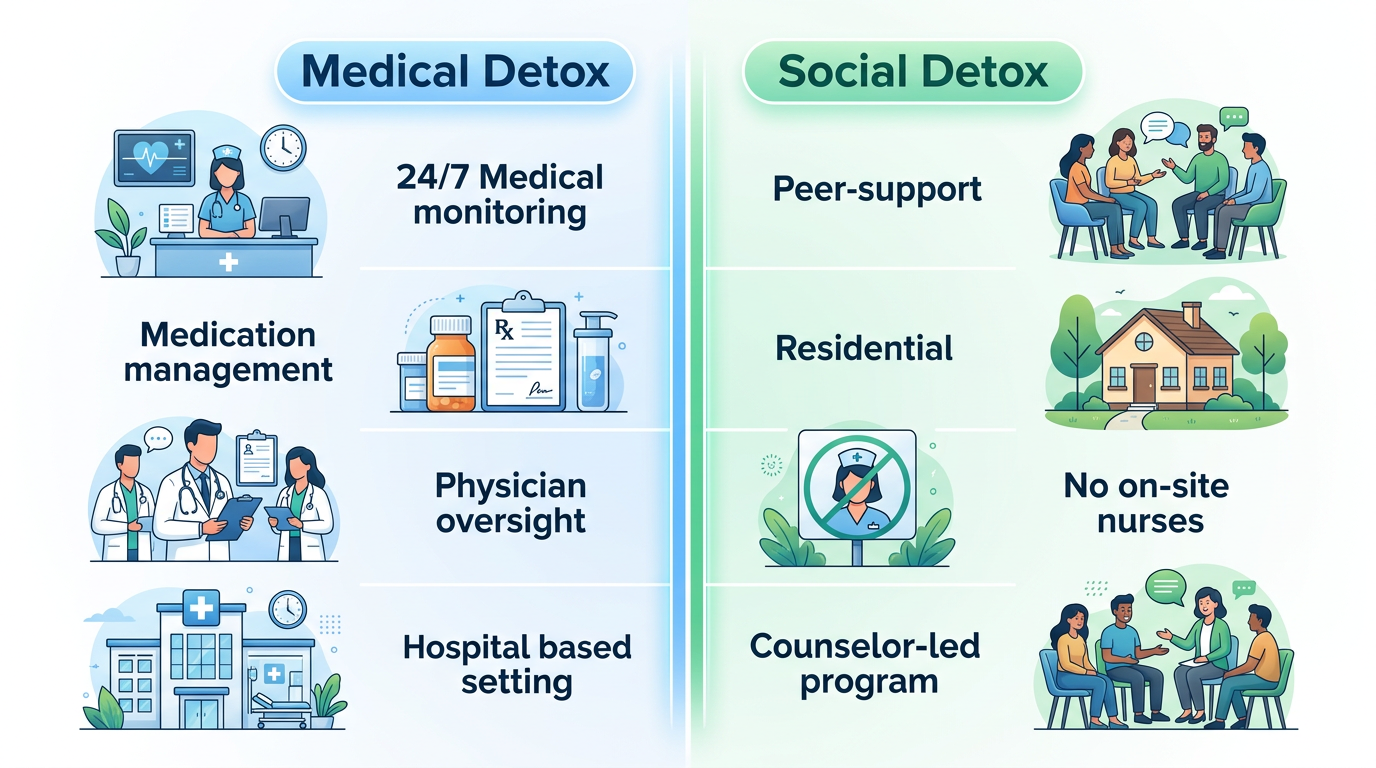
Medical detox vs social detox comparison infographic
Drug detox New Haven providers assess withdrawal risk, medical history, and substance type when recommending a detox pathway. Insurance coverage and personal preference also influence the choice, though clinical safety remains the priority. The next section examines the medical detox process step-by-step.
3. Inpatient vs Outpatient Detox Options
When exploring detox centers in Connecticut, one of the first decisions you will face is whether to choose inpatient or outpatient detox. Inpatient detox requires an overnight stay at a facility with 24/7 medical monitoring, providing a structured, substance-free environment that reduces the risk of relapse during withdrawal. This level of care is typically recommended for moderate-to-severe withdrawal symptoms. Outpatient detox, by contrast, allows patients to live at home and attend daily or near-daily clinic visits, offering more flexibility for those with strong support systems and less severe dependencies.
For many, however, the line is not always clear, and the decision often comes down to individual clinical needs. When seeking medical detox in CT, the right choice depends on substance type, withdrawal severity, co-occurring conditions, and the stability of your home environment. Options for drug detox in New Haven include facilities like ours, where patients can receive medically supervised care and a thorough assessment to clarify which path offers the best starting point for recovery. Contact our team to learn more about our detox programs in ct.
4. Insurance Acceptance and Payment Options
When researching detox centers in CT, understanding how insurance and payment works is a key step. At EMEND New Haven, we accept many major insurance plans to support connecticut addiction treatment. Our team verifies benefits at no cost so you know exactly what your policy covers before starting medical detox in CT at our facility. We work with providers including Aetna, Cigna, Blue Cross Blue Shield, and UnitedHealthcare. Coverage always depends on your individual plan details and is not final until we complete the verification process.
For clients without insurance or those who prefer not to use it, self-pay options are available for drug detox in New Haven. Our admissions team will discuss rates directly with you and explain available payment arrangements. We believe financial questions should never stand between someone and the care they need.
Contact our admissions team for a free, confidential insurance benefits check. We will confirm your coverage, outline any out-of-pocket costs, and help you plan the next step toward recovery.
5. Dual Diagnosis Treatment for Co-Occurring Disorders
Beyond individual substance use treatment, EMEND New Haven also specializes in dual diagnosis care for patients at our New Haven facility. For individuals seeking a truly comprehensive approach, drug detoxification programs in New Haven integrate mental health support from the very beginning. Dual diagnosis is the clinical practice of treating a substance use disorder and a mental health condition, such as anxiety, depression, PTSD, or bipolar disorder, at the same time.
The Substance Abuse and Mental Health Services Administration (SAMHSA) confirms that integrated care–coordinating treatment for both conditions simultaneously–produces significantly better outcomes than treating each one in isolation. This is why many of the state’s leading programs, including connecticut rehabs like EMEND New Haven, have adopted a fully integrated model. Untreated mental health conditions frequently fuel a cycle of substance use. EMEND New Haven’s clinically supervised dual diagnosis program uses evidence-based therapies, including Dialectical Behavior Therapy (DBT) and trauma-informed care, tailored to co-occurring disorders at our medical detox programs in CT.
By addressing the root causes of addiction alongside the substance use itself, our interdisciplinary team helps create a more stable foundation for lasting, sustainable recovery.
6. Medications Used During Detox in Connecticut
To manage the challenging symptoms described above, clinicians at our detox center use medications such as buprenorphine, benzodiazepines, and clonidine, each targeting specific withdrawal pathways. During a medical detox in CT clinicians work within physician-prescribed protocols to stabilize patients and reduce severe discomfort. The medication protocols used at detox centers in CT offer evidence-based symptom management that prepares individuals for the next level of care.
Buprenorphine/naloxone, commonly known as Suboxone, is a standard medication for opioid withdrawal management, helping to ease cravings and physiological distress without producing the euphoria of full opioid agonists. For alcohol withdrawal, clinicians implement benzodiazepine tapers with medications such as diazepam or chlordiazepoxide, administered under close medical supervision to prevent complications like seizures.
Clonidine, an alpha-2 agonist, may be used off-label to manage autonomic symptoms including sweating and elevated heart rate. In a drug detox New Haven setting these medications are administered only after a comprehensive medical assessment and with continuous monitoring to ensure patient safety.
It is important to note that naltrexone is sometimes introduced post-detox for relapse prevention, though it is not a detox medication itself. All medications are physician-prescribed and monitored, reinforcing the medical nature of professionally supervised withdrawal. Once withdrawal is stabilized, patients transition to residential care where therapy begins, creating a continuous treatment pathway. Results may vary based on individual patient conditions and circumstances. Information on this site is for educational purposes and is not a substitute for professional medical advice. Please consult with a healthcare professional for diagnosis and personalized treatment recommendations.
7. What to Expect During Detox Admission
When you arrive for medical detox in New Haven at EMEND New Haven, you are welcomed into a supportive, clinically rigorous admission process designed to make the transition into treatment as smooth as possible. Unlike some other detox centers in CT, here every step is guided by licensed medical professionals who prioritize your safety, dignity, and comfort from the very first moment.
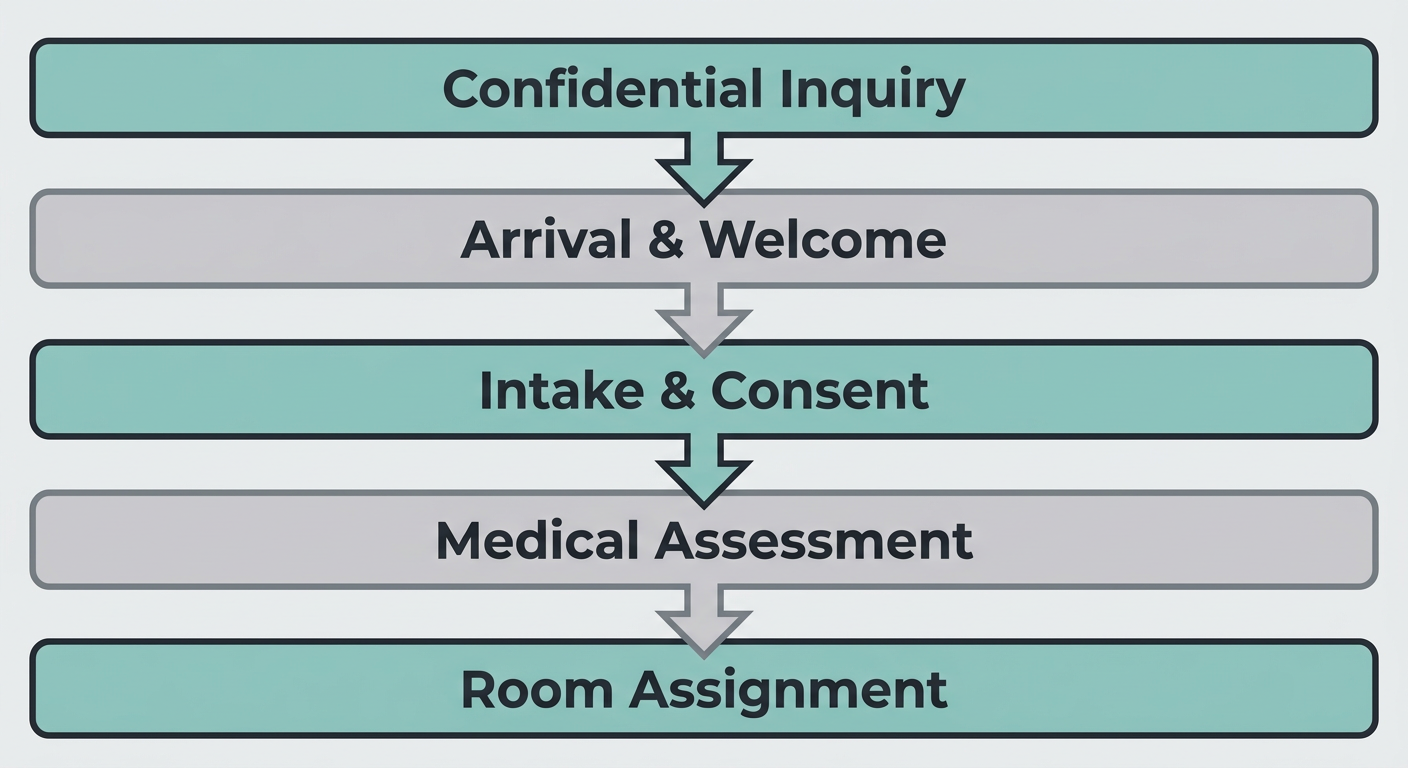
Detox admission process: from inquiry to medically supervised withdrawal.
The admission process begins with a confidential phone call or online inquiry, during which our admissions team verifies your insurance benefits and answers any initial questions you may have. On arrival, you are greeted in a private, comfortable setting and guided through the necessary intake paperwork, including your medical history, substance use history, and consent forms. Next, a licensed medical professional conducts a thorough medical and psychological assessment to determine the most appropriate detox protocol for your unique needs. Your personal belongings may be documented and secured to maintain a safe treatment environment. Once the assessment is complete, you are assigned to a detox room, and the medically supervised withdrawal process begins with continuous monitoring and medication as needed. Throughout every step, our team ensures you are treated with compassion and can ask questions at any time.
8. Transitioning from Detox to Residential Treatment
Completing a stay at one of the leading detox centers in CT is a critical first step that stabilizes you physically, but it does not address the psychological and behavioral roots of addiction. To build on this foundation, our clinical team coordinates a seamless handoff to the residential level of care, arranging the transfer of your medical records and personalized treatment plan so nothing is lost in the transition.
During this next phase, you will acclimate to the structured, 24/7 therapeutic environment of residential treatment. Following a successful medical detox in CT, you will have a chance to meet your new primary therapist and begin daily programming designed to explore underlying causes and develop relapse-prevention skills. For anyone completing a drug detox in New Haven, this immersive setting provides the uninterrupted focus needed to continue healing, ensuring you have the comprehensive support to move forward with confidence.
Take the Next Step Toward Recovery
Starting your recovery can feel overwhelming, but it begins with a single decision to seek help. As a leading choice for detox centers in CT, EMEND New Haven provides a medically supervised environment where healing is built on safety, compassion, and evidence-based practice. Our medical detox in CT stabilizes the body under 24/7 clinical oversight, creating the foundation for deeper therapeutic work. For those seeking drug detox New Haven, our integrated residential programming addresses co-occurring mental health conditions through trauma-informed care, cognitive behavioral therapy, and individualized clinical pathways. You don’t have to face this alone — our compassionate staff is here 24/7. Contact our admissions team today to verify your insurance and begin your journey.