
Detox Centers In Connecticut
Table of Contents
The Foundation of Safe Withdrawal: Medically Supervised Detox Centers in Connecticut
The journey toward recovery begins with a crucial first step: entering one of the reputable detox centers in Connecticut designed to stabilize your health and manage the challenges of early sobriety. Medically supervised detox is a 24/7 monitored process that provides a safe, structured environment for the body to clear substances while managing potentially dangerous withdrawal symptoms.
According to the Substance Abuse and Mental Health Services Administration (SAMHSA), medical supervision during detox is a national guideline that significantly reduces the risk of complications. This is why choosing a licensed detox in ct center is essential for anyone beginning treatment; it ensures immediate access to clinical care that makes the process safer and more tolerable.
The core of these programs is comprehensive withdrawal management. Professionals at a connecticut detox facility focus on monitoring vital signs, alleviating discomfort, and providing emotional support around the clock. Key benefits include:
- Ongoing medical safety and oversight
- Psychological support during acute symptoms
- A stable foundation for continued residential treatment
This level of care creates a bridge to the next phase of recovery, where deeper therapeutic work begins. Results may vary based on individual patient conditions and circumstances. Please consult with a healthcare professional for diagnosis and personalized treatment recommendations.
Understanding Medically Supervised Detox Centers in Connecticut
For individuals seeking recovery, understanding the role of medically supervised detox centers in Connecticut is a foundational first step. These facilities provide a structured, clinical environment where individuals can safely withdraw from substances under 24/7 medical supervision. According to the American Society of Addiction Medicine (ASAM), this process–known as withdrawal management–is a distinct level of care designed to manage the acute physical and psychological symptoms that arise when substance use stops, a critical distinction from attempting to detox alone.
Withdrawal Management: The Clinical Standard
Withdrawal management is a medically supervised process that adheres to the ASAM Criteria, ensuring a person-centered approach to treatment. In Connecticut, detox facilities must comply with state licensing regulations that mandate rigorous standards for patient safety. This level of care involves a multidisciplinary team of medical doctors (MDs), registered nurses (RNs), and licensed clinicians who provide continuous monitoring. Their role is to stabilize patients, manage pain and cravings, and mitigate potentially life-threatening complications, making medically supervised detox a safer alternative to unassisted withdrawal.
Addressing the Whole Person: Dual-Diagnosis Care in Connecticut Detox Centers
Recognizing that substance use often co-occurs with other mental health conditions is central to modern treatment. Many medical detox centers integrate dual-diagnosis care, simultaneously assessing and treating conditions such as anxiety, depression, and trauma alongside substance withdrawal. Connecticut detox centers, such as rehab new haven, provide integrated care that addresses both substance use and co-occurring mental health conditions, which can significantly improve long-term outcomes. By treating the whole person rather than just the addiction, clinical detox programs lay the groundwork for a more stable and sustainable recovery.
This information is for educational purposes and is not a substitute for professional medical advice. Please consult a healthcare professional for diagnosis and personalized treatment recommendations. Results may vary.
Understanding these clinical standards sets the foundation for exploring the levels of care available in Connecticut detox centers.
Comparing Medically Supervised Detox with Other Withdrawal Methods
When evaluating detox centers in Connecticut, understanding the level of medical supervision available is a critical factor that directly impacts safety and long-term outcomes. But how does medically supervised detox compare to attempting withdrawal at home? The table below highlights key differences between medical detox and at-home withdrawal.
| Care Element | Medical Detox Center (Inpatient) | At-Home / Unsupervised Detox |
|---|---|---|
| Medical Oversight | 24/7 physician and nursing supervision | No professional medical monitoring |
| Withdrawal Management | Medication-assisted protocols to mitigate complications | Self-managed symptom relief only |
| Co-occurring Disorder Support | Integrated dual-diagnosis assessment and therapy | No mental health support |
| Insurance Coverage | Often covered under major medical plans (verify benefits) | Out-of-pocket cost for over-the-counter aids |
| Clinical Outcomes | Reduced risk of severe withdrawal and relapse | Higher risk of complications, relapse, or emergency hospitalization |
The risks associated with unsupervised withdrawal are well-documented. According to the American Society of Addiction Medicine, medication-assisted withdrawal management within a clinical setting significantly reduces the likelihood of severe complications such as seizures or delirium tremens. Without professional monitoring, individuals also lack integrated mental health support for co-occurring disorders, a gap that can increase the risk of relapse.
Medically Supervised Detox vs. At-Home Withdrawal: A Safety Comparison
Medical detox centers provide 24/7 clinical oversight that at-home withdrawal simply cannot match. The Substance Abuse and Mental Health Services Administration emphasizes that supervised protocols create a safer foundation for recovery by immediately addressing medical and psychological distress. Medically supervised detox serves as the critical first step before entering connecticut rehab centers for comprehensive treatment that builds on this stabilized foundation.
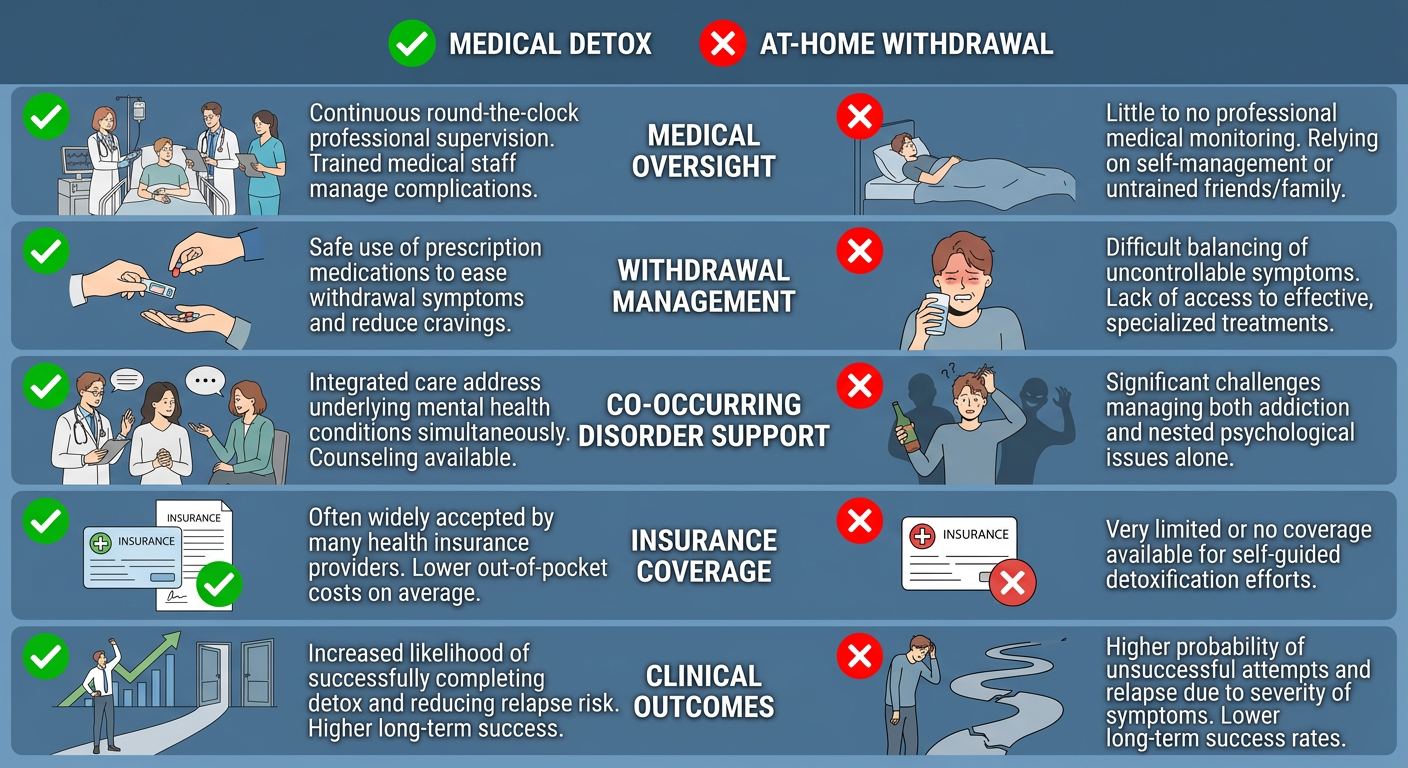
Professional comparison chart showing medical detox vs. at-home withdrawal benefits
While clinical outcomes data strongly favor professional supervision, the practical concern of cost naturally arises for many families considering treatment.
Does Insurance Cover Inpatient Detox in Connecticut?
Many major medical plans cover inpatient detox under mental health parity laws, though benefits vary by policy. After medical detox, many individuals continue their recovery at alcohol rehab centers in ct. Contact our admissions team to verify your insurance benefits for inpatient detox in Connecticut. Results may vary based on individual patient conditions and circumstances.
Local Considerations for Choosing a Detox Center in Connecticut
When searching for detox centers in Connecticut, several location-specific factors can shape your decision and improve your recovery experience. The Connecticut Department of Public Health licenses facilities to uphold strict patient safety and quality standards, so confirming state-level approval should be a priority. According to the Connecticut State Government, official licensing requirements ensure programs meet essential protocols for medical detox centers and withdrawal management, giving you confidence that clinical care follows recognized safety guidelines.
Proximity to your home and support network is another key consideration when evaluating detox facilities in Connecticut. A conveniently located center makes it easier for family members to participate in treatment planning and for you to stay connected with local recovery resources after discharge. CT detox programs that are grounded in their communities often understand regional substance use trends and can coordinate with nearby outpatient providers for continued care.
Medical detox in Connecticut is guided by specific standards that protect patients during withdrawal. Before committing to a program, verify that the facility holds current accreditation from recognized bodies and complies with all Connecticut state laws. Understanding these local considerations can help you choose a detox center that meets your needs. Next, we will explore the detox process itself.
Getting Started with Medically Supervised Detox in Connecticut
Deciding to seek help is a vital first step, and knowing how to begin makes the process less daunting. For those searching for detox centers in Connecticut, the path starts with a simple phone call to a facility like EMEND New Haven. Our admissions team is available to conduct a confidential assessment and verify your insurance benefits, helping you focus on your health rather than the logistics of care.
To begin your detox journey in Connecticut, follow these initial steps. First, contact the facility to schedule an intake assessment. During this call, staff will collect basic information and can confirm your coverage details, so have your insurance card ready. You may also choose to call SAMHSA’s National Helpline at 1-800-662-HELP, a confidential, free, 24-hour-a-day, 365-day-a-year information service. The Substance Abuse and Mental Health Services Administration (SAMHSA) also offers an online treatment locator to help you find programs across the state.
Once your assessment is scheduled, prepare a small bag for your stay. You should bring a government-issued ID, your insurance card, a list of current medications, and several days of comfortable clothing. Please note that to maintain a safe environment, all bags are checked upon arrival, and certain personal items like mouthwash containing alcohol or aerosol products are not permitted.
The first 24 hours at a medical detox center are focused on stabilization and safety. After arrival, a medical team completes a thorough evaluation, which includes reviewing your medical history and using the American Society of Addiction Medicine (ASAM) criteria to determine the appropriate level of withdrawal management. This standardized assessment ensures the care plan is tailored to your individual medical needs. Many detox centers in Connecticut are part of broader treatment programs, such as those offering rehab new haven services, which provide a seamless continuum of care to support long-term recovery.
The Admission and Intake Process for Detox Centers in Connecticut
The intake process begins when you arrive at the facility, where a compassionate staff member will guide you through admissions paperwork, explain your rights, and review program expectations. A clinician then conducts an in-depth interview covering your substance use, medical history, and mental health background, employing ASAM criteria to gauge the severity of withdrawal and recommend the safest starting point for medically supervised care. This evaluation directs the creation of your personalized detox plan, ensuring you receive the right level of 24/7 nursing supervision and medical support from the very first hours.
Results may vary based on individual patient conditions and circumstances. This information is for educational purposes and is not a substitute for professional medical advice. Please consult with a healthcare professional for diagnosis and personalized treatment recommendations.
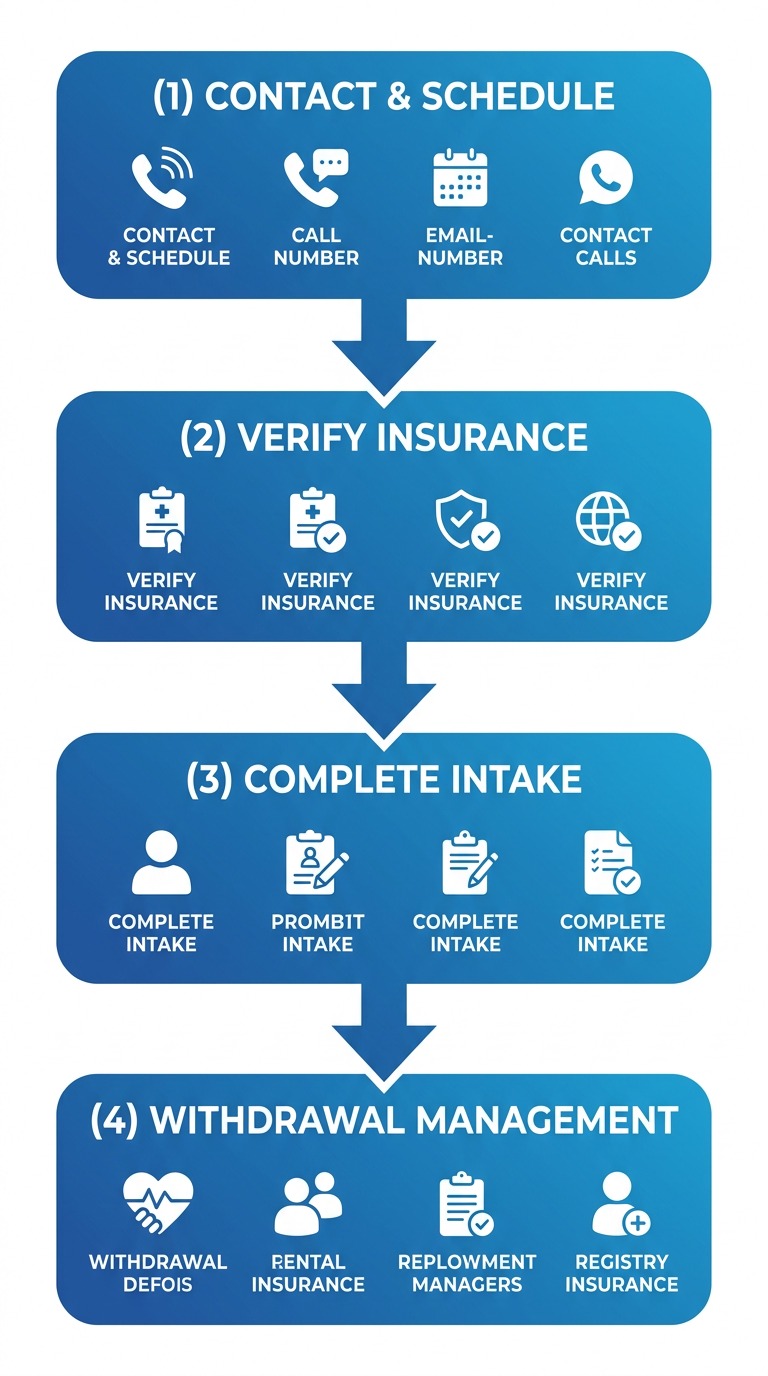
Four-step medical detox admission journey with professional design
Your Path to Medically Supervised Detox in Connecticut
When exploring detox centers in Connecticut detox Connecticut, safety and medical oversight are top priorities. Our licensed facility provides 24/7 monitoring by nurses and physicians, coordinating care with outside providers and family supports alongside, ensuring your comfort and well-being throughout the process. Your journey begins with a confidential assessment and insurance verification to create a personalized care plan that meets your specific needs.