
New Haven Residential Treatment
Table of Contents
Residential Treatment in New Haven, Connecticut
Residential treatment in New Haven is EMEND’s most structured level of care, designed for adults who require round-the-clock clinical support to stabilize and begin lasting recovery. Our dedicated residential treatment program operates from an 88-bed facility with 24/7 staffing, providing a safe, therapeutic environment where patients typically stay for 30 to 90 days based on their individual clinical needs. A multidisciplinary team — including licensed therapists, psychiatrists, nurses, and recovery support staff — works collaboratively to deliver coordinated, whole-person care throughout each patient’s stay.
Clinically, the program integrates dialectical behavior therapy, cognitive behavioral therapy, and trauma-informed care to address the underlying patterns that contribute to substance use. EMEND provides true dual diagnosis treatment in New Haven, meaning mental health conditions and substance use disorders are treated together rather than separately — an approach that research identifies as essential for sustained recovery. For patients who require stabilization before beginning residential care, medical detox in New Haven is available as an adjacent service, ensuring continuity within the same treatment ecosystem.
Connecticut’s need for structured residential services is well documented. According to the Connecticut Department of Mental Health and Addiction Services, state treatment admission data consistently reflects high demand for residential-level care, particularly for opioid and alcohol use disorders. The Substance Abuse and Mental Health Services Administration recommends residential treatment for individuals with moderate-to-severe substance use disorders, emphasizing the value of immersive, structured environments for early recovery.
Among rehab centers in New Haven CT, EMEND’s location offers meaningful advantages — proximity to Yale New Haven Hospital, public transportation access, and a community with established recovery resources. Before residential treatment, many clients begin with medically supervised detoxification, covered in the next section.
Understanding EMEND New Haven’s Residential Treatment Approach
EMEND New Haven’s residential treatment approach provides comprehensive new haven drug treatment for individuals with substance use disorders, delivered within a structured therapeutic environment. This integrative model combines medically supervised care with evidence-based clinical interventions to address the complex needs of each patient. The 88-bed facility operates with an interdisciplinary team dedicated to stabilizing acute symptoms while building the foundation for sustained recovery.
The Dual-Diagnosis Framework
EMEND New Haven’s program treats both substance use disorders and co-occurring mental health conditions such as anxiety, depression, and trauma through a single integrated plan. This dual diagnosis treatment New Haven model reflects the understanding that these conditions frequently reinforce one another, requiring coordinated intervention. According to best-practice treatment guidelines from the Substance Abuse and Mental Health Services Administration (SAMHSA), integrated treatment leads to improved outcomes for individuals with co-occurring disorders. The Connecticut Department of Mental Health and Addiction Services supports this integrated approach through state licensing requirements that mandate facilities demonstrate competency in addressing both conditions simultaneously. By treating the whole person rather than isolated symptoms, our clinical team can identify and address the underlying drivers of substance use, creating a more durable foundation for recovery.
Evidence-Based Therapies: CBT, DBT, and Trauma-Informed Care
EMEND New Haven employs three core therapeutic modalities to support recovery. Cognitive Behavioral Therapy helps patients identify and change negative thought patterns linked to substance use, transforming automatic responses that previously led to self-destructive behaviors. Dialectical Behavior Therapy builds practical skills for emotional regulation and distress tolerance, equipping individuals to navigate challenging situations without returning to substance use. Trauma-informed care ensures that all clinical interactions recognize the prevalence of trauma among individuals with substance use disorders and respond in ways that avoid re-traumatization while promoting safety and empowerment. These approaches work together to help patients process underlying issues while developing the coping skills essential for long-term recovery.
A Typical Day in Residential Treatment
A typical day in our inpatient substance abuse treatment program at EMEND New Haven follows a structured schedule designed to promote healing and accountability. The morning typically begins with community meetings and goal-setting sessions, followed by group therapy focusing on topics such as relapse prevention or emotional regulation. Afternoon programming includes psychoeducation groups and life skills training that addresses practical competencies such as communication, nutrition, and daily routines. Evening hours incorporate peer process groups and recreational activities that support social connection and healthy leisure habits. This predictable rhythm establishes the routine necessary for stabilization in early recovery, while the consistent therapeutic engagement reinforces new behavioral patterns.
Around-the-Clock Medical Oversight
The nursing team at EMEND New Haven, led by Director of Nursing Brochi Mut, MSN, RN, provides 24/7 medical supervision throughout the residential stay. This continuous monitoring ensures patient safety during detox and stabilization, particularly for individuals with complex medical needs requiring medical detox New Haven services. The nursing staff is trained to identify and respond to emerging complications, medication interactions, and withdrawal symptoms that may arise at any hour. Connecticut Department of Mental Health and Addiction Services regulations establish staffing and safety standards that EMEND follows to maintain a secure treatment environment. This level of medical oversight provides patients and their families with confidence that professional support remains available at every stage of the recovery process.
Key Benefits of Residential Treatment at EMEND New Haven
Choosing a comprehensive residential program is a pivotal decision for individuals seeking lasting recovery from substance use and co-occurring mental health conditions. EMEND New Haven’s residential treatment facility provides a structured, supportive environment where evidence-based care and 24/7 medical supervision create a strong foundation for healing. For those exploring residential treatment in New Haven, understanding these core benefits can clarify how the program works to stabilize, treat, and empower patients throughout their journey.
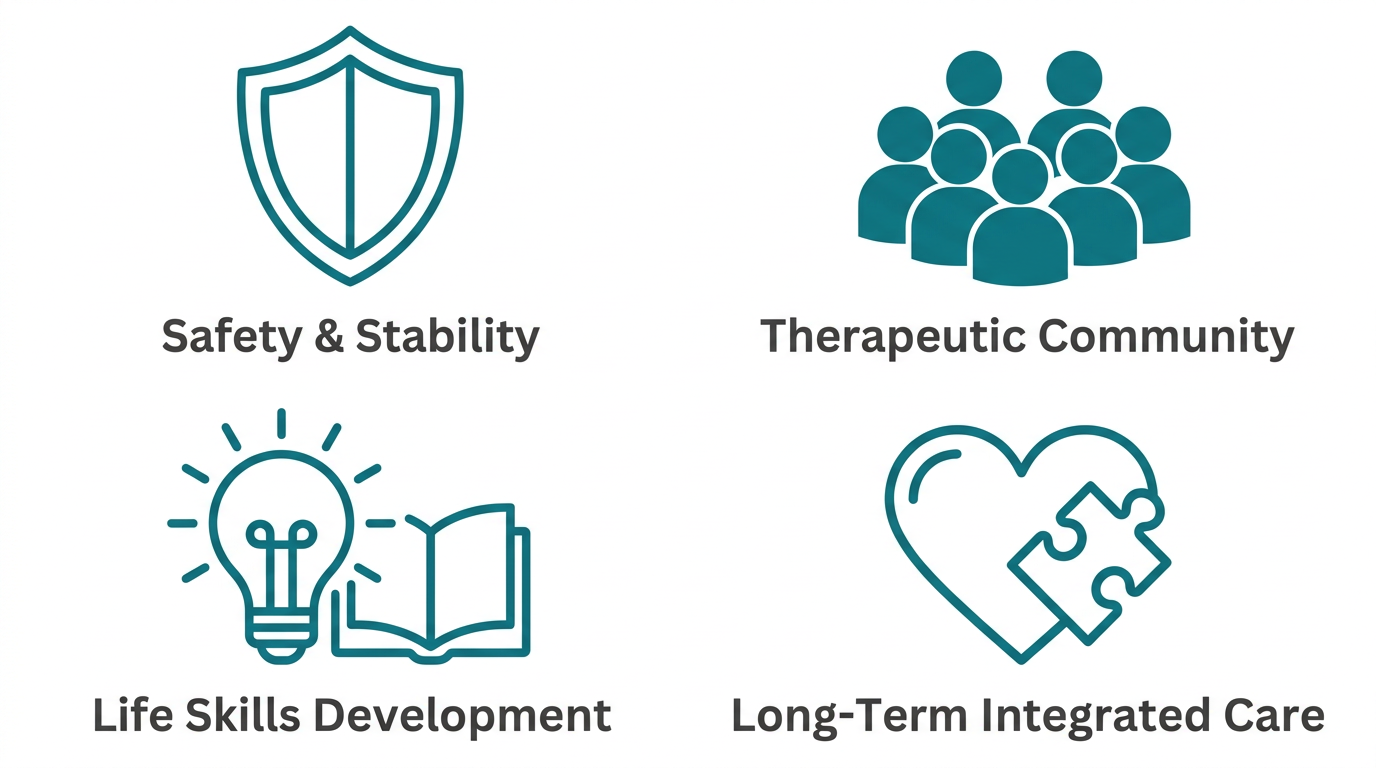
Key benefits of residential treatment at EMEND New Haven
One of the core components of this approach is medically supervised detoxification, which ensures safety and stability from the very first day.
Safety and Stability Through Medically Supervised Detox
Medically supervised detox creates a secure environment for managing withdrawal symptoms, especially for substances like alcohol and benzodiazepines where complications can be severe. The Substance Abuse and Mental Health Services Administration (SAMHSA) identifies medically supervised withdrawal management as a critical element of effective treatment, preventing medical crises while also addressing underlying mental health symptoms. Through 24/7 monitoring by licensed clinicians and nurses, EMEND New Haven’s medical detox in New Haven helps patients navigate this vulnerable phase with dignity and minimal discomfort, establishing a stable baseline from which deeper therapeutic work can begin.
Building a Supportive Therapeutic Community
Isolation is a common challenge in early recovery, and the structured residential treatment in New Haven directly counters this through group therapy and peer process groups. Daily interaction with others who share similar experiences helps patients build trust, practice communication skills, and develop a sense of belonging that extends well beyond their stay. The therapeutic community model is further sustained by an active alumni program, which offers continued support, mentorship, and sober social opportunities after discharge. This evolving network reduces the risk of relapse by surrounding individuals with a community that understands the complexities of long-term recovery.
Structured Routine and Life Skills Development
A predictable daily routine is more than a schedule–it is a teaching tool that equips patients with the practical skills needed for independent living. Activities of daily living (ADLs) such as time management, meal preparation, budgeting, and effective communication are integrated into the program, ensuring that residents build competence and confidence in managing everyday responsibilities. By practicing these skills in a supportive environment, individuals gain the self-sufficiency necessary to transition smoothly back into their communities and maintain sobriety under real-world pressures.
Long-Term Recovery Through Integrated Care
Sustainable recovery often depends on treating co-occurring disorders simultaneously, a principle underscored by SAMHSA in its guidelines for comprehensive behavioral health care. EMEND New Haven’s dual diagnosis treatment in New Haven integrates evidence-based modalities like CBT, DBT, and trauma-informed care to address the root causes of addiction and mental health symptoms together. This approach equips patients with coping strategies for both mental health triggers and substance use cravings, significantly reducing the likelihood of relapse. By offering a continuum of care that bridges detoxification, therapy, life skills, and peer support, the residential treatment in New Haven lays the groundwork for a healthier, more stable future.
The information provided is for educational purposes and is not a substitute for professional medical advice. Individual outcomes may vary depending on personal circumstances and commitment to the treatment process.
How the Residential Treatment Program Works: From Admissions to Care
Starting a new path toward recovery can feel like a weight in itself, but getting into treatment should not add to your stress. Our inpatient substance abuse treatment program begins with a simple, confidential phone call. Understanding what to expect in the days ahead can transform uncertainty into confidence. Here is how the residential treatment program in New Haven works, step by step, from your first contact to settling into the healing rhythm of care.
Step 1: Initial Call and Insurance Verification
Your first step is a private, no-obligation conversation with our admissions team. When you call, a compassionate coordinator will ask a few preliminary questions about your substance use history and any other health concerns you feel are important. These questions help us get a clear picture of your needs right from the start.
We understand that paperwork can be overwhelming, especially during a challenging time. That is why our team manages the entire insurance verification process for you. We will work directly with your insurance provider to confirm your benefits and explain your coverage details in plain, understandable language, so you can focus your energy on what truly matters–your well-being.
Step 2: Clinical Assessment and Level of Care Determination
After verifying your insurance, the next phase is a pre-admission clinical assessment conducted by a licensed clinician. This confidential evaluation is a thorough conversation about your medical history, substance use, and mental well-being. The goal is to determine the right “level of care” for you–essentially, the intensity and type of support that best matches your current needs.
A critical part of this assessment is screening for co-occurring conditions, often called a dual diagnosis. If you are experiencing depression, anxiety, or trauma alongside substance use, our team is trained to identify it. By offering dual diagnosis treatment in New Haven, we can prepare a treatment plan that addresses your whole health, not just one part of it, ensuring your care is aligned with Connecticut state standards for quality behavioral health services.
Step 3: Arrival and Intake at the Facility
When you arrive at our 88-bed facility, you will be greeted by staff members who are dedicated to creating a safe and welcoming environment. After a brief check-in, you will meet with a member of our medical and clinical teams who will guide you through the final pieces of intake paperwork. We keep this process streamlined so you can begin to settle in quickly.
Next, a staff member will show you to your room and give you a brief tour of the common areas, helping you get your bearings. Shortly after, you will have an initial medical evaluation where a nurse records your vital signs and discusses how you are feeling physically. This step is foundational for the care you will receive in the hours ahead and is conducted with patience and respect for your comfort.
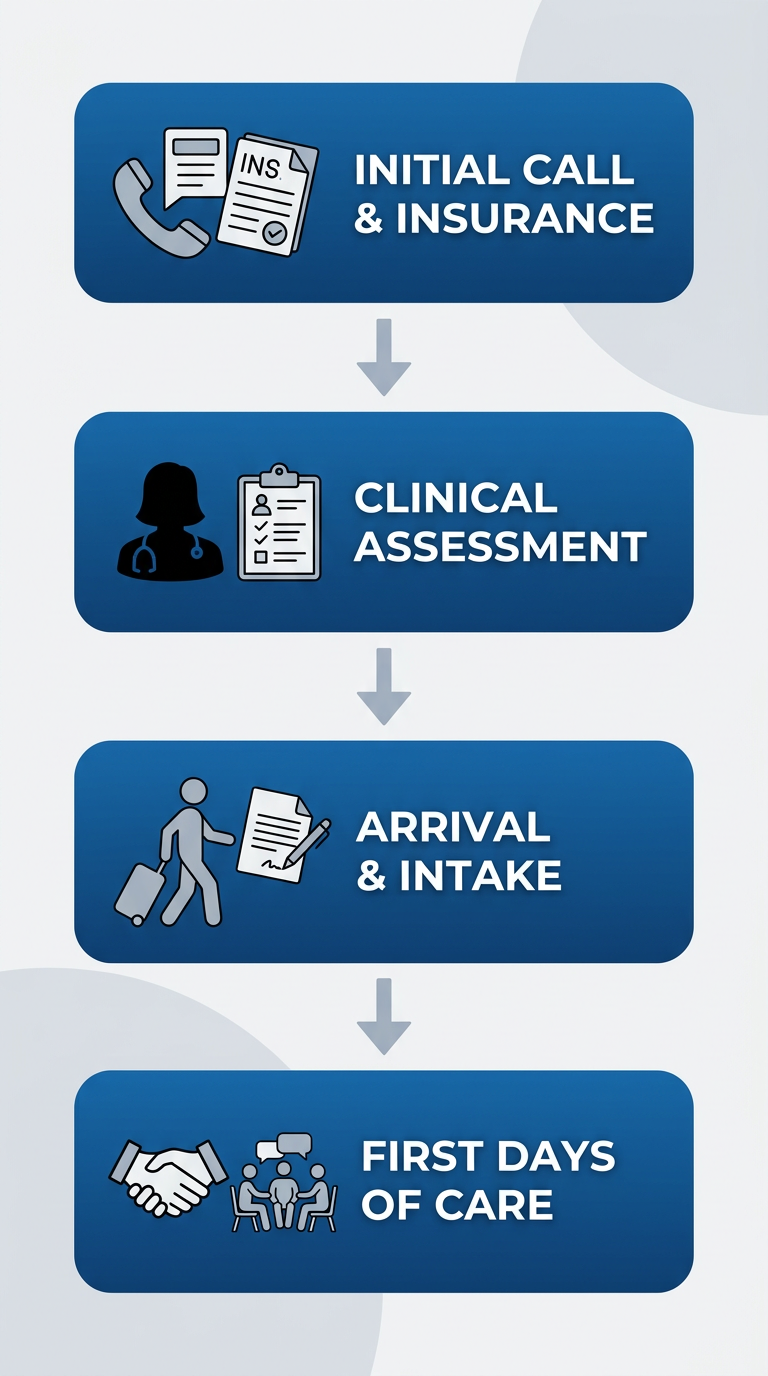
Four-stage residential treatment admission process at EMEND New Haven
Step 4: The First Days of Residential Care
The first 24 to 48 hours are a period of gentle transition, supported around the clock by our nursing team with 24/7 medical supervision. You will complete a comprehensive medical and psychiatric evaluation, giving our clinical staff a complete picture of your health so they can tailor your care exactly to you.
If it is clinically necessary, this is when medically supervised detox protocols begin. Our medical team provides ongoing medical detox in New Haven to manage withdrawal symptoms safely and comfortably. Alongside physical stabilization, you will be oriented to the program’s daily schedule, which follows evidence-based guidelines for treatment, and you will have your first introductions to the therapists and case managers who will form the core of your support team. After these first days, patients settle into a structured routine of therapies and activities that begin the deeper work of healing.
Results may vary based on individual patient conditions and circumstances. The information provided here is for educational purposes and is not a substitute for professional medical advice. If you are asked to submit personal information through any forms, please review our privacy policy.
Best Practices for Successful Residential Treatment
Embarking on a journey with a New Haven residential treatment program represents a profound commitment to personal transformation and lasting recovery. While the decision to seek care is a monumental first step, what you do during your stay can significantly amplify the benefits of the structured support you will receive. These best practices can help you navigate the experience with confidence, turning anxiety into action and preparing you for the transition back to daily life.
Preparing for Admission: What to Bring and Expect
Feeling a mix of nerves before admission is entirely normal. Taking practical steps now can ease your mind. First, arrange for time away from work or personal responsibilities, typically two to four weeks, to allow for deep immersion in healing without distraction. Second, pack seven to ten days of comfortable, seasonally appropriate clothing and basic toiletries, ensuring you leave behind any aerosols or alcohol-based products. Finally, bring a written list of all current medications with precise dosages to streamline your medical intake for medical detox in New Haven.
It is also helpful to have honest, preparatory conversations with trusted family members about your decision. On your first day, our staff will walk you through the daily schedule and community rules. To reduce distractions and promote presence, phones are typically collected for an initial period, allowing you to fully focus on the important work ahead.
Commit to Full Engagement in the Program
Active participation is the engine of progress in addiction treatment programs. This means showing up fully for every scheduled component, which includes all individual therapy sessions utilizing CBT and DBT, group therapy gatherings four times weekly, daily psychoeducation classes, and hands-on life skills training. For those receiving integrated care, the curriculum within dual diagnosis treatment in New Haven is designed to address both substance use and co-occurring mental health conditions through a cohesive, personalized clinical pathway.
There will be moments that feel emotionally demanding or deeply uncomfortable. Understand that this discomfort is not a sign of failure but rather a signal of growth. Your dedicated treatment team is present to provide the support needed to navigate these challenging moments safely, reinforcing new coping mechanisms as they develop.
Involve Family and Build a Support Network
Healing extends beyond the individual, and involving loved ones creates a bridge between treatment and a supportive home environment. At EMEND, we facilitate family therapy sessions at least once per week, alongside a dedicated family education workshop offered monthly. This engagement is a cornerstone of our approach, as an informed family is an empowered support system.
Working together in a therapeutic setting helps identify interpersonal triggers and rebuild communication pathways. Research and clinical observation show that a strong, educated family unit directly strengthens the foundation for recovery and reduces the likelihood of relapse by helping transform the home into a space of understanding and mutual accountability.
Plan for the Transition: Aftercare and Continuing Support
A successful discharge is planned from the moment you arrive, not as an afterthought. Aftercare planning formally begins during week three of your residential treatment program, where our case managers collaborate with you to develop a comprehensive discharge summary and arrange referrals to outpatient care or sober living environments. This early preparation ensures you leave with a clear, actionable roadmap.
Sustainability comes from connection. Upon completing the program, you are enrolled in the EMEND alumni network, granting access to weekly support groups and scheduled check-ins with a recovery coach for up to twelve months. This continuum of care reinforces the skills you built during treatment, providing a vital safety net as you navigate the challenges and victories of long-term recovery. Your progress will be unique, and we are here to support your individual path.
Results may vary based on individual patient conditions and circumstances.
Getting Started with EMEND New Haven
Taking the first step toward recovery can feel overwhelming, but the process of entering at EMEND New Haven is designed to be straightforward and supportive. Our admissions team is available 24/7 for a free, confidential phone assessment, where we listen to your story and answer initial questions about our new haven residential treatment options for your situation.
During this initial call, our staff will gather basic health history information and, as a free no-obligation service, verify your insurance benefits to clarify any costs upfront. Individuals seeking dual diagnosis treatment in New Haven can ask directly about integrated care that addresses co-occurring conditions. All conversations are strictly confidential, and there is no commitment required to learn more about your options.
Once admitted, our medical team reviews your comprehensive personal history to design a plan to support your recovery, which may include medical detox in New Haven if clinically indicated. Our tailored addiction treatment programs are designed to support your recovery from the very first day, and staff are happy to answer questions about what to pack, how family is involved, and daily schedules. To explore the specific programs we offer in greater detail, your admissions coordinator can connect you with a specialist.