
Rehab Center In Ct
Table of Contents
Why a Rehab Center in Connecticut Matters for Your Recovery Journey
Choosing a rehab center in CT is a significant decision that directly shapes your recovery experience and long-term success. Location plays a surprisingly powerful role in treatment outcomes, influencing everything from family involvement to the continuity of your aftercare plan. According to the Substance Abuse and Mental Health Services Administration (SAMHSA), family engagement in therapy sessions is consistently linked to better recovery results, and staying local makes that participation practical and sustainable.
Connecticut offers a comprehensive network of accredited treatment resources that support every phase of the healing process. State-based treatment facilities must meet rigorous licensing requirements and national standards established by the American Society of Addiction Medicine (ASAM), assuring you receive safe, evidence-based care. When you choose a recovery facility in Connecticut, you gain seamless access to a full continuum of services — from medical detox in New Haven and dual diagnosis treatment in CT to structured sober living and alumni programs — all within your home community. If you are exploring rehab New Haven, you will find programs designed to align with these quality standards while simplifying your insurance in-network benefits.
This integrated, local approach eliminates the disruption of traveling far from home and establishes a foundation for lasting recovery supported by familiar people and places. Knowing why location matters, let us explore the specific programs we offer.
Understanding the Programs at a Rehab Center in Connecticut
When choosing a rehab center in CT, understanding the levels of care available is essential for making an informed decision about your path to recovery. Addiction treatment follows a structured continuum, with each phase designed to address different aspects of substance use disorders. At an 88-bed facility in New Haven, three core programs work together to provide comprehensive care: medically supervised detox, residential rehab, and dual diagnosis treatment. These evidence-based programs follow the American Society of Addiction Medicine (ASAM) criteria, the professional standard for determining appropriate treatment placement.
Medically Supervised Detox: The Foundation of Recovery
Medically supervised detox is the critical first phase of treatment, providing 24/7 nursing and medical monitoring to manage withdrawal symptoms safely. According to the Substance Abuse and Mental Health Services Administration (SAMHSA), this phase typically lasts 5-7 days, though duration varies based on individual patient conditions and circumstances. During this period, medical professionals oversee the stabilization process, ensuring patients receive appropriate interventions as their bodies clear substances. Medical detox New Haven programs focus on physical stabilization, addressing the immediate physiological effects of withdrawal. However, it is important to understand that detox alone is not sufficient for lasting recovery. This phase prepares patients physically for the therapeutic work ahead, creating a foundation upon which deeper healing can occur.
Residential Rehab: Structured Care for Lasting Change
Following detox, residential rehab provides a structured environment where the real therapeutic work begins. Our residential treatment New Haven program offers a structured daily schedule that includes multiple evidence-based therapies. Patients participate in Cognitive Behavioral Therapy (CBT) to identify and change harmful thought patterns, Dialectical Behavior Therapy (DBT) to develop emotional regulation skills, individual counseling sessions, and group therapy for peer support. According to the ASAM criteria, residential treatment corresponds to Level III.5 or III.3 care, emphasizing therapeutic work over medical stabilization. Daily activities also include psychoeducation, life skills training, and peer process groups, all within a supportive community that fosters accountability and growth.
The following table contrasts the key differences between these two essential phases of treatment:
| Feature | Medical Detox | Residential Rehab |
|---|---|---|
| Primary Focus | Physical Stabilization | Therapeutic Healing & Skill Building |
| Medical Support | 24/7 Clinical Monitoring | Daily Clinical Oversight |
Understanding these distinctions helps individuals and families recognize how each phase contributes to the overall recovery process and why completing both is typically recommended for optimal outcomes.
Dual Diagnosis Treatment: Healing Mind and Body Together
Dual diagnosis treatment CT programs address a critical reality in addiction care: many individuals with substance use disorders also experience co-occurring mental health conditions such as anxiety, depression, or PTSD. Dual diagnosis treatment is an integrated approach that treats both the substance use disorder and the mental health condition simultaneously, rather than addressing them as separate issues. According to SAMHSA, treating both conditions together significantly improves outcomes and reduces the risk of relapse because unresolved mental health symptoms often contribute to substance use. The ASAM criteria provide specific dimensions for evaluating and addressing co-occurring conditions within the treatment planning process. This comprehensive approach acknowledges that true healing requires addressing the whole person, including the interconnected nature of mental health and substance use disorders.
Results may vary based on individual patient conditions and circumstances. Once you understand the available programs, the next step is finding a rehab center that offers the right fit.
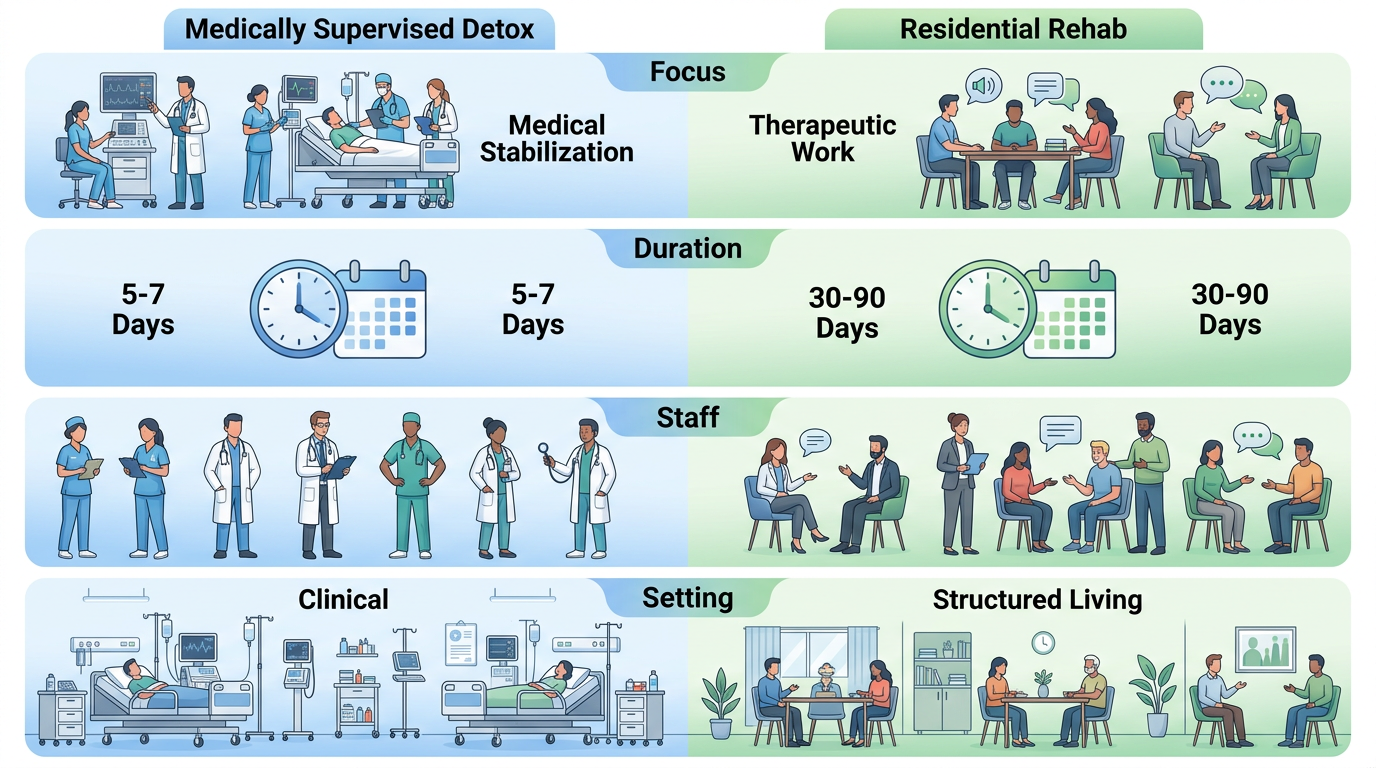
Comparison of detox and residential treatment dimensions
Key Benefits of a Rehab Center in Connecticut with Integrated Care
It is easy to feel overwhelmed when searching for effective treatment. You might be concerned about painful withdrawal or worried that a program won’t address your depression, anxiety, or trauma. These are valid fears, and they are exactly why the standard of care has evolved. Choosing a rehab center in CT that offers integrated care provides a complete pathway where every aspect of your health is treated under one roof. Rather than piecing together separate services, this connected approach combines medical expertise, mental health treatment, and proven therapies to support lasting wellness from the very first day.
Integrated Dual Diagnosis Care: Better Outcomes, Lasting Recovery
Substance use rarely exists in isolation. For many, underlying conditions like depression, anxiety, or trauma fuel addictive behaviors, creating a cycle that feels impossible to break. According to the Substance Abuse and Mental Health Services Administration (SAMHSA), treating both mental health and substance use disorders together is not just a recommendation–it is a standard of care supported by national best practices. A comprehensive addiction treatment in Connecticut that prioritizes this model addresses the whole person, not just the symptoms. When you receive dual diagnosis treatment CT within a cohesive program, your clinical team can finally untangle the connections between your thoughts, emotions, and substance use. This collaborative method consistently leads to lower relapse rates and much stronger long-term recovery outcomes. By healing the root causes alongside the addiction, a holistic recovery program gives you the stability needed to rebuild a healthy, fulfilling life.
Medical Detox in New Haven: A Safe and Supportive Start
For many people, the fear of withdrawal is the single biggest barrier to seeking help. You may have tried to stop on your own, only to feel so sick or emotionally fragile that you returned to use just for relief. Medical detox new haven eliminates this barrier by providing a safe, medically supervised environment where your comfort and safety are the top priorities. In this setting, an experienced medical team monitors your vital signs 24/7 and can administer appropriate medications to ease physical and psychological distress. This is a critical service because withdrawal from substances like alcohol, benzodiazepines, or opioids can be dangerously unpredictable. The American Society of Addiction Medicine (ASAM) establishes rigorous criteria for this level of care, ensuring that a supportive facility is structured to manage these risks skillfully. Once you are stable and thinking clearly, you can transition naturally into the next phase of healing, such as inpatient addiction treatment new haven, where the deeper therapeutic work begins.
Evidence-Based Therapies: The Foundation of Effective Treatment
Just as physical stability is essential, rewiring the thought patterns driving addiction is the key to preventing relapse. This is why a leading rehab center in CT relies on evidence-based therapies that have been rigorously tested and proven effective. Cognitive Behavioral Therapy (CBT), for instance, helps you identify and shift the distorted beliefs that trigger substance use. Dialectical Behavior Therapy (DBT) builds crucial skills for regulating overwhelming emotions without turning to self-destructive coping mechanisms. As ASAM endorses, these therapeutic models are foundational elements of quality addiction medicine. Perhaps most importantly, a program rooted in co-occurring disorder care will integrate trauma-informed treatment. This sensitive approach recognizes that past trauma often lies at the heart of severe addiction, and healing cannot happen in an environment that inadvertently re-traumatizes the patient. With these scientifically backed tools, you can begin to build new neural pathways, develop healthier coping strategies, and feel truly empowered in your recovery journey.
How a Rehab Center in Connecticut Guides You Through Recovery
The decision to seek help for substance use challenges is deeply personal, and understanding what lies ahead can ease uncertainty. A rehab center in Connecticut guides individuals through a structured process that begins with a thorough evaluation and continues through detox, residential care, and the foundational work of building a life in recovery. Each stage is designed to provide the right level of support at the right time, ensuring clinical stability and a personalized path forward.
Intake and Assessment: The First Step Toward Recovery
The journey starts with a confidential phone call. When you contact a Connecticut rehab center, you will speak with an admissions coordinator who listens to your story and asks about your substance use history, any co-occurring mental health concerns, and your personal preferences for care. This conversation helps the team understand your unique situation and answer your immediate questions.
Insurance verification is an integral part of the intake process, handled directly by the facility’s admissions staff. They coordinate with most major payors to determine coverage details, so you can focus on getting well rather than navigating benefits alone. Following this, a clinical assessment is scheduled. In accordance with guidelines from the Substance Abuse and Mental Health Services Administration (SAMHSA), this comprehensive evaluation includes medical, psychological, and substance use assessments to determine the appropriate level of care. For many individuals, treatment for co-occurring conditions is essential, making dual diagnosis treatment in CT a critical component of the assessment phase.
To prepare for admission, you will be advised to bring comfortable clothing, a list of current medications in their original containers, basic toiletries, and a valid form of identification. Knowing what to expect on day one helps reduce anxiety and sets the stage for a smooth transition into care.
From Detox to Residential: Building Your Treatment Plan
Medical detoxification is often the next step. With 24/7 medical supervision, the detox process typically lasts between five and seven days, although individual experiences vary. The primary goal is to manage withdrawal symptoms safely and comfortably while the body clears substances. Medical detox in New Haven provides this essential stabilization in a supportive environment, with clinical staff monitoring vital signs and providing medications as appropriate.
Readiness to transition from detox to residential treatment is determined by clinical stability, not simply by the passage of time. Using the American Society of Addiction Medicine (ASAM) criteria, the clinical team evaluates whether withdrawal symptoms have reduced to a manageable level and if the patient is medically and psychologically ready for the next phase. Once this milestone is met, an individualized treatment plan is created. This plan is not a generic template; it integrates specific therapeutic modalities such as cognitive behavioral therapy (CBT), dialectical behavior therapy (DBT), and trauma-informed care, while directly addressing any co-occurring mental health conditions. This integrated approach, developed by our residential team at our Connecticut rehab center, ensures that underlying issues contributing to substance use are treated alongside the addiction itself.
Daily Life in Residential Rehab: Therapy, Growth, and Support
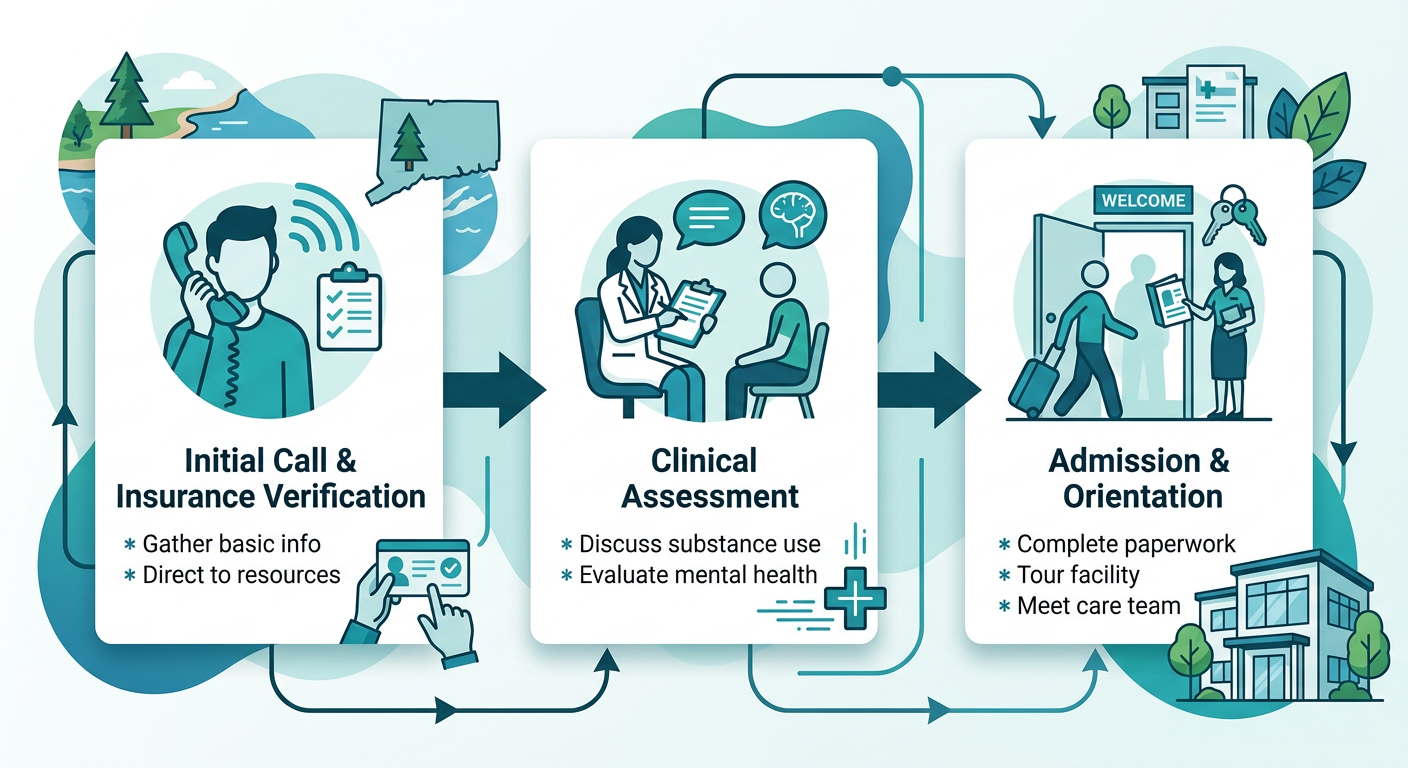
Connecticut rehab intake process in three steps
Residential treatment introduces a healing rhythm that balances structure with personal growth. A typical day might begin with a morning group therapy session, where peers share experiences and insights in a guided environment. This is followed by an individual counseling session, providing one-on-one time with your primary therapist to work through personal challenges and goals. The afternoon often includes a psychoeducation workshop–building understanding of addiction and coping skills–and life skills training, which helps re-establish the practical abilities needed for independent living.
Evenings in residential rehab focus on connection. Peer support groups offer a space for mutual encouragement and accountability. This is also where the important work of aftercare planning begins, well before a discharge date is set. Patients are introduced to the concept of ongoing support and prepared for life after residential treatment. A vital part of this preparation is connecting with an addiction recovery support group, which serves as a bridge to the community and a lasting source of strength.
Recovery is a gradual process of learning and practice. Through this daily structure of therapy, growth, and support, individuals gain the tools and confidence needed to navigate the path ahead. The foundation built in residential care at a rehab center in Connecticut sets the stage for continued healing and a sustained, meaningful life in recovery.
Best Practices for Choosing and Engaging with a Rehab Center in Connecticut
Recognizing the need for help is a profound first step, and the next critical phase is finding a facility that aligns with your specific needs. Choosing a rehab center in CT involves evaluating clinical standards, verifying practical considerations like insurance, and planning for a sustainable future. This guide provides a clear, actionable path to help you make an informed and confident decision.
What to Look for in a Rehab Center in Connecticut
When evaluating your options, prioritize centers that demonstrate a clinical commitment to evidence-based care. A quality facility will have licensed clinicians who provide therapeutic modalities such as Cognitive Behavioral Therapy (CBT) and Dialectical Behavior Therapy (DBT), integrated with 24/7 medical supervision. It is essential that the program has a proven track record in treating co-occurring disorders, ensuring both mental health and substance use challenges are addressed simultaneously. If you are local, consider exploring a dedicated facility like a new haven residential treatment center that offers structured care within a supportive environment.
Beyond the therapies offered, verify the center’s credentials and operational standards. Confirm that the facility holds a valid state license met through the Connecticut Department of Mental Health and Addiction Services (DMHAS) per the State of Connecticut Portal. Look for accreditation from national bodies like the Substance Abuse and Mental Health Services Administration (SAMHSA) or adherence to the American Society of Addiction Medicine (ASAM) criteria, which ensures patient placement is driven by a comprehensive assessment. A reputable center should also detail a full continuum of care, outlining how a patient typically progresses from medical detox through residential treatment and into a robust aftercare plan.
How to Verify Insurance for Dual Diagnosis Treatment in Connecticut
Navigating the financial aspect of care is a practical step that requires clarity. To begin verifying coverage for dual diagnosis treatment CT, first call the member services number located on the back of your insurance card. Be prepared to provide specific details about the patient and the diagnosed condition. The core goal of this call is to understand your plan’s behavioral health benefits clearly. Essential questions to ask include: “Does my plan cover medical detox and residential treatment for a dual diagnosis?”, “What is the daily copay or coinsurance for in-network facilities?”, and “Is prior authorization required before admission?”.
It is equally critical to distinguish between in-network and out-of-network coverage to avoid unforeseen expenses. Ask the insurance representative for a detailed breakdown of your financial responsibility and request a reference number for the call. Facilities typically offer a benefits verification service, where an admissions specialist can conduct this inquiry on your behalf and present a clear summary of estimated costs, allowing you to focus on the recovery process rather than the billing department.
Preparing for Rehab and Planning for Life After Treatment
Preparing for a residential stay involves both mental and logistical organization. Mentally, set realistic expectations for the treatment process, understanding that recovery is a journey that can support profound change without guaranteeing immediate, linear results. Logistically, this means arranging time off work, securing childcare, and planning transportation to the facility, such as those offering medical detox New Haven. Tying up personal and professional loose ends before admission helps reduce external stress and allows you to be fully present for the therapeutic work ahead.
Recovery extends well beyond discharge, making post-treatment planning a vital part of initial facility selection. Inquire about the center’s family support programs, which educate loved ones and rebuild healthy communication systems crucial for a stable home environment. An active alumni network is another invaluable asset, offering a community of peers who understand the challenges of early recovery. Regular alumni events and peer connections provide a layer of accountability and support that has been shown to help individuals maintain sobriety and navigate life after treatment successfully.
By carefully considering these factors, you are not just choosing a program–you are laying the foundation for long-term wellness and a more stable future.
Lasting Recovery Starts Here: Call a Rehab Center in Connecticut Today
Finding the right rehab center in CT is the first step toward lasting recovery. If you’re ready to take the next step, professional help is available right now, and it can help you build a foundation for a healthier, more stable future.
The Substance Abuse and Mental Health Services Administration (SAMHSA) provides a free, confidential national helpline at 1-800-662-HELP, along with an online treatment locator to connect you with appropriate care in your area. Many facilities offer a full continuum of evidence-based services, starting with medical detox in New Haven for safe withdrawal management. From there, structured residential programming can address the root causes of addiction through personalized therapy. For those facing co-occurring mental health conditions, many centers offer dual diagnosis treatment in CT to ensure both issues are treated together.
EMEND New Haven’s new haven residential treatment center provides a structured environment for healing, with 24/7 medical supervision and an interdisciplinary team dedicated to your recovery. Building long-term stability extends beyond treatment, and a strong sober living support network can help you maintain sobriety as you transition back to daily life.
Call a rehab center in Connecticut today to begin your journey. Lasting recovery is possible, and the right support can make all the difference.
Results may vary based on individual patient conditions and circumstances.